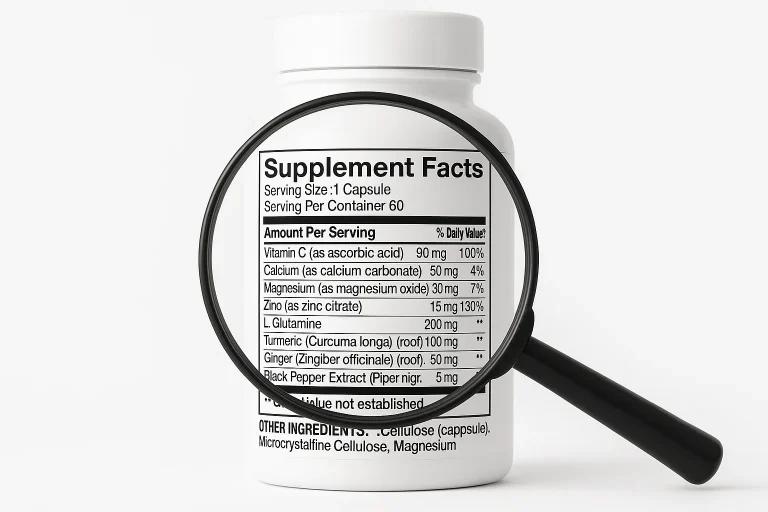

Supplements with the strongest scientific evidence (not just advertising)
Suplementy z najmocniejszymi dowodami naukowymi: zestawienie wg sily dowodow. u Bucha.
The supplement market is flooded with promises based on in vitro studies, influencer opinions, and selectively cited studies with small groups. Meanwhile, a truly solid base of evidence exists only for a handful of substances - and they are not always the ones with the largest advertising budgets. A Cochrane meta-analysis from 2022 confirmed that the intensity of supplement marketing does not correlate with the strength of its clinical evidence (Cochrane Library, 2024). This ranking is based solely on the quality of published studies - not on popularity or product prices.
KEY INFORMATION
• Only a handful of supplements have Class A evidence (RCT meta-analyses with reproducible results) for specific indications.
• Kreatyna i kofeina to najlepiej zbadane suplementy ergogeniczne - setki RCT, rekomendacje ISSN (2021).
• Vitamin D, magnesium, omega-3, and melatonin have strong evidence - but the context of the indication is key.
• EFSA approves health claims only after rigorous assessment - this is a high standard.
• "Good evidence" ≠ "dramatic effect" - many substances with a strong base have a moderate but consistent and repeatable clinical effect.
Methodology: evidence strength rating scale
The ranking is based on the hierarchy of medical evidence used by Cochrane and regulatory bodies. We do not include studies funded solely by manufacturers without external verification, animal studies, or observational data without a control group.
| Level of evidence | Description | Example |
|---|---|---|
| A - najsilniejszy | Meta-analyses of multiple RCTs, consistent results across different populations, long follow-up | Creatine for muscle strength, vitamin D for deficiency |
| B - silny | Several well-designed RCTs, consistent results, shorter follow-up | Melatonin for jet lag, magnesium for cramps |
| C - umiarkowany | Single RCTs or meta-analyses with limitations | Ashwagandha for cortisol, berberine for glycemia |
| D - weak | Observational studies, small trials, short duration or inconsistent results | Green tea for weight without training |
| E - brak / marketing | Only in vitro or animal studies, no RCTs, selective citations | Detox, many multivitamins for overall health |
Additional criterion: approval by EFSA of a specific health claim for substances and indications. EFSA rejects over 80% of submitted claims - those that pass are evidence of demanding regulatory verification.
Ranking of supplements with the strongest evidence
The following ranking includes substances with evidence levels A or B for at least one specific clinical indication. Each entry has an assigned indication - because the same supplement can have level A for one effect and E for another.
| Position | Supplement | Indication with A/B class evidence | Poziom | Key source |
|---|---|---|---|---|
| 1 | Creatine monohydrate | Muscle strength, muscle mass, anaerobic endurance | A | ISSN Position Stand (2021); hundreds of RCTs |
| 2 | Caffeine | Aerobic and strength performance, fatigue reduction | A | ISSN (2021); BJSM meta-analysis of 300 RCTs (2018) |
| 3 | Vitamin D | Bone health, immunity, reduction of fracture risk (in deficiency) | A | EFSA (approved claims); VITAL study (2019) |
| 4 | Omega-3 fatty acids (EPA+DHA) | Lowering triglycerides; risk of cardiovascular events at high doses | A (triglycerides); B (cardiovascular) | AHA Advisory (2019); REDUCE-IT study |
| 5 | Melatonin | Jet lag, circadian rhythm disorders, shift work | A | Cochrane (2002); AASM (2015) |
| 6 | Magnesium | Muscle cramps (in deficiency), sleep quality, migraine prevention | B | NIH ODS; Cochrane (migraine 2012) |
| 7 | Vitamin B12 | Correction of deficiency (vegans, elderly, metformin users); neuroprotection | A (in deficiency) | NIH ODS; EFSA |
| 8 | Vitamin C | Reduction of cold duration; collagen synthesis; antioxidant effects | B | Cochrane (2013): -8% cold duration |
| 9 | Folic acid (pregnancy) | Prevention of neural tube defects during pregnancy | A | WHO; EFSA; PTGiP guidelines |
| 10 | Glucomannan | Lowering LDL cholesterol, feeling of fullness | B | EFSA approved claim (E 425i) |
Price update: June 26, 2026
Kreatyna - numer jeden bez kontrowersji
Creatine monohydrate is likely the most researched ergogenic supplement in the history of nutrition science. The International Society of Sports Nutrition in its 2021 position paper summarizes: creatine increases maximum strength by about 5-15%, muscle mass by 1-2 kg within 4 weeks of supplementation, and delays fatigue during anaerobic efforts (Lanhers et al., JISSN, 2021). These results are reproducible in hundreds of independent laboratories worldwide.
The mechanism is precisely understood: creatine is phosphorylated to phosphocreatine in the muscles, creating a readily available ATP buffer - the main carrier of cellular energy. During efforts lasting 1-30 seconds (sprinting, weightlifting), ATP is replenished faster with saturation of the phosphocreatine store. This translates into the ability to perform more work before ATP depletion.
We have noticed that creatine has unexpected applications beyond sports - a growing database indicates benefits for cognitive health, particularly in older adults and vegetarians (whose natural muscle creatine levels are lower due to a lack of meat in the diet). The study by Rae et al. (2003) showed improvement in working memory tests in vegetarians after creatine supplementation. This is not an A-level indication, but the mechanism is solid: the brain consumes creatine and can benefit from its supplementation.
Witamina D - silna baza, ale kontekst niedoboru ma znaczenie
Vitamin D has one of the best-researched safety and efficacy profiles among micronutrients. EFSA has approved health claims for vitamin D regarding bone health, muscle function, calcium and phosphorus absorption, and proper immune system functioning (EFSA, 2024). The VITAL study (25,000 participants) showed a 25% reduction in cancer mortality with supplementation of 2000 IU/day after 2 years of observation - with a stronger effect in individuals with baseline deficiency (Manson et al., NEJM, 2019).
Key context for Poland: The Polish Society of Supplementology recommends vitamin D supplementation from October to March, as sun exposure is insufficient for endogenous synthesis. It is estimated that over 60% of Poles have 25(OH)D levels below 50 nmol/L in autumn and winter. At such levels, supplementation of 1000-2000 IU daily is one of the most justified supplementation interventions for the Polish population.
Omega-3 fatty acids - the difference between a marker and a clinical event
Omega-3 fatty acids (EPA and DHA) have an A level for lowering triglycerides - this is one of the most solid supplemental effects, confirmed by meta-analyses of hundreds of studies. At doses of 2-4 g of EPA+DHA daily, triglycerides decrease by 20-45% (AHA Scientific Advisory, 2019). The REDUCE-IT study showed that pure EPA (ethyl icosapentate, 4 g/day) reduced the risk of serious cardiovascular events by 25% in individuals with elevated triglycerides on statins.
Important caveat: REDUCE-IT was a prescription drug study (Vascepa), not a regular omega-3 supplement. Standard omega-3 supplements (e.g., fish oil 1 g/day) have weaker data on hard endpoints. Dose and form matter - taking 1 g of "fish oil" is not the same as taking 4 g of pure EPA. A-level evidence pertains to specific doses and specific forms, not "omega-3 in general."
We have noticed that consumers often buy omega-3 supplements based on the general belief that "fish are healthy." This is intuition in the right direction, but dosing matters. A typical supplement with 300 mg EPA+DHA per capsule, taken once daily, provides about 10% of the dose used in studies on cardiovascular events. Check the EPA+DHA content (not "fish oil") on the label.
Melatonin - one of the few supplements with hard evidence from Cochrane
Melatonin is unique: it has a Cochrane review with a strong positive conclusion - one of the few substances in the supplement category for which Cochrane states efficacy. The review by Herxheimer and Petrie from 2002 (updated) included 10 RCTs and showed that melatonin prevents or alleviates jet lag when flying across 5 or more time zones, especially in the eastward direction (Cochrane, 2002). Doses of 0.5-5 mg were effective; no advantage was shown for higher doses.
Beyond jet lag, melatonin has good data for circadian rhythm disorders in shift workers and blind individuals (lack of endogenous synchronization through light). In general insomnia without circadian rhythm disorders, the effects of melatonin are modest - it shortens sleep latency by about 7 minutes and extends sleep by about 8 minutes according to the meta-analysis by Ferradioles (2020). This is statistically significant but clinically modest.
Magnesium - a modest supplement with surprisingly solid data
Magnesium is one of those supplements that does not have impressive marketing but has solid data for several indications. Cochrane in a 2012 review found that magnesium (various forms, 400-600 mg/day) reduces the frequency of migraine attacks by about 22% vs placebo (Cochrane, 2012). The Polish Neurological Society has included magnesium as an option for migraine prevention - this is a rare example of a supplement with a place in clinical guidelines.
For sleep health, magnesium has class B evidence: a randomized study on 46 older adults with insomnia showed a reduction in sleep onset time and improvement in subjective sleep quality with magnesium glycinate 500 mg/day for 8 weeks. For muscle cramps in pregnant women (calf cramps), magnesium is recommended by PTGiP guidelines. This is a substance that may be justified in many populations, but always with a specific indication.
Vitamin B12 and folic acid - supplements with a clearly defined target group
Vitamin B12 and folic acid are examples of supplements where the strength of evidence is inextricably linked to the target population. Vitamin B12 has an A level of evidence - but only when correcting a deficiency. B12 deficiency primarily affects vegans and vegetarians (diet without animal products), older adults (reduced secretion of stomach acid and Castle's intrinsic factor), and individuals taking metformin long-term (the drug reduces B12 absorption in the ileum). The NIH Office of Dietary Supplements estimates that B12 deficiency affects about 6% of people under 60 and over 20% of people over 60 in Western countries (NIH ODS, 2024).
Folic acid has the strongest evidence in one narrow but absolutely critical indication: prevention of neural tube defects in the fetus. WHO and EFSA jointly recommend 400 µg of folic acid daily for all women planning pregnancy, starting at least one month before conception and continuing through the first trimester. This is one of the few supplementation applications where the decision not to use it has direct, measurable health consequences. For men and women not of childbearing age - the evidence for the benefits of folic acid supplementation is significantly weaker.
Ashwagandha and adaptogens - between level C and a growing evidence base
Ashwagandha (Withania somnifera) is gaining popularity as an "adaptogen" for stress and cortisol. In the evidence ranking, it lands at level C - not because it is ineffective, but because the clinical RCT base is still relatively narrow. The meta-analysis by Priyanka et al. from 2021 analyzed 5 RCTs and showed a significant reduction in serum cortisol levels (by about 15-25% vs placebo) and improvement in perceived stress scales (PSS) at doses of 240-600 mg of standardized extract daily for 8-12 weeks (Priyanka et al., Medicine, 2021).
Level C does not disqualify ashwagandha as a valuable supplement - it merely indicates that the evidence base is smaller than for A-level supplements. In cases of psychological stress and non-organic sleep disorders, ashwagandha has the most promising data among popular "adaptogens." For comparison: rhodiola rosea and Siberian ginseng have a similar level of evidence (C), while lion's mane (Hericium erinaceus) in the context of cognitive functions remains at level D - few RCTs, small samples, short observations.
We have noticed that consumers often confuse "strong evidence" with "dramatic effect." Creatine and caffeine have level A - but neither of these supplements can replace training. The effects of A-level supplements are usually moderate (5-15% improvement in performance, 0.5-1 kg reduction in body fat, several percent reduction in cortisol) and measurable only against a good baseline lifestyle. A supplement acts as a margin, not a foundation.
Frequently Asked Questions
Which supplement has the strongest scientific evidence?
Creatine and caffeine have the strongest and most consistent evidence in the field of physical performance - hundreds of RCTs, meta-analyses, and ISSN recommendations (ISSN, 2021). Vitamin D has strong evidence when a deficiency is confirmed. Melatonin is exceptionally well-researched in circadian rhythm disorders.
Are EFSA-approved supplements safe and effective?
Approval by EFSA means that the evidence for a specific health claim was sufficient in the assessment of the scientific panel - EFSA rejects over 80% of submitted claims (EFSA, 2024). This is a high standard. Approval pertains to a specific indication and dose - always check what exactly has been approved.
Does vitamin D help in the absence of deficiency?
The benefits of vitamin D are primarily documented in correcting deficiency (25(OH)D below 50 nmol/L). The VITAL study showed a reduction in cancer mortality at 2000 IU/day, but the effect was stronger in individuals with baseline deficiency (Manson et al., NEJM, 2019). Supplementation in individuals with normal levels provides smaller or negligible benefits.
Which supplements are unnecessary with a good diet?
With a well-balanced diet, it is difficult to justify supplementation: multivitamins (no evidence supporting their use in healthy individuals, according to USPSTF 2022), high doses of vitamin C (excess is excreted), iron without confirmed deficiency, general probiotics without indication. Exceptions: vitamin D in autumn/winter in Poland and vitamin B12 for vegans.
Is creatine safe for long-term use?
Yes. Creatine is one of the most researched supplements regarding long-term safety. Reviews covering up to 5 years of use have not shown adverse effects on kidney function in healthy individuals. ISSN confirms the safety of creatine monohydrate at 3-5 g/day (ISSN, 2021). In cases of kidney disease, use without medical supervision is unjustified.
Does ashwagandha have scientific evidence for stress reduction?
Ashwagandha (Withania somnifera) has a C level of evidence - promising, but narrower than for A-level supplements. A meta-analysis of 5 RCTs showed a reduction in cortisol by about 15-25% vs placebo and improvement in perceived stress scales at 240-600 mg of standardized extract for 8-12 weeks. This is a real effect, but the RCT base is still small and studies are mainly short-term - long-term safety and efficacy data require confirmation in larger trials (Priyanka et al., Medicine, 2021).
This article is informational and educational in nature. It contains internal links to products available in the u Bucha store. Prices and specifications may change - please check the current data on the product page before purchasing.
Author: Michał Waluk · Published: 2026-05-04 · Updated: 2026-05-04