
Homemade protein bars with hemp protein
Homemade hemp protein bars – a no-bake recipe. 12–15g of protein per bar, sugar-free, and free from artificial ingredients. Ready in 20 minutes.
Store-bought protein bars have one common problem: a long list of ingredients that starts with whey protein and ends with maltodextrin, glucose-fructose syrup, and emulsifiers. The homemade equivalent with hemp protein has 8 ingredients and takes 20 minutes to prepare. One bar provides 12-15 g of protein from three plant sources, natural sweetness from dates, and omega acids from hemp seeds. No baking, no cooking. The recipe below guides you through each step and explains how to avoid the most common mistake - bars that crumble.
KEY INFORMATION
• Hemp protein contains about 50% edestin and 33% albumin - fractions that are well absorbed after exercise (Schuler et al., Nutrients, 2023).
• A 30 g serving of hemp protein powder: 15-18 g of protein, 2-4 g of fat, and 5-7 g of fiber (USDA FoodData Central, 2023).
• The digestibility of hemp protein (PDCAAS approx. 0.63-0.66) is higher than that of pea protein (0.59) (Tang et al., Journal of Food Science, 2010).
• Store the bars in the refrigerator for up to 2 weeks or in the freezer for up to 3 months - a ready weekly ration in one session.
What does hemp protein provide in homemade bars?
Hemp protein is ground, defatted hemp seeds - a concentrate of protein fractions without most of the fat present in whole seeds. It contains about 50% edestin - a globulin with a structure very similar to human serum globulin, which translates to high digestibility. Schuler et al. (Nutrients, 2023) indicate that the edestin fraction is particularly metabolically active after physical exertion when muscle tissues actively take up amino acids.
In the no-bake bar, hemp protein serves a dual purpose: it adds protein and thickens the mixture. Too little protein - the mixture is too wet and sticky. Too much - the mixture is dry and bitter (hemp protein is earthier than whey). The optimal amount in this recipe is 5 tablespoons (about 40 g) for a batch of 8-10 bars. Tang et al. (Journal of Food Science, 2010) They demonstrated that the digestibility of hemp protein (PDCAAS approx. 0.63-0.66) is higher than that of pea protein - making it a good choice for those on a plant-based diet looking for an alternative to whey.
We noticed in tests that the bars cut better after a night in the fridge than after 1 hour. Freshly chilled (1 h) they are hard on the edges, but the center is still somewhat pliable - they cut unevenly. After a night, the entire mixture has uniform hardness, and the knife moves straight without crumbling. If you have time, prepare the bars a day in advance.
Nutritional values - what does one bar provide?
One bar (about 55-60 g) provides about 230-250 kcal, 12-15 g of protein, 12 g of fat, and 18 g of carbohydrates. Fiber from hemp protein and oats: about 4 g. Magnesium from hemp seeds covers about 20% of the daily requirement for adults (USDA FoodData Central, 2023). Compared to a store-bought protein bar: similar calorie content, higher fiber, no maltodextrin or glucose syrups.
Ingredients - what do you need?
Proportions for 8-10 bars (about 500 g of mixture). Active working time: 20 minutes + 1 hour of cooling.
- 200 g daktyli Medjool bez pestek (ok. 10-12 sztuk)
- 5 tablespoons (approx. 40 g) of organic hemp protein powder
- 5 tablespoons of almond or cashew butter (unsweetened)
- 3 tablespoons of hulled hemp seeds
- 3 tablespoons of rolled oats
- 2 tablespoons raw cacao
- 1 tablespoon of unrefined coconut oil
- a pinch of sea salt
- optional: 2 tablespoons of chopped dark chocolate (min. 70% cocoa), 2 tablespoons of dried cranberries, 1 teaspoon of vanilla extract
How to prepare homemade protein bars with hemp protein - step by step?
The bars do not require an oven. You need a food processor and a mold or baking tray. Active working time: 20 minutes. The rest is done by the fridge.
Step 1. Blend the date base. Dates into the food processor. If dry, soak in warm water for 10 minutes and drain. Blend for 60-90 seconds until a sticky mass is uniform. A good base has the consistency of marzipan - no lumps and pulls away from the walls while blending.
Step 2. Add protein, butter, cocoa, and oil. To the date base, add hemp protein, almond butter, cocoa, coconut oil, and salt. Blend for 30-40 seconds until combined. The mixture will be thick and dark - this is the right state at this stage. Check for lumps of protein - if there are any, blend for another 20 seconds.
Step 3. Add textural ingredients by hand. Transfer the mixture to a large bowl. Add hemp seeds, oats, and optional additions (chocolate, cranberries). Mix by hand or with a wooden spoon - these ingredients should be visible, not blended. They provide crunch and texture to the finished bar.
Step 4. Check the consistency. Take a spoonful of the mixture and form a roll in your hands. A good mixture does not stick to your hands and holds its shape. Too dry - a spoonful of water or butter. Too wet - a spoonful of hemp protein or oats. This test helps avoid bars that crumble when cut.
Step 5. Shape in the mold. Line a mold (about 20×10 cm) with baking paper, leaving enough overhang to pull the mixture out by the paper. Transfer the mixture and flatten it with your hand or the back of a spoon to a thickness of about 1.5-2 cm. Press down firmly - a loose mixture will not hold its shape when cut.
Step 6. Chill and cut. Place in the refrigerator for at least 1 hour or in the freezer for 30 minutes. Best results after a night in the fridge. Remove together with the paper onto a board. Cut into 8-10 bars with a sharp knife. Wrap each in baking paper or foil and store in the refrigerator.
Tips and variations
Homemade protein bars with hemp protein come in various flavor variations:
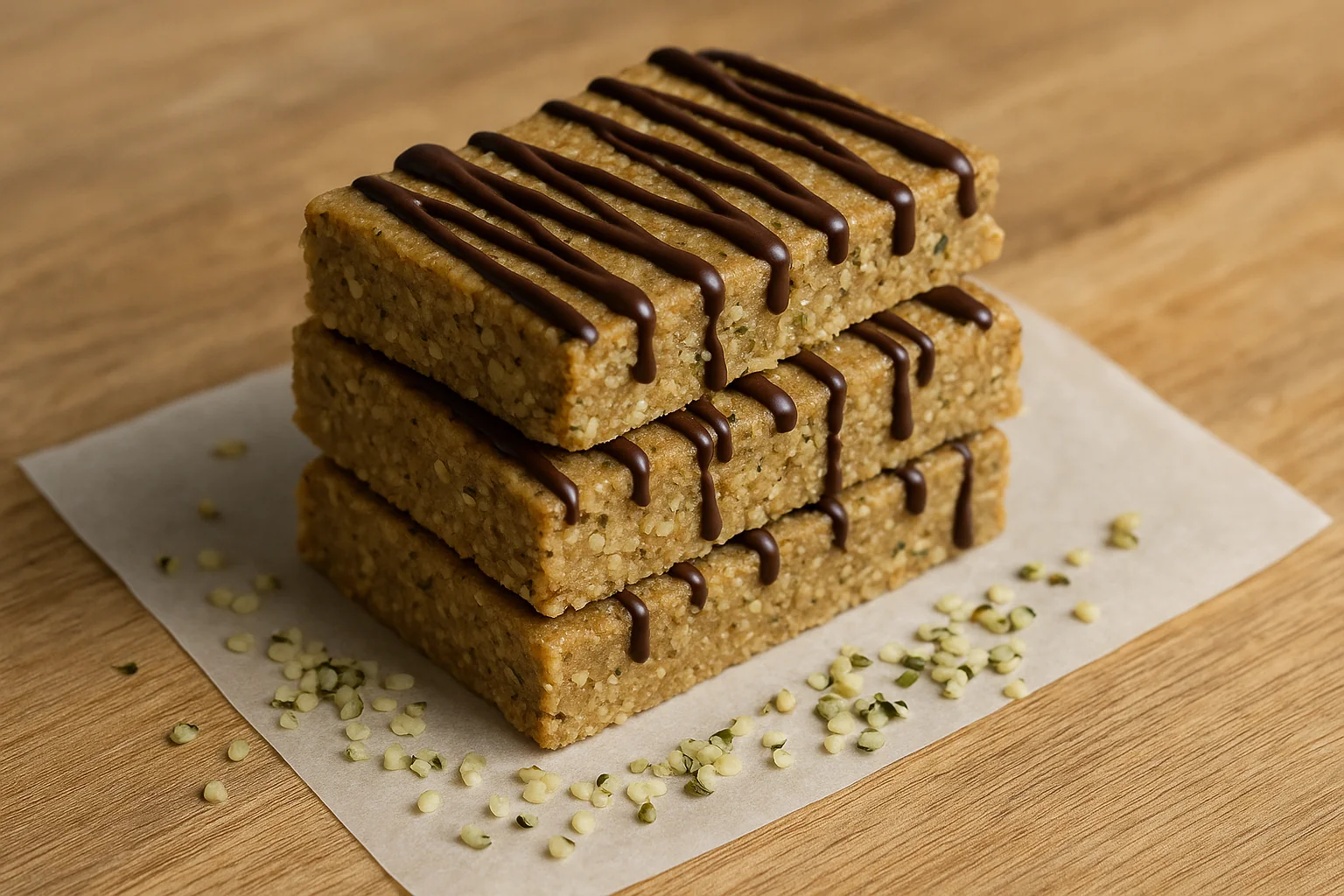
Chocolate-mint version. Add a few drops of peppermint oil to the mixture (not extract - too watery) and 3 tablespoons of chopped dark chocolate. The chocolate contrasts with the mint and the nuttiness of the hemp protein. Decorate the top with a melted strip of dark chocolate before cooling.
Citrus version. Add the zest of 1 orange or lime to the mixture. The citrus breaks the earthiness of the hemp protein and gives the bars a fresh aroma. Add a tablespoon of orange juice and reduce the amount of coconut oil by half a tablespoon to balance the moisture.
Nut version. Add 30 g of chopped walnuts or pecans to the hand mixing along with the seeds. Nuts provide a distinct crunch and a deeper fatty flavor. Reduce almond butter by a tablespoon to prevent the mixture from being too oily.
Also check out the lighter ball version: energy balls with hemp protein and dates - ta sama baza, format kulek, gotowe w 20 minut bez foremki.
Frequently Asked Questions
How much protein does a homemade hemp protein bar contain?
One bar (about 55-60 g) provides 12-15 g of protein from hemp protein, almond butter, and hemp seeds. A 30 g serving of hemp protein powder contains 15-18 g of protein (USDA FoodData Central, 2023). A homemade bar has more protein than many store-bought counterparts with fewer ingredients.
Do hemp protein bars need to be baked?
No - these are no-bake bars. Dates and butter act as natural binders. Not baking preserves the omega acids from hemp protein. The digestibility of hemp protein (PDCAAS approx. 0.63-0.66) is better than that of pea protein (Tang et al., Journal of Food Science, 2010).
How long can homemade protein bars be stored?
In the refrigerator for up to 2 weeks. In the freezer for up to 3 months - take out 10-15 minutes before eating. Hemp protein contains about 50% edestin (Schuler et al., Nutrients, 2023), whose nutritional properties remain stable during cold storage.
What can replace almond butter?
Peanut butter (more intense flavor), cashew (sweeter), sunflower (for allergy sufferers). Tahini gives a more bitter profile. Each paste has a different consistency - adjust the amount of hemp protein or oil to achieve the right density of the mixture.
How many calories does a homemade hemp protein bar have?
One bar provides about 230-250 kcal, 12-15 g of protein, 12 g of fat, and 18 g of carbohydrates. Fiber from hemp protein (5-7 g in 30 g, USDA, 2023) and oats is about 4 g per bar - clearly more than in typical store-bought bars.
This article is for informational and educational purposes and does not replace consultation with a doctor. If you are pregnant, breastfeeding, taking medications, or have chronic conditions, consult the use of supplements or herbs with a specialist.
Author: Michał Waluk · Published: 2026-05-04 · Updated: 2026-05-04