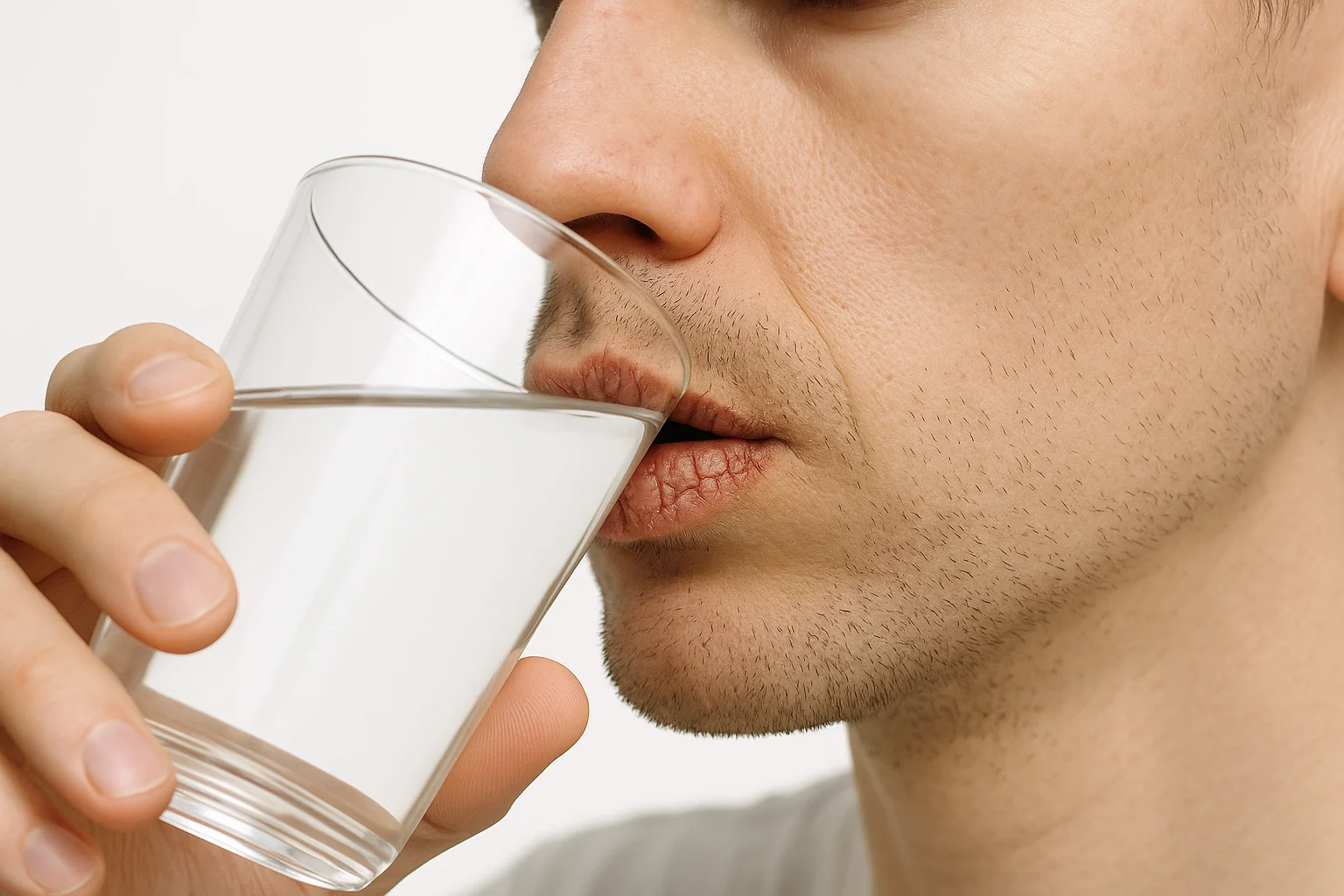

Dry mouth after cannabis - why it occurs and how to alleviate it
Dry mouth after cannabis — what it is, how it works, and what to watch out for. u Bucha.
Dry mouth after cannabis is one of the most commonly reported side effects - so common that it has its own name in English: cottonmouth. Most users consider it an annoying but harmless nuisance and reach for a glass of water. Few know that this sensation is backed by a precise biochemical mechanism - cannabinoids directly block saliva secretion by the salivary glands acting through the same endocannabinoid receptors that affect the brain. In this article, we explain exactly how it works, when dryness is a concern worth noting, and what methods actually help.
KEY INFORMATION
• CB1 and CB2 receptors present in human salivary glands are the direct target of cannabinoid action (Prestige et al., Experimental Biology and Medicine, 2006).
• THC inhibits saliva secretion more strongly than CBD, due to its higher affinity for CB1 receptors.
• Chronic dry mouth (xerostomia) increases the risk of cavities and oral infections.
• Sugar-free gum with xylitol and sipping water are the best-documented methods for alleviating the symptom.
Biochemical mechanism: why do cannabinoids dry out the mouth?
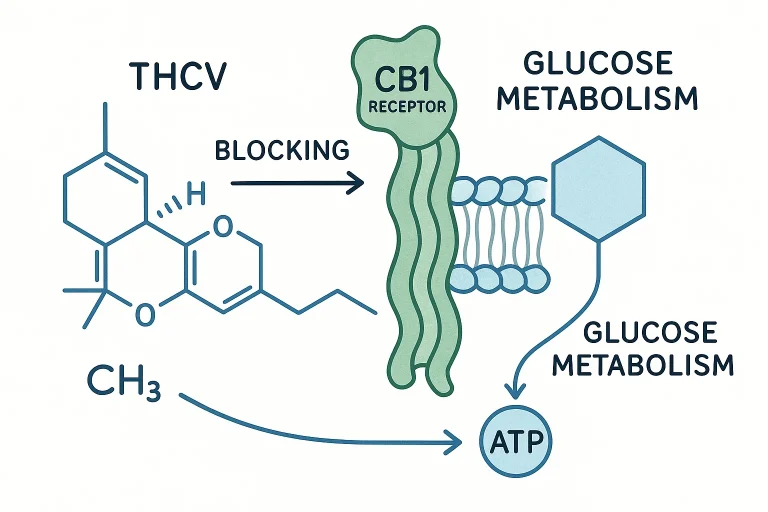
Human salivary glands - parotid, submandibular, and sublingual - contain functional CB1 and CB2 receptors. This discovery, confirmed in 2006 by Prestige and colleagues (Prestige et al., Experimental Biology and Medicine, 2006), explains the direct cause of dryness. When THC or other cannabinoids activate CB1 receptors in the salivary glands, they inhibit the release of acetylcholine - a neurotransmitter that normally stimulates saliva secretion. The effect is reversible and subsides with the metabolism of cannabinoids.
Why are submandibular glands particularly susceptible? They account for about 65-70% of total saliva production at rest. Parotid glands produce more saliva when eating but are less active at rest. Cannabinoids primarily inhibit submandibular glands, which explains why dryness is particularly intense during moments of calm - for example, when you are sitting and doing nothing - and somewhat milder during eating, which mechanically stimulates saliva.
We have noticed that many people using legal cannabis flower or CBD oil are surprised when they experience dry mouth - as they associate this effect solely with marijuana. However, the mechanism is the same: cannabinoids, even with low THC and high CBD, can slightly reduce saliva secretion. The effect is milder than with high THC, but real - and it's worth knowing about.
Cottonmouth and CBD: does legal flower also dry out the mouth?
Legal cannabis flower (THC below 0.3%, high CBD) can cause dry mouth, but usually milder than strains with high THC. The difference lies in the affinity for CB1 receptors: THC is a full agonist of CB1, activating the receptor strongly. CBD is an allosteric modulator - it changes how the receptor works without directly activating it in the same sense. At typical doses of CBD from legal flower, the effect on salivary glands is subtle but noticeable in sensitive individuals.
Other cannabinoids in legal flower also play a role. CBG (cannabigerol) shows affinity for CB1 and CB2 receptors, similar to CBD. Terpenes, especially myrcene, can modulate the effects of cannabinoids by affecting the blood-brain barrier and transport across cell membranes. However, there are no direct clinical studies isolating the contribution of individual terpenes to cannabis-induced xerostomia - this is an area requiring further research.
| Factor | Impact on dry mouth | Notes |
|---|---|---|
| Wysoki THC (>10%) | Strong - pronounced xerostomia | Full agonist of CB1 in salivary glands |
| CBD w wysokich dawkach (>40 mg) | Moderate | Dose-dependent effect |
| Legalny susz (THC <0,3%) | Mild to moderate | Depends on terpene profile and amount |
| Vaporization vs smoking | Vaporization causes slightly less dryness | No direct burning of throat tissue |
| Accompanying alcohol | Significantly intensifies | Alcohol itself dehydrates |
| Accompanying caffeine | Moderately intensifies | Diuretic effect of coffee |
How to effectively relieve dry mouth?
The effectiveness of various methods for alleviating cottonmouth varies. Drinking large amounts of water at once does not solve the underlying mechanism - it only dilutes mucus and temporarily moistens the mucous membrane. Much better results come from sipping small amounts of water every few minutes, which maintains moisture without causing a dilution effect. Still water is better than sparkling - carbon dioxide slightly irritates the already dry mucous membrane.
Chewing sugar-free gum is one of the best-documented methods for stimulating saliva - chewing mechanically activates salivary reflexes regardless of cannabinoid inhibition. Gums containing xylitol have an additional advantage: xylitol inhibits the growth of cavity-causing bacteria (Streptococcus mutans), protecting enamel in conditions of reduced saliva. Similarly, sucking on a piece of ice - the cold and mechanical contact with the mucous membrane stimulate the salivary glands to work.
Medications and products for dry mouth available at pharmacies (sprays, gels, artificial saliva) usually contain carboxymethylcellulose or hyaluronic acid as humectants. They are intended for patients with chronic xerostomia (e.g., after radiotherapy or with Sjögren's syndrome), but they also provide temporary relief for dryness caused by cannabis. This is an option for those who regularly experience stronger xerostomia.
When does dry mouth require a doctor's attention?
Episodic dryness after cannabis consumption does not require medical consultation. However, it is worth paying attention to several warning signs. If dry mouth is chronically present - not only after cannabis but also in the morning and throughout the day - it may indicate other causes: dehydration, medication effects (anticholinergics, diuretics, some psychiatric medications), thyroid diseases, diabetes, or Sjögren's syndrome. Chronic xerostomia is also one of the risk factors for cavities, so with regular cannabis use, it is advisable to increase the frequency of dental visits.
From our observations, individuals using legal cannabis flower in the evenings most often report dryness in the morning - especially if they fall asleep without hydration or with their mouths slightly open. A simple rule: a glass of water before bed and on the nightstand significantly reduces this problem. Nighttime dryness is usually the result of both mouth breathing and residual cannabinoid effects on the salivary glands during sleep.
Dry mouth and long-term oral hygiene
With regular use of cannabis products, it is worth thinking about dry mouth not just as a temporary discomfort, but as a factor affecting oral health over the long term. Saliva serves four key functions: it moistens the mucous membrane, neutralizes acids, contains digestive enzymes, and provides calcium and phosphate ions for enamel remineralization. Each of these functions is impaired with chronic reduction in saliva secretion.
Epidemiological studies conducted in populations with chronic xerostomia (e.g., in patients after head and neck radiotherapy) show significantly higher rates of cavities and gum diseases compared to individuals with normal saliva secretion. The mechanism is simple: cavity-causing bacteria (Streptococcus mutans) metabolize sugars into acids that demineralize enamel - normally saliva buffers these acids and remineralizes microdamage. Without saliva, this protective system is incomplete.
For regular users of cannabis flower or CBD oil, several practical rules limit long-term risk: brushing teeth after each use (not just in the morning and evening), using fluoride toothpaste to strengthen enamel, regular dental visits every 6 months instead of annually, and using xylitol mouthwashes that actively inhibit the growth S. mutans. It's not about dramatic precautions - it's about adjusting hygiene routines to reality.
It is also worth remembering that the method of application matters. Vaporizing hemp flower at a temperature of 170-185°C causes less intense xerostomia than burning (smoking), as the temperature is lower and there are no combustion products that directly irritate the mucous membrane. CBD oil taken sublingually usually has the least effect on saliva secretion among popular methods of cannabis use. If dry mouth is bothersome for you, it is worth experimenting with the method of application and comparing the effects.
Frequently Asked Questions
Why do cannabis cause dry mouth?
Dry mouth after cannabis results from the action of cannabinoids - primarily THC - on CB1 and CB2 receptors in the salivary glands. Activation of these receptors inhibits saliva secretion. A study by Prestige et al. (Experimental Biology and Medicine, 2006) confirmed the presence of functional CB1 and CB2 receptors in human salivary glands.
Is dry mouth after cannabis harmful?
Short-term dryness is not harmful, but chronic xerostomia increases the risk of cavities and oral infections. Saliva neutralizes acids, aids in the remineralization of enamel, and inhibits bacterial growth. With regular cannabis use, it's important to maintain oral hygiene and proper hydration.
Does CBD also cause dry mouth like THC?
CBD can cause dry mouth, but the mechanism is different and weaker than with THC. CBD acts as a modulator of CB1 receptors, not a full agonist. At low doses of CBD (5-15 mg), the effect is rarely felt; at higher doses (above 40-50 mg), it may be noticeable. Legal flower (THC below 0.3%) causes milder dryness than high-THC strains.
How to quickly relieve dry mouth after cannabis?
The most effective methods are: sipping water in small amounts, chewing sugar-free gum with xylitol to stimulate saliva production, sucking on ice cubes, and avoiding alcohol and caffeine. Products with xylitol also protect enamel in cases of chronic dryness caused by reduced saliva secretion.
Does dry mouth also occur with CBD oil use?
Yes, although less frequently and milder than with vaporizing flower. CBD oil taken sublingually directly interacts with the salivary glands and can locally reduce saliva secretion. The effect depends on the dose - at low doses (5-15 mg CBD) it is rarely noticeable, while at higher doses (above 40-50 mg) it may be more pronounced.
This article is for informational and educational purposes and does not replace consultation with a doctor. If you are pregnant, breastfeeding, taking medications, or have chronic conditions, consult the use of supplements or herbs with a specialist.
Author: Michał Waluk · Published: 2026-05-04 · Updated: 2026-05-04