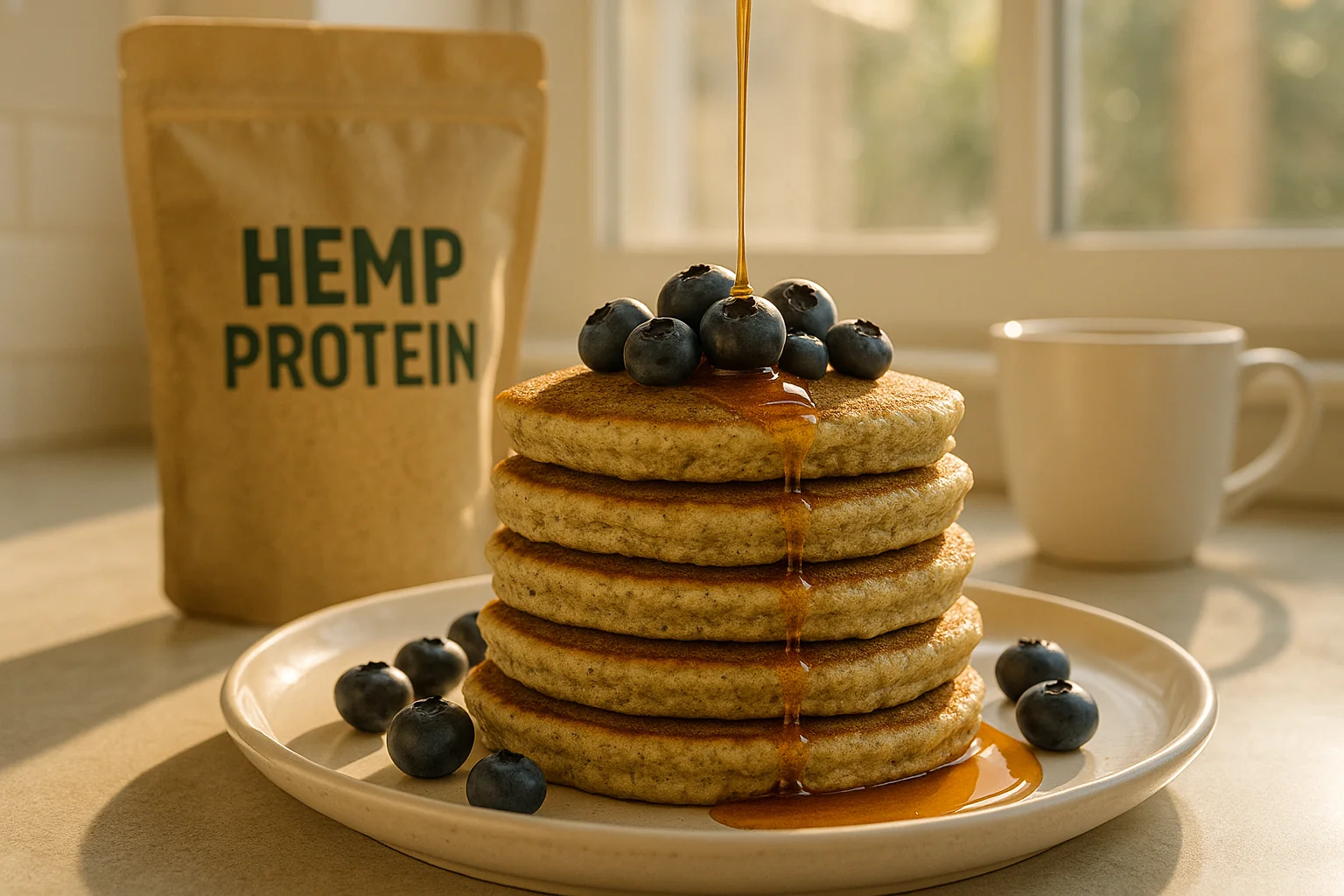

Pankejki proteinowe z białkiem konopnym: po treningu
Pankejki z białkiem konopnym krok po kroku. Ile białka naprawdę dają, co mówią pomiary strawności konopnego białka i jak usmażyć je tak, żeby się nie rozpadły.
Pankejki z proszkiem konopnym mają dwie reputacje naraz. Jedni mówią, że to najlepsze roślinne śniadanie po treningu, drudzy, że placki wychodzą kruche, ziemiste i rozpadają się na patelni. Obie strony mają trochę racji, tylko z różnych powodów. Konopne białko rzeczywiście trawi się dobrze, ale jego jakość aminokwasowa jest niższa, niż sugerują opisy na opakowaniach. A ciasto faktycznie jest delikatniejsze, bo proszek chłonie płyn inaczej niż mąka pszenna i nie buduje siatki glutenowej. Poniżej znajdziesz przepis na sześć do ośmiu placków, dane z pomiarów trzydziestu handlowych próbek konopnych oraz poprawki, po których pankejki trzymają formę przy odwracaniu. Napiszę też, ile białka da się w tym przepisie policzyć, a ile trzeba odczytać z opakowania.
KLUCZOWE INFORMACJE
• Wytłok konopny po tłoczeniu oleju, czyli surowiec proszków białkowych, ma 40,7% białka i PDCAAS 46-51% (House, Journal of Agricultural and Food Chemistry, 2010).
• Lizyna jest pierwszym aminokwasem ograniczającym we wszystkich badanych produktach konopnych, więc konopie nie są białkiem pełnowartościowym w sensie punktacji aminokwasowej.
• Izolat konopny strawił się in vitro w 88-91% wobec 71% dla izolatu sojowego (Wang, Food Chemistry, 2008).
• Łuskane nasiona konopi mają 31,6 g białka i 48,8 g tłuszczu na 100 g (USDA FoodData Central, rekord 170148).
Co naprawdę wiadomo o białku konopnym?
Że trawi się bardzo dobrze, a jego punktacja aminokwasowa jest przeciętna, i te dwie rzeczy nie są sprzeczne. Najszerszy pomiar zrobił zespół House’a (Journal of Agricultural and Food Chemistry, 2010) na trzydziestu handlowych próbkach z zachodniej Kanady: całych nasionach, wytłoku po tłoczeniu oleju na zimno, nasionach łuskanych oraz łuskach. Jakość oceniono wskaźnikiem PDCAAS, w teście strawności na szczurach, wobec zapotrzebowania FAO i WHO dla dzieci w wieku 2-5 lat.
Wyniki rozjeżdżają się między postaciami surowca. Całe nasiona miały 24,0% białka i 30,4% tłuszczu, nasiona łuskane 35,9% i 46,7%, a wytłok po tłoczeniu 40,7% białka przy 10,2% tłuszczu. Strawność samego białka była wysoka wszędzie, a w wytłoku najwyższa, bo 90,8-97,5%. PDCAAS wypadł jednak niżej: 49-53% dla całych nasion, 46-51% dla wytłoku i 63-66% dla nasion łuskanych. Powód podaje ta sama praca: lizyna jest pierwszym aminokwasem ograniczającym we wszystkich badanych produktach konopnych. Usunięcie łuski poprawia i strawność, i wynik końcowy.
Drugi pomiar dotyczy izolatu. Wang i współpracownicy (Food Chemistry, 2008) porównali izolat konopny z sojowym w modelu trawienia in vitro. Po działaniu pepsyny i trypsyny strawność izolatów konopnych wyniosła 88-91% wobec 71% dla izolatu sojowego. Ci sami autorzy piszą wprost, że poza lizyną i aminokwasami siarkowymi profil konopny spełnia zalecenia FAO i WHO dla małych dzieci. Innymi słowy: to dobre białko roślinne z wyraźną luką aminokwasową, a nie odpowiednik serwatki. Głównymi białkami zapasowymi nasion są edestyna i albumina, obie łatwo trawione, co odnotował już Callaway (Euphytica, 2004).
Ile białka mają te pankejki?
Tyle, ile wynika z etykiety Twojego proszku plus około 22 g z jajek i płatków. Dwa jajka rozmiaru L to około 115 g bez skorupek, czyli blisko 14,5 g białka (USDA FoodData Central, rekord 171287). Sześćdziesiąt gramów suchych płatków owsianych dokłada 7,9 g białka i 6,1 g błonnika (rekord 173904). To jest część, którą da się policzyć z pomiarów, a nie z opisu na opakowaniu.
Reszta zależy od proszku i tu trzeba czytać etykietę. Proszek sprzedawany jako białko konopne powstaje z wytłoku po tłoczeniu oleju, dodatkowo przesianego i odtłuszczonego, więc deklarowana zawartość białka bywa wyższa niż zmierzone przez House’a 40,7% dla samego wytłoku. Nie ma jednego rekordu w bazie składu żywności dla wszystkich takich proszków, bo różnią się przerobem, więc miarodajna jest tabela na opakowaniu.
Osobna sprawa to sytość, którą tym pankejkom przypisuje się najczęściej. Leidy i współpracownicy (Obesity, 2011) przez dwanaście tygodni obserwowali 27 mężczyzn z nadwagą lub otyłością na diecie z deficytem 750 kcal. Grupa jedząca 25% energii z białka zgłaszała przez cały dzień większe uczucie sytości niż grupa jedząca 14%, a wieczorem rzadziej myślała o jedzeniu. Uwaga na zakres tego wyniku: to badanie odchudzania u mężczyzn z nadwagą, a nie badanie regeneracji po treningu. O oknie anabolicznym ta praca nie mówi nic.
Z naszego doświadczenia wynika, że proszki konopne różnych producentów zachowują się w cieście zupełnie inaczej. Drobno mielony, jasnobrązowy daje gładkie ciasto i łagodniejszy smak. Grubszy, ciemniejszy chłonie więcej płynu i zostawia ziemisty posmak. Jeśli ciasto wyjdzie jak gęsty budyń, to nie błąd przepisu, tylko inna granulacja.
Czego potrzebujesz na sześć pankejków?
Proporcje są na dwie porcje po trzy do czterech placków. Płatki owsiane zmiel sam, bo świeżo zmielone chłoną płyn wolniej niż gotowa mąka i ciasto łatwiej doprowadzić do właściwej gęstości.
- 40 g proszku konopnego białkowego, około trzech łyżek z górką
- 60 g drobno zmielonych płatków owsianych albo mąki owsianej
- 1 łyżeczka proszku do pieczenia
- szczypta soli
- 2 jajka rozmiaru L
- 200 ml napoju roślinnego, owsianego albo migdałowego
- 1 łyżka oleju kokosowego nierafinowanego
- 1 łyżeczka miodu lub syropu klonowego, opcjonalnie
- do smażenia: olej kokosowy albo masło klarowane
- do podania: świeże owoce, jogurt, łyżka syropu klonowego
Proszek konopny ma naturalny zielonkawy odcień i orzechowy zapach. Oba są normalne i po usmażeniu placki wychodzą po prostu ciemniejsze niż zwykłe. Jeśli chcesz je rozjaśnić, zmniejsz proszek do 30 g i dołóż 10 g płatków. Napój roślinny wybieraj niesłodzony, bo wersje z cukrem przypalają się na patelni szybciej, niż środek placka zdąży się ściąć. Olej kokosowy możesz zastąpić masłem klarowanym, ale nie zwykłym masłem: osad z niego przywiera do patelni i barwi kolejne placki na ciemno.
Jak usmażyć pankejki z białkiem konopnym?
Cały proces to około dwudziestu minut, z czego osiem na przygotowanie ciasta. Jedyny moment, w którym łatwo popsuć efekt, to odwracanie: konopne ciasto potrzebuje na patelni więcej czasu niż zwykłe, zanim zwiąże się na tyle, by przetrwać ruch łopatką.
- Zmiel płatki owsiane w blenderze lub młynku przez 30 sekund na drobny proszek. Możesz też użyć gotowej mąki owsianej.
- W dużej misce połącz mąkę owsianą z proszkiem konopnym, proszkiem do pieczenia i solą. Rozbij grudki proszku rózgą, bo ma silną tendencję do zbrylania.
- W osobnej misce roztrzep jajka z napojem roślinnym, olejem kokosowym i opcjonalnie miodem. Wlej do suchych składników i wymieszaj. Kilka grudek nie przeszkadza.
- Odstaw ciasto na 5 minut, żeby proszek wchłonął płyn. Jeśli po tym czasie jest zbyt gęste, dolej 2-3 łyżki napoju roślinnego.
- Rozgrzewaj patelnię teflonową na średnim ogniu przez 2 minuty i posmaruj ją cienko olejem kokosowym. Kropla ciasta ma delikatnie skwierczeć, a nie strzelać.
- Wlewaj po 3-4 łyżki ciasta i smaż 2,5-3 minuty, aż bąbelki pojawią się na całej powierzchni, a brzegi przestaną błyszczeć. Odwróć szeroką łopatką jednym ruchem i dosmaż 1,5-2 minuty. Nie dociskaj placków szpatułką.
- Podawaj od razu, z owocami i jogurtem. Zimne pankejki konopne twardnieją mocniej niż pszenne, więc odgrzewaj je krótko na suchej patelni, a nie w mikrofalówce.
Co zmienić, gdy ciasto się rozpada?
Najczęstsza przyczyna to za wczesne odwracanie, a druga w kolejności to za mało spoiwa w cieście. Konopny proszek nie ma glutenu i nie zbuduje siatki, która trzyma placek w całości, więc rolę tę pełnią jajka i skrobia z płatków. Jeśli mimo czekania placki pękają, zmniejsz proszek do 30 g i dołóż jedno żółtko. Pomaga też mniejszy rozmiar: placek o średnicy ośmiu centymetrów odwraca się bez pęknięcia, a piętnastocentymetrowy łamie się w połowie pod własnym ciężarem.
Wersja bez jajek działa na siemieniu lnianym: dwie łyżki zmielonego siemienia namoczone w sześciu łyżkach wody przez pięć minut zastępują dwa jajka. Placki wychodzą mniej puszyste, ale trzymają formę i smakują tak samo. W wersji czekoladowej dosyp dwie łyżeczki kakao i łyżeczkę cynamonu, a proszku konopnego daj o 5 g mniej, bo kakao też chłonie płyn. Ten sam proszek wchodzi bez zmian do omletu proteinowego, do koktajlu białkowego i do domowych batonów proteinowych.
Najczęściej zadawane pytania
Ile białka mają pankejki z białkiem konopnym?
Dwa jajka i 60 g płatków owsianych dają razem około 22 g białka na całą partię, licząc z rekordów 171287 i 173904 bazy USDA FoodData Central. Ile dołoży proszek konopny, zależy od jego przerobu, więc tę liczbę odczytaj z tabeli wartości odżywczych na opakowaniu.
Czy białko konopne jest pełnowartościowe?
Nie w sensie punktacji aminokwasowej. House i współpracownicy (2010) stwierdzili, że lizyna jest pierwszym aminokwasem ograniczającym we wszystkich badanych produktach konopnych, a Wang (2008) dodaje do tej listy aminokwasy siarkowe. Wszystkie aminokwasy egzogenne są obecne, ale dwie pozycje wypadają poniżej zapotrzebowania referencyjnego.
Czy białko konopne trawi się gorzej niż sojowe?
Przeciwnie. W modelu trawienia in vitro po pepsynie i trypsynie izolaty konopne osiągnęły strawność 88-91% wobec 71% dla izolatu sojowego (Wang, Food Chemistry, 2008). Niższy wskaźnik PDCAAS konopi bierze się nie ze strawności, tylko ze składu aminokwasowego, głównie z niedoboru lizyny.
Czym różni się proszek konopny od nasion konopi?
Pochodzeniem i zawartością tłuszczu. Proszek powstaje z wytłoku, który zostaje po wytłoczeniu oleju, a ten wytłok ma 40,7% białka i 10,2% tłuszczu (House, 2010). Łuskane nasiona to inny produkt: 31,6 g białka i 48,8 g tłuszczu na 100 g według rekordu 170148 bazy USDA FoodData Central.
Czy można zrobić te pankejki bez jajek?
Tak. Dwie łyżki zmielonego siemienia lnianego namoczone w sześciu łyżkach wody przez pięć minut zastępują dwa jajka. Ciasto będzie luźniejsze, więc zmniejsz proszek konopny do 30 g i smaż mniejsze placki. Wychodzą mniej puszyste, ale nie pękają przy odwracaniu.
Kiedy jeść pankejki proteinowe po treningu?
Kiedy Ci pasuje. Popularne okno anaboliczne trwające pół godziny nie ma potwierdzenia w pracach, które ten tekst przywołuje: badanie Leidy z 2011 roku dotyczyło sytości na diecie odchudzającej, a nie regeneracji powysiłkowej. Liczy się raczej całodobowa podaż białka niż zegar po ostatniej serii.
Białka konopnego ani nasion konopi w naszym sklepie nie ma. Z konopnych produktów spożywczych znajdziesz w kategorii żywność herbaty konopne i słodkie przekąski.
Artykuł ma charakter informacyjno-edukacyjny i nie zastępuje konsultacji z lekarzem. Jeśli jesteś w ciąży, karmisz piersią, przyjmujesz leki lub masz schorzenia przewlekłe, skonsultuj zastosowanie suplementów lub ziół ze specjalistą.
Autor: Michał Waluk · Opublikowano: 2026-06-15 · Aktualizacja: 2026-08-16