
Vitamin E acetate and the EVALI crisis - what should never be in a vaporizer cartridge
Octan witaminy E i kryzys EVALI: bezpieczenstwo, ostrzezenia i fakty z badan w tabeli. u Bucha.
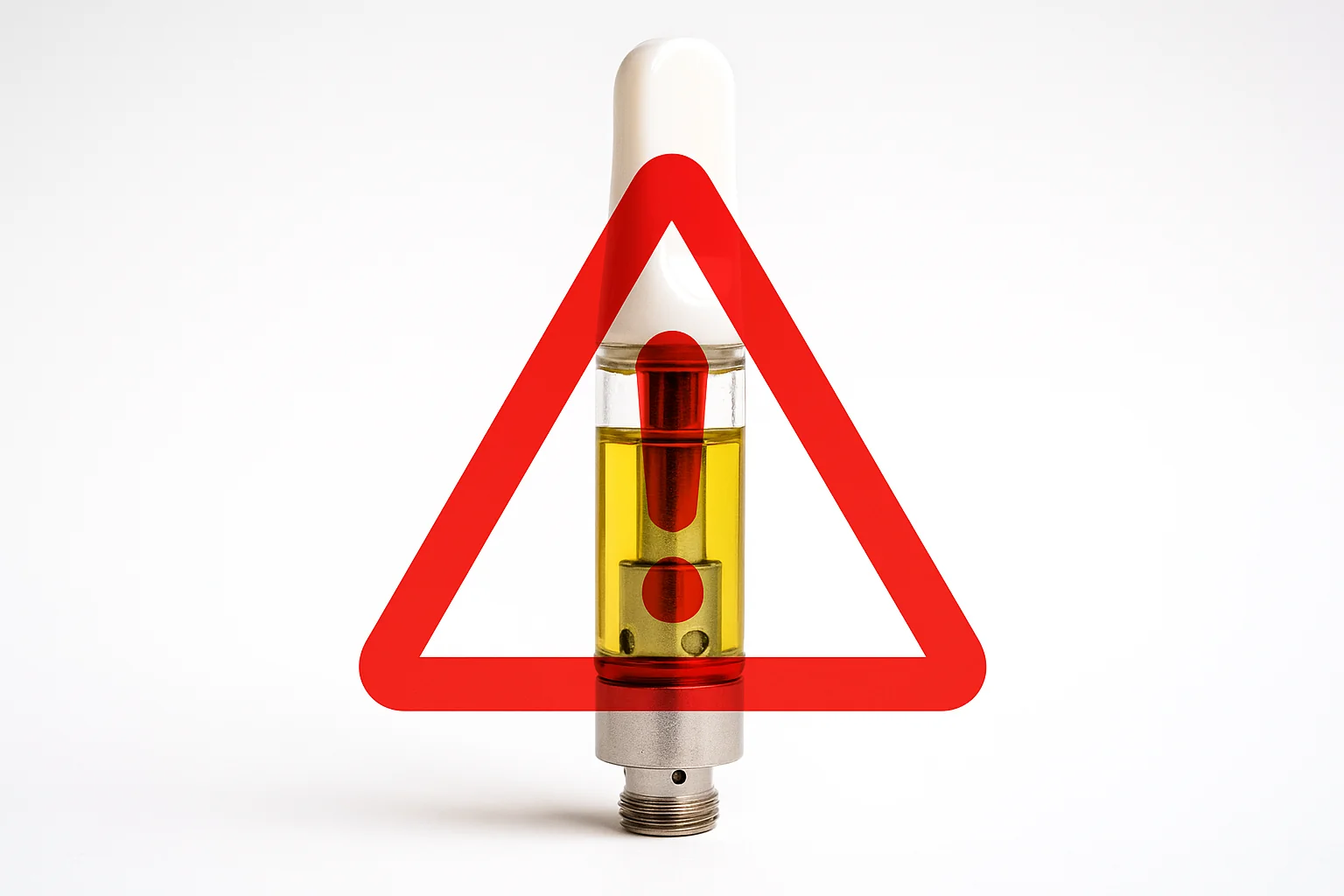
In 2019, a mysterious lung disease epidemic broke out in the United States. Thousands of people were hospitalized with severe pneumonia after using vaporizers - many in intensive care units, and dozens died. The CDC named this disease EVALI and after several months of investigation identified the main culprit: vitamin E acetate illegally added to THC cartridges as a cheap diluent. This story changed the safety of vaporization worldwide and has direct implications for anyone buying or considering purchasing CBD cartridges for a vaporizer. In this article, we explain exactly what happened, why this substance is so dangerous, and what ingredients should never be in cartridges.
KEY INFORMATION
• EVALI caused over 2800 hospitalizations and 68 deaths in the USA between 2019-2020 (Kalininskiy et al., npj Primary Care Respiratory Medicine, 2021).
• Vitamin E acetate (VEA) was detected in 94% of BAL samples from EVALI patients (Blount et al., NEJM, 2020).
• VEA is safe orally and on the skin - it only becomes dangerous when inhaled at high temperatures.
• Legal CBD cartridges from reputable manufacturers should not contain VEA - a COA certificate with a solvent panel is a key verification.
What is EVALI and how did the crisis erupt?
EVALI (E-cigarette or Vaping product use-Associated Lung Injury) is a disease identified by the CDC and FDA in August 2019, when the number of hospitalizations for severe pneumonia among e-cigarette and vaporizer users in the USA surged. By February 2020, the CDC confirmed 2807 hospitalizations and 68 deaths related to EVALI (Kalininskiy et al., npj Primary Care Respiratory Medicine, 2021). Patients presented symptoms of lipoid pneumonia - a specific lung tissue damage caused by inhaling fatty substances.
The CDC and FDA investigation pointed to THC cartridges purchased on the black market as the main source of exposure. Over 80% of EVALI patients reported using THC cartridges, often of unknown origin. When laboratories tested these cartridges, they found a common ingredient: vitamin E acetate (VEA - Vitamin E Acetate), used as a cheap, colorless, and odorless diluent that visually made the diluted product resemble a thick, full-spectrum THC extract. This economic fraud became the cause of one of the largest lung disease epidemics associated with the use of consumer inhalation devices in U.S. history.
Why is vitamin E acetate dangerous to inhale?
Vitamin E acetate (tocopherol) is perfectly safe as a dietary supplement taken orally or as an ingredient in creams applied to the skin. The problem arises solely with inhalation. At vaporization temperatures (200-250°C), VEA does not vaporize cleanly - it thermally decomposes into reactive products, including ketene. Ketene is a highly reactive organic compound capable of binding with amines and alcohols in lung tissues, damaging surfactant and causing alveolitis (Blount et al., NEJM, 2020).
A groundbreaking study by Blount et al. published in New England Journal of Medicine in 2020 confirmed VEA in 94% (48 out of 51) of bronchoalveolar lavage (BAL) fluid samples taken from patients with confirmed EVALI. In the control group of healthy vaporizer users, VEA was detected in 0% of samples. This was definitive evidence of a causal link (Blount et al., NEJM, 2020). The FDA issued a consumer warning regarding VEA, and the CDC recommended avoiding any cartridges containing this substance.
| Substance | Oral safety status | Inhalation status | Why used in cartridges |
|---|---|---|---|
| Vitamin E acetate (VEA) | Safe (supplement) | Niebezpieczny - EVALI | Cheap diluent, thick appearance |
| Polyethylene glycol PEG 400 | Bezpieczny | Decomposition to formaldehyde >200°C | Solvent, readily available |
| Plant oils (MCT, coconut) | Bezpieczny | Lipoid pneumonia | Base for hemp extracts |
| Propylene glycol PG (low concentration) | Bezpieczny | Moderate - irritation with excess | Standard in e-cigarette liquids |
| Vegetable glycerin VG | Bezpieczny | Acceptable at moderate temperatures | Standard in e-cigarette liquids |
| Pure hemp extract without base | N/A | Best choice - no diluents | Premium product without dilution |
What else can be dangerous in vaporization cartridges?
Vitamin E acetate is the best-documented hazard, but not the only one. Polyethylene glycol (PEG 400) is a commonly used diluent in pharmaceutical and cosmetic products - safe when taken orally. The problem arises when heated above 200°C: PEG decomposes into acetaldehyde and formaldehyde, both substances with confirmed carcinogenic and respiratory irritant effects (Kosmider et al., Nicotine & Tobacco Research, 2014). Some CBD cartridges on the market still contain PEG as a base.
Plant oils - MCT (fractionated coconut oil) and regular coconut oil - are often used as carriers for CBD in oral drops. The same substance in a vaporization cartridge is dangerous: fatty oils inhaled into the lungs cause lipoid pneumonia by accumulating in the alveoli and inhibiting gas exchange. This is the same mechanism as with VEA. Therefore, it is worth checking whether the CBD cartridge manufacturer uses MCT oil instead of pure extract - which is unfortunately common in cheaper products.
We have noticed that customers asking about CBD cartridges often focus solely on the CBD and THC content, without checking the base composition. Meanwhile, it is the base - not the cannabinoid - that can be the source of danger. A simple rule: if the cartridge manufacturer does not provide the full composition on the label or in the COA, it is a red flag. A reputable manufacturer has something to boast about.
How to verify the safety of CBD cartridges?
A Certificate of Analysis (COA) is a fundamental verification tool. A good COA for a vaporization cartridge should include: cannabinoid profile (CBD, THC, and others), terpene panel, pesticide panel, heavy metals panel, and - most importantly - a solvent and diluent panel. The latter is often omitted by budget manufacturers, yet it identifies the presence of VEA, PEG, and plant oils.
Ask the manufacturer or seller directly for the COA. Reputable distributors of CBD vaporization products provide certificates on the product page or upon request. If the seller cannot or will not provide a COA with testing for diluents, treat it as a warning sign. An alternative: herbal vaporizers (plant material) completely bypass the diluent issue - there is no oil base here, only dry plant heated to vaporization temperature.
From our experience, the CBD cartridge market in Poland is qualitatively diverse. Some manufacturers provide full COAs with a solvent panel, while others limit themselves to THC/CBD results. After the EVALI crisis, EU standards for inhalation products are tightening, but enforcement of regulations can be uneven. Therefore, self-verification of documentation remains crucial for safety.
How did the EVALI crisis change the CBD cartridge market in Europe?
The EVALI crisis of 2019-2020, although concentrated in the USA, had a direct impact on the European CBD vaporization cartridge market. European regulatory bodies - including EMCDDA and national drug agencies - issued warnings about VEA in vaporization products and tightened requirements for ingredient transparency. In Poland, the Chief Sanitary Inspectorate and the Office for Registration of Medicinal Products drew attention to the need for full disclosure of the composition of products intended for inhalation (EMCDDA, Cannabis Drug Profile).
The change was particularly visible in the requirements for CBD cartridge manufacturers: more and more distributors began to require a COA with a solvent panel as a condition for product sales. E-commerce platforms removed hundreds of products from their offerings whose manufacturers could not provide base composition documentation. This is paradoxically a positive outcome of the crisis - the market has become clearer, although still uneven in terms of quality enforcement.
For consumers in Poland, the practical lesson from EVALI is simple: never buy vaporization cartridges without a full composition on the label and without a COA with a solvent panel. Premium products cost more precisely because they commission these tests and disclose their results. The price difference between a cartridge with full documentation and one without documentation can be several dozen zlotys - the difference in health risk is incomparably greater. Herbal vaporizers, which operate on plant material without any oil base, remain the safest choice for those who value certainty about the composition of the inhaled material.
Frequently Asked Questions
What is EVALI and what caused it?
EVALI is a severe lung disease associated with the use of vaporizers and e-cigarettes. In the USA, it caused over 2807 hospitalizations and 68 deaths between 2019 and 2020 (Kalininskiy et al., npj Primary Care Respiratory Medicine, 2021). The main substance responsible for lung damage was vitamin E acetate (VEA) used as a diluent in illegal THC cartridges.
Why is vitamin E acetate dangerous in vaporizer cartridges?
VEA is safe orally and on the skin. The problem arises with inhalation - at vaporization temperature, it decomposes into ketene and other reactive compounds that damage lung surfactant. The CDC detected VEA in 94% of BAL samples from EVALI patients (Blount et al., NEJM, 2020), confirming the causal relationship.
What other substances should be avoided in CBD vaporizer cartridges?
Besides VEA, avoid cartridges containing polyethylene glycol PEG 400 (which decomposes into formaldehyde above 200°C) and MCT or coconut plant oils (which cause lipoid pneumonia). A safe base is pure hemp extracts without diluents or propylene glycol (PG) with vegetable glycerin (VG) in low concentrations.
How to check if a vaporizer cartridge is safe?
Look for cartridges with a Certificate of Analysis (COA) from an independent laboratory containing a solvent and diluent panel - not just a cannabinoid profile. A reputable manufacturer discloses the full composition. Avoid products without a composition label, without a COA, and purchased from unverified sources.
Are vaporizers for hemp flower safer than oil cartridges?
Herbal vaporizers (plant material) completely bypass the diluent issue - there is no oil base here. The risk of EVALI is solely associated with oil cartridges containing dangerous diluents. Herbal vaporizers operate at temperatures of 170-210°C, releasing cannabinoids and terpenes without combustion.
This article is for informational and educational purposes and does not replace consultation with a doctor. If you are pregnant, breastfeeding, taking medications, or have chronic conditions, consult the use of supplements or herbs with a specialist.
Author: Michał Waluk · Published: 2026-05-04 · Updated: 2026-05-04