
Hemp tea: how it works, when to drink it, and how it differs from CBD oil
Hemp tea – how it works, when to drink it, and how it differs from CBD oil? CBD content, absorption through the digestive tract, practical brewing tips 2026.
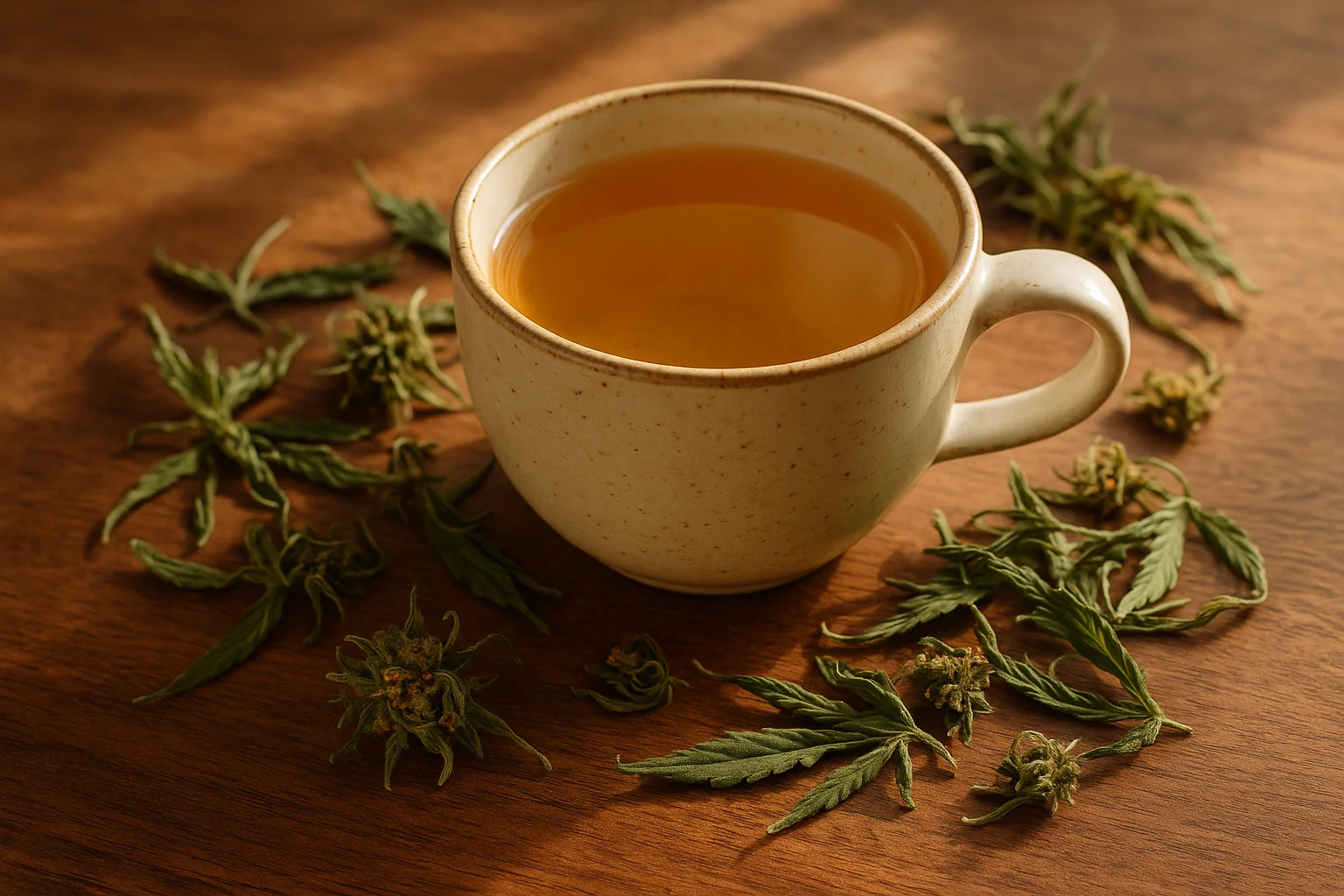
Hemp tea is experiencing a renaissance in popularity in the Polish wellness market - and the number of questions about its actual effects is growing faster than the awareness of the answers. Does hemp tea provide as much CBD as oil? Does it help with relaxation and sleep? And when should you reach for an infusion, and when should you choose precise CBD oil? These questions deserve concrete, data-driven answers - because the difference between the two forms is fundamental, not cosmetic. In this article, we will explain the mechanism of action of hemp tea, the CBD content in the infusion, the optimal brewing time, and a clear comparison with CBD oil.
KEY INFORMATION
• A cup of hemp tea provides 1-15 mg of CBD - CBD is lipophilic and poorly soluble in water; adding fat (milk, butter) can increase extraction by 3-4 times.
• Onset of hemp tea: 45-90 min via the digestive tract; CBD oil sublingually: 15-30 min with a bioavailability of 13-19% (Millar et al., Frontiers in Pharmacology, 2019).
• Legal hemp teas contain ≤0.3% THC - the dose in a cup is not psychoactive.
• Tea and CBD oil are complementary: different rates, concentrations, and contexts of use.
How hemp tea works - phytochemicals and mechanism of action
Hemp tea is not a mono-extract of CBD - it is a complex infusion made from Cannabis sativa L. containing dozens of phytochemicals. CBD is the most studied cannabinoid, but the infusion also contains other flavonoids (apigenin, vitexin), terpenes (myrcene, linalool, beta-caryophyllene), and organic acids. Andre et al. (Industrial Crops and Products, 2016) they identified over 400 chemical compounds in Cannabis sativa L., many of which exhibit biological activity independent of CBD.
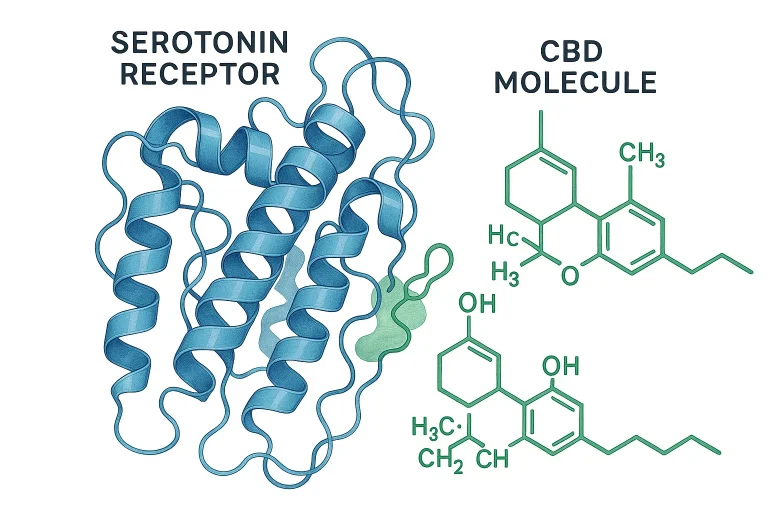
The mechanism of action of hemp tea involves several pathways simultaneously. CBD in the infusion acts on the endocannabinoid system - CB1 and CB2 receptors - as well as on serotonin receptors 5-HT1A, which may translate into anxiolytic and calming effects. Linalool (a terpene present in hemp material) acts on GABA-A receptors, similar to some sedative medications, but at much lower concentrations. Beta-caryophyllene selectively binds to CB2 receptors, exhibiting anti-inflammatory effects.
Apigenin - a flavonoid present in hemp leaves - has documented anxiolytic effects. Viola et al. (Planta Medica, 2000) they demonstrated that apigenin binds to benzodiazepine receptors in the brain, showing an anxiolytic effect without sedation. In hemp infusion, apigenin is present in small amounts, but with regular consumption, it may have an additive significance to the action of CBD.
The entourage effect - the mutual enhancement of the effects of cannabinoids and terpenes - likely also occurs in hemp tea. The whole infusion from the material may work more fully than a CBD isolate with a similar concentration, precisely because all the phytochemicals act synergistically. This is one of the arguments for choosing full-spectrum tea instead of an infusion made solely from CBD isolate.
Ile CBD jest w herbacie konopnej - fakty i ograniczenia ekstrakcji wodnej
CBD is lipophilic - it dissolves in fats and alcohol, not in water. This is a fundamental property that determines how much CBD actually ends up in your cup. Studies on the extraction of CBD from hemp material into various solvents indicate that water extracts only 20-40% of the CBD available in the raw material - the rest remains in the plant material.
How much CBD is in one cup? With typical quality hemp material (5-10% CBD in dry mass) and a portion of 1 g (typical sized infusion): the raw material contains 50-100 mg of CBD, but 20-40% passes into the water = 10-40 mg of CBD. With a 200 ml cup, the concentration is 0.05-0.2 mg/ml. Real numbers for a standard infusion range from 5-15 mg of CBD per cup - and that with good quality raw material. Cheaper materials with lower CBD content may yield single-digit values.
Our observations: The most common mistake when brewing hemp tea is brewing it like black tea - boiling water, 3 minutes, without fat. This way, you lose 60-80% of the potential CBD. Just add a tablespoon of coconut oil or a teaspoon of butter to the cup before placing the strainer - fat dissolves CBD and extracts it from the material during brewing. The difference in effect is noticeable.
How to improve CBD extraction? Fat as a carrier is the simplest solution - a tablespoon of coconut oil, butter, or whole milk in the cup can increase the amount of CBD in the infusion by 3-4 times. Brewing temperature: 70-80°C, not boiling (100°C). Higher temperatures degrade delicate phytochemicals. Time: 10-15 minutes under cover - covering retains terpenes, which are volatile. With uncovered brewing, you lose most of the aromatic terpenes before the infusion cools.
When to drink hemp tea - optimal times and purposes of use
Hemp tea has its own "window" of applications, which differs from the window for CBD oil. A low dose of CBD, slow absorption, and the entourage effect with the infusion's phytochemicals make it an ideal tool for relaxation rituals - not for precise symptom management.
Evening and sleep: This is the most natural use of hemp tea. 30-60 minutes before sleep, a cup of warm hemp infusion combines the thermal effects of a warm drink (lowering blood pressure, relaxation) with the action of phytochemicals. Beta-caryophyllene and linalool from hemp material enhance the calming effect. The heat itself raises adenosine levels (a sleep neurotransmitter) and lowers body temperatures after sweating - signaling to the brain that it’s time for sleep.
Rano jako alternatywa dla kawy: People sensitive to caffeine or looking for a calmer start to the day can replace their morning coffee with hemp tea. The gentle action of CBD on the 5-HT1A receptor may support a cheerful mood without stimulation. Terpenes (especially myrcene) have a toning effect at low doses.
Stress and tension during the day: Taking a break with a cup of hemp tea during a demanding workday is a ritual that combines the action of the drink (a pause from the screen, warmth, focus on the present) with gentle support from CBD. The effects from a single use are subtle - with regular consumption over several weeks, users describe a gradual improvement in resilience to daily stress.
Hemp tea vs CBD oil - key differences
The question "which is better - hemp tea or CBD oil?" is imprecise, as they are tools for different applications. Millar et al. (Frontiers in Pharmacology, 2019) They studied the bioavailability of CBD via different routes of administration: sublingual (13-19%), oral with food (20-30%), inhalation (30-34%). Hemp tea falls into the oral category - with an additional decrease in bioavailability due to the poor solubility of CBD in water.
Onset (czas do efektu): CBD oil sublingually - 15-30 minutes, as CBD is absorbed directly through the blood vessels under the tongue, bypassing the liver. Hemp tea - 45-90 minutes, as it passes through the entire digestive tract: stomach, small intestine, and liver (first-pass effect), which metabolizes some CBD to 7-hydroxy-CBD.
Dosing Precision: CBD oil - precise, repeatable. 5 drops of 10% oil = 5 mg of CBD every time. Hemp tea - variable, dependent on the quality of the material, brewing time and temperature, amount of water. You cannot know exactly how much CBD you are drinking in a cup.
Context and ritual: CBD oil is supplementation - convenient, quick, targeted. Hemp tea is a ritual - slow, sensory, relaxing. Both elements have value, but serve different roles in a daily wellness routine.
Cena per mg CBD: CBD oil is usually cheaper per mg of CBD than hemp tea - CBD in oil is concentrated and efficiently absorbed. If the goal is a therapeutic dose of CBD, oil is more cost-effective. If the goal is a ritual and the holistic effect of the infusion - tea has its unique value.
How to brew hemp tea - practical brewing protocol
Most people brew hemp tea the same way they brew black tea, losing most of its potential. Below is a brewing protocol that maximizes the extraction of CBD and phytocomponents while preserving aromatic terpenes.
Surowiec: 1-2 g of hemp material per 200-250 ml of water. Better raw material (higher CBD content, COA certificate) = more CBD in the cup. When purchasing, check if the CBD content is given in % - look for products with ≥5% CBD in dry mass.
Fat as a carrier: Add 1 tablespoon of coconut oil, ghee, or 50 ml of whole milk to the empty cup. The fat will extract CBD during brewing. Plant-based milk (coconut, oat) works, although it contains less fat than whole cow's milk.
Water temperature: 70-80°C. Not boiling - high temperature (>90°C) destroys delicate terpenes and flavonoids that are responsible for aroma and part of the action. If you don't have a thermometer, boil water and wait 5 minutes before brewing.
Brewing time: 10-15 minutes under cover (with a plate or saucer). Covering retains volatile terpenes that normally escape as vapor. After 15 minutes, strain - longer brewing does not extract more CBD, but may add a bitter taste from chlorophyll.
Sweetening: Honey (added after cooling to 60°C, to avoid destroying enzymes) or any sweetener. Hemp tea has a characteristic herbal, slightly grassy taste - for many people, it is pleasant in itself, especially when the raw material is of good quality.
Safety and interactions of hemp tea
Hemp tea made from industrial strains of Cannabis sativa L. (≤0.3% THC) is safe for daily consumption for most adults. CBD in typical doses for infusion (5-15 mg) is well tolerated. However, there are several groups that should exercise caution.
Individuals taking medications metabolized by the CYP450 enzyme (CYP3A4, CYP2C9) should consult a doctor before regularly consuming hemp tea. CBD inhibits the activity of these enzymes, which can increase the concentration of medications in the blood - this mainly concerns anticoagulants (warfarin), immunosuppressants, and some statins. At doses from tea (5-15 mg CBD), the risk is low, but when combined with CBD oil (higher doses) - it can be clinically significant.
Pregnancy and breastfeeding: due to incomplete safety data on CBD in these groups, hemp tea is not recommended as a supplement. An infusion of nettle leaves, chamomile, or lemon balm is a safer relaxing alternative.
Children: hemp tea is not intended for children. Safety data on CBD in children pertains to pharmaceutical preparations (Epidiolex) administered under medical supervision for refractory epilepsy - not wellness products.
How to combine hemp tea with CBD oil - a complementary strategy
The most effective strategy is to treat hemp tea and CBD oil as complementary tools, not alternatives. Tea is a ritual and a holistic extract with phytonutrients; oil is precise, fast-acting CBD supplementation.
Sample protocol: in the morning, 5 drops of 5% CBD oil sublingually (a precise dose for a good start, onset 20 min) + in the evening, a cup of hemp tea with a spoon of coconut oil (a calming ritual before sleep, onset 60 min). Total daily CBD dose: ~12.5 mg from oil + ~10-15 mg from tea = 22-27 mg CBD/day - a range considered effective for wellness/relaxation purposes.
From our experience: Individuals transitioning from evening coffee to hemp tea often need 10-14 days to fully appreciate the subtle calming effect of the infusion. The first cup rarely 'works spectacularly' - but after a week of regular use, the evening ritual with hemp tea becomes an anchor signaling to the nervous system that it's time to switch to rest mode. This contextual (Pavlovian) effect is as significant as the pharmacological one.
You can find a detailed comparison of CBD forms in the article Shot konopny vs olejek CBD, and a full overview of the properties of hemp flower in the article What is CBD flower.
Frequently Asked Questions
Ile CBD zawiera herbata konopna?
One cup of hemp tea typically provides 1-15 mg of CBD, depending on the quality of the herb and the brewing method. CBD is lipophilic - only 20-40% of CBD from the raw material passes into the water. Adding fat (milk, coconut butter) can increase extraction by 3-4 times. With herbs containing ≥5% CBD and proper brewing, it is realistically possible to obtain 10-15 mg of CBD per cup.
How to brew hemp tea to extract more CBD?
Add a spoonful of coconut oil or butter to the cup before brewing. Steep for 10-15 minutes at 70-80°C, covered. The fat acts as a carrier for CBD from the herb - the difference in the amount of extracted CBD is 3-4 times compared to brewing in plain water. For maximum effect: stir the infusion while brewing.
When to drink hemp tea?
Best in the evening, 30-60 minutes before sleep - warm hemp infusion supports relaxation thanks to CBD, the terpene linalool, and beta-caryophyllene. It also serves as a morning alternative to coffee for those sensitive to caffeine. Onset of effects is 45-90 minutes - plan to drink in advance, not just before going to bed.
Does hemp tea work faster than CBD oil?
NO. Millar et al. (Frontiers in Pharmacology, 2019) They demonstrated that sublingual CBD bioavailability is 13-19%, with an onset of 15-30 minutes. Hemp tea passes through the entire digestive tract - onset 45-90 minutes, lower bioavailability. Tea is a ritual and a supplement, not a substitute for fast-acting oil.
Czy herbata konopna zawiera THC?
Legal hemp teas from Cannabis sativa L. contain ≤0.3% THC - a value that does not exceed the EU limit. The amount of THC in a cup of infusion is trace and not psychoactive. The product is legal in Poland and safe for daily consumption by adults.
What is the difference between hemp tea and CBD oil?
Tea is a holistic aqueous extract from hemp herb - low CBD concentration (1-15 mg/cup), slow onset (45-90 min), rich mixture of phytochemicals, a ritual. CBD oil is a concentrated oil extract - precise dose, fast sublingual onset (15-30 min), higher bioavailability. Complementary tools for different purposes and contexts.
Can hemp tea be combined with CBD oil?
Yes, it is a popular and effective combination. Evening hemp tea + morning CBD oil is a strategy that combines ritual with precise supplementation. A total daily CBD dose in the range of 20-40 mg is safe for healthy adults. With medications, check for CYP450 interactions with a doctor. You can read more about the strategy of combining CBD forms in CBD Hemp Ointment.
This article is for informational and educational purposes and does not replace consultation with a doctor. If you are pregnant, breastfeeding, taking medications, or have chronic conditions, consult the use of supplements or herbs with a specialist.
Author: Michał Waluk · Published: 2026-05-04 · Updated: 2026-05-04