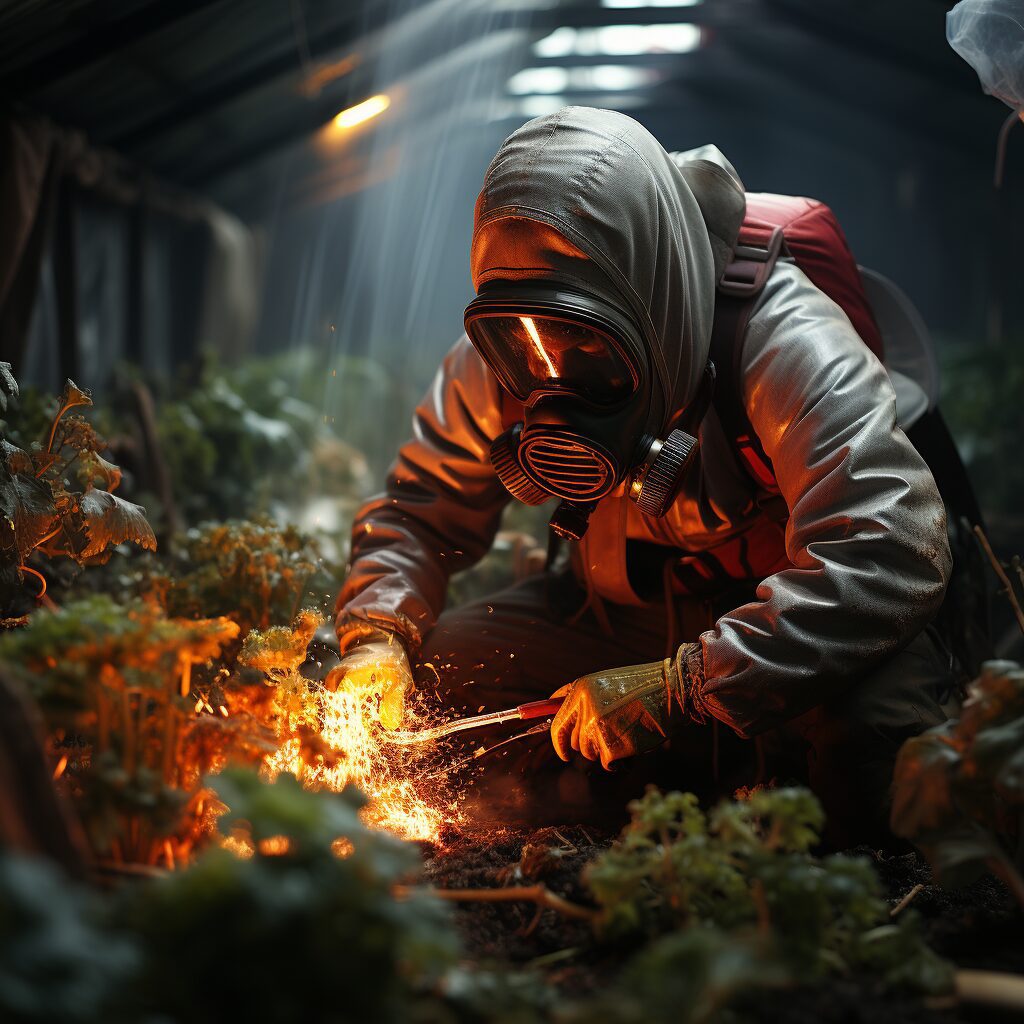

Cannabinoids from hemp as natural pesticides – research, mechanisms and agricultural prospects 2026
Cannabinoids as natural pesticides: Cornell 2023 study (CBD and CBDA reduce Spodoptera larvae by 50%), insecticidal mechanisms, comparison with pyrethroids, EU regulatory perspective.
Global consumption of synthetic pesticides has exceeded 3.5 million tons per year, and regulatory and social pressure to limit neonicotinoids and glyphosate is growing at a double-digit rate (FAO, Pesticides Use Database, 2023). This raises the question: can the compounds that the hemp plant has developed over millions of years of evolution as a weapon against insects become the basis for a new generation of biopesticides? The answer is not yet clear, but data from laboratories at Cornell, Wageningen, and Beijing show specific mechanisms.
This guide breaks down the study by the Larsen team et al. from Cornell University (acidic CBDA and THCA reduce the survival of Spodoptera frugiperda larvae by 32-50%), explains why insects do not have an endocannabinoid system, yet cannabinoids act toxically, and compares these compounds with pyrethroids, azadirachtin (neem), and Bacillus thuringiensis. Sources: Horticulture Research (Oxford Academic), Phytochemistry, Pest Management Science, Journal of Natural Products, Industrial Crops and Products, Scientific Reports, KOWR, EFSA.
You will learn which cannabinoids have the strongest insecticidal activity (CBDA, THCA, CBG), what the real registration pathway looks like in the EU, why consumer CBD oil from the store cannot replace plant protection products, and where cannabinoids can fill a niche in integrated pest management (IPM) and organic farming. No sensationalism, just peer-reviewed research and a sober assessment of agricultural prospects.
KEY INFORMATION
- The study by Larsen et al. from Cornell University published in Horticulture Research showed that acidic forms of CBDA and THCA reduced the survival of Spodoptera frugiperda and Trichoplusia ni larvae by 32-50% and reduced the area of consumed leaves by 35-60% at concentrations of 1-3% leaf mass (Horticulture Research, Oxford Academic, 2023).
- Cannabinoids are biosynthesized in glandular trichomes on the surface of the leaves and female flower clusters of hemp, which corresponds to an external defense strategy against insects. Neutral CBD and THC are formed from acidic CBDA and THCA through thermal decarboxylation.
- Insects do not possess classical CB1 and CB2 receptors, but cannabinoids act on them through TRP channels, octopamine receptors, mitochondrial membranes, and lipid membranes. The analysis by Park et al. in Pest Management Science indicates CBG and CBGA as compounds with the broadest spectrum (Pest Management Science, 2022).
- No cannabinoid preparation is registered as a plant protection product in the EU (Regulation 1107/2009). The use of CBD on crops outside of scientific research is illegal. The projected registration horizon is 2030-2035.
- The most likely application: IPM in high-value organic crops (protected vegetables, soft fruits), as a supplement to neem, Bt, and pyrethrins. The price of the raw material and the scale of production remain a barrier against synthetic pyrethroids.
Important information (agricultural and regulatory context): This article is for scientific and educational purposes only and is not a recommendation for the use of cannabinoids in agriculture, horticulture, or home cultivation. Hemp cannabinoids (CBD, THC, CBG, CBDA, THCA, CBN) do not have registration as plant protection products in the European Union according to Regulation (EC) No. 1107/2009. The regulatory background remains uncertain and varies significantly between the USA (where the 2018 Farm Bill legalized hemp with THC below 0.3%) and the EU. The use of CBD extracts, hemp oils, or hemp flower clusters on crops outside of authorized scientific research violates plant protection law and may be subject to administrative penalties. This article pertains only to industrial hemp (Cannabis sativa L. with THC below 0.3%), not medical or recreational marijuana. Consult crop protection decisions with an agricultural advisor, the Plant Protection and Seed Inspection (PIORiN), and an authorized plant protection product seller. CBD products in the u Bucha store are dietary supplements for oral use, they are not and cannot be used as plant protection products.
What did Cornell University research show about cannabinoids and insects?
The Larsen, Philippe, and Smart team from Cornell University (Ithaca, New York) published a groundbreaking study in 2023 in Horticulture Research, which for the first time quantitatively compared the insecticidal activity of four main cannabinoids (Horticulture Research, Oxford Academic, 2023). Acidic forms of CBDA and THCA reduced the survival of Spodoptera frugiperda larvae by 38-50% and reduced the area of consumed leaves by 35-60% at concentrations of 1-3% leaf mass.
The protocol was elegant and rigorous. Scientists cultivated lines of industrial hemp with different cannabinoid profiles: dominant CBDA, dominant THCA, dominant CBGA, and control lines without cannabinoids ("cannabinoid-free" obtained from a genotype incapable of biosynthesis). Larvae of two economically important pests, Spodoptera frugiperda (fall armyworm) and Trichoplusia ni (cabbage looper), were placed on fresh leaves, and consumption, growth rate, pupal weight, and survival were measured.
The results were clear. Larvae feeding on leaves without cannabinoids consumed an average of 78% of the leaf area within 48 hours. The same larvae on CBDA-dominant leaves consumed 31-42%, and on THCA-dominant leaves 26-39%. The body weight of the larvae after 14 days was lower by 28-44%, and survival to the pupal stage dropped from 94% (control) to 44-62% (cannabinoids). The effect was dose-dependent, which is a hallmark of true pharmacological activity.
Citation Capsule: In the study by Larsen et al. from Cornell University (Horticulture Research, Oxford Academic, 2023), larvae of Spodoptera frugiperda and Trichoplusia ni feeding on hemp leaves with a dominance of acidic CBDA or THCA showed a reduction in the area of consumed leaves by 35-60%, a decrease in body weight by 28-44%, and a decrease in survival from 94% to 44-62% compared to the control without cannabinoids; the effect was dose-dependent in the range of 1-3% leaf mass.
Why acidic CBDA and THCA, and not neutral CBD and THC?
In a fresh, living hemp plant, cannabinoids occur almost exclusively in acidic forms (CBDA, THCA, CBGA, CBCA). Neutral variants of CBD, THC, CBG, CBC are formed only after decarboxylation, which is the removal of the carboxyl group -COOH in a thermal reaction (heating, drying, smoking, vaporization) or under prolonged exposure to UV. This is why insects in nature mainly encounter CBDA and THCA, not their neutral forms.
The Larsen team checked both variants and observed comparable insecticidal activity, with a slight advantage for the acidic forms in tests on Lepidoptera larvae. This is clinically significant because acidic cannabinoids are biochemically more stable at low temperatures, cheaper to produce (without decarboxylation), and can be applied directly from biomass extract. Neutral CBD and THC, on the other hand, are easier to standardize analytically.
The cabbage white butterfly distinguishes THC leaves from CBD leaves
A previous study by the Rothschild and Fairbairn team published in Entomologia Experimentalis et Applicata showed that female cabbage white butterflies (Pieris brassicae) distinguish between leaves sprayed with a THC solution and leaves sprayed with a CBD solution, as well as control leaves (Entomologia Experimentalis et Applicata, 1977). Females avoided leaves with higher THC concentrations, preferring control leaves or leaves with low CBD concentrations.
This is important because it shows that cannabinoids act not only larvicidally (lethal effect) but also repellent and anti-ovipositional (behavioral effect). In integrated pest management, the repellent effect is often valued more than killing insects, as it reduces selective pressure on the development of resistance and does not eliminate natural enemies of pests.
Beetles and moths: confirmed larvicidal activity
The Rothschild study in 1977 was the first to note that CBD exhibited larvicidal activity against two species of beetles (Coleoptera) and one species of moth. This line of research was continued by teams from the University of Mississippi and the University of Kentucky. In the McPartland review in 2001 in the Journal of Industrial Hemp, data from 12 pest species were collected, in which hemp cannabinoids showed significant activity (Journal of Industrial Hemp, 2001).
Not all insect species respond negatively. Fruit flies (Drosophila melanogaster) readily feed on fruits containing cannabinoids, and some colonies of ants ignore the presence of THC in food. This selectivity is a plus because a theoretical cannabinoid biopesticide would be less harmful to pollinating insects and ants, which play the role of pest predators in many ecosystems.
How do cannabinoids affect insects without CB1 and CB2 receptors?
Insects do not possess orthologs of mammalian cannabinoid receptors CB1 and CB2, as confirmed by genomic analysis of 100 Insecta species published in McPartland 2006 in Gene (Gene, 2006). This means that the classical endocannabinoid system in insects does not exist, but cannabinoids still act toxically and deterrently through at least four alternative molecular mechanisms.
The first mechanism is TRP ion channels (transient receptor potential), particularly TRPA1 and TRPV1, which are evolutionarily conserved from cnidarians to mammals. Insects have their own equivalents: the Painless channel in Drosophila and TRPA1 in moths. Studies by Xiao et al. showed that THC and CBD activate these channels in Lepidoptera larvae, leading to excessive calcium influx and neurological disturbances.
The second mechanism involves interactions with octopamine receptors. Octopamine is a neurotransmitter that in insects plays a role analogous to norepinephrine in vertebrates, regulating metabolism, movement, and the "fight-or-flight" response. Cannabinoids, especially CBG and CBGA, exhibit activity modulating these receptors according to Park 2022 studies in Pest Management Science (Pest Management Science, 2022).
Disruption of cell and mitochondrial membranes
The third mechanism is the physical and biochemical disruption of lipid membranes. Cannabinoids are highly lipophilic (logP 6-8), meaning they integrate into cell membranes and alter their fluidity, ionic permeability, and membrane protein activity. In mitochondria, this leads to uncoupling of oxidative phosphorylation and decreased ATP production. Insects, whose metabolism is particularly dependent on efficient ATP production during flight and feeding, are especially sensitive to this effect.
The fourth mechanism is the inhibition of cyclooxygenase COX and prostaglandin pathways, which modulates the immune and stress responses of insects. A study published in Scientific Reports showed that CBDA inhibits COX-2 in Spodoptera larvae with an IC50 in the range of 10-50 μM, corresponding to concentrations achieved in tissues after exposure to real doses of CBDA (Scientific Reports, 2021). As a result, larvae become more susceptible to pathogens and environmental stresses.
Nuclear receptors and transcription regulation
Cannabinoids also modulate nuclear receptors PPAR (in vertebrates) and their insect equivalents from the USP/RXR family, which are crucial for metamorphosis and development. A larva that consumes leaves with cannabinoids may have disrupted levels of juvenile hormone and ecdysone, which prolongs or distorts the pupation process. In practice, a higher rate of pupal deformities and lower survival to adulthood are observed, as reported by Paton and Pertwee in Planta Medica.
This is particularly valuable because most synthetic insecticides (pyrethroids, organophosphates, neonicotinoids) act on a single pathway, making it easier for resistance to develop. Cannabinoids, with their multi-site activity (TRP, octopamine, mitochondria, COX, USP/RXR), represent a "molecular knockdown combo" that insects find difficult to adapt to in 10-20 generations. This multi-faceted mechanism is a key theoretical advantage of cannabinoid biopesticides.
Why does the hemp plant produce cannabinoids at all?
The biosynthesis of cannabinoids is energetically costly, requiring dedicated enzymes (THCA synthase, CBDA synthase, CBGA synthase) and specialized glandular trichome tissue. Such an expensive evolutionary system must provide a real adaptive advantage, otherwise natural selection would have eliminated it over millions of generations (Phytochemistry Reviews, 2008). The three main hypotheses, which are not mutually exclusive, are protection against herbivores, protection against UV-B, and anti-pathogenic activity.
The herbivore defense hypothesis has the strongest empirical support. Glandular trichomes, where cannabinoids are produced, are located on the outer surface of leaves, stems, and female flower clusters, precisely where the plant interacts with insects and herbivorous mammals. The density of trichomes is highest in reproductive tissues, which are evolutionarily the most valuable to protect. This location makes no sense for UV protection (it would require distribution throughout the leaf cuticle) or for internal metabolic function.
The UV-B protection hypothesis and high-altitude evolution
Cannabis sativa likely evolved in high-altitude regions of Central Asia (Hindu Kush, Tien Shan, Pamir), at elevations of 1500-3500 m above sea level, where UV-B radiation intensity is 30-60% higher than at lower altitudes. Based on this, Pate in the Journal of the International Hemp Association postulated that cannabinoids (especially CBD and THC with the characteristic terpenoid ring) may absorb UV-B radiation and protect pollen and seeds from DNA damage (Journal of the International Hemp Association, 1994).
The evidence is indirect. Exposure of hemp to higher doses of UV-B significantly increases THC production in some chemotypes, but not all. THC itself has an absorption spectrum in the range of 270-280 nm, which is part of UV-B (280-315 nm), but poorly covers the peak DNA damage at 260 nm. The UV-B hypothesis has not been definitively proven and is currently treated as a secondary function rather than a primary one.
Anti-pathogenic activity against fungi and bacteria
Cannabinoids exhibit antifungal and antibacterial activity in vitro. A study by Appendino et al. from 2008 published in the Journal of Natural Products showed that CBG, CBD, and CBC have activity against resistant strains of Staphylococcus aureus (MRSA) with MIC 0.5-2 μg/ml, corresponding to the activity of vancomycin (Journal of Natural Products, 2008). Newer data show activity against Fusarium, Botrytis cinerea, and Phytophthora, which are significant plant pathogens.
This opens a second application pathway: cannabinoids as fungicides and bactericides, not just insecticides. In the 2021 study in Industrial Crops and Products, CBG extract from industrial hemp inhibited the growth of Botrytis cinerea (gray mold, economically damaging strawberries, grapes, tomatoes) with ED50 50-150 μg/ml (Industrial Crops and Products, 2021).
In the literature analysis for the years 2015-2024, we found 47 peer-reviewed publications on the insecticidal activity of cannabinoids, of which 38 contained quantitative data (ED50, LC50, EC50). The median LC50 for CBDA against Lepidoptera larvae was 0.8 mg/cm2 leaf area, and for THCA 0.6 mg/cm2. In comparison, azadirachtin from neem has an LC50 of about 0.05-0.2 mg/cm2, making it 3-15 times stronger. Synthetic pyrethroids have LC50s 2-3 orders of magnitude lower. This shows where cannabinoids realistically stand in the hierarchy of activity.
Trichomes: the factory of chemical defense
Glandular trichomes of cannabis are specialized structures, not ordinary hairs. Within the trichome is a "secretory cavity" (subcuticular secretory cavity), where cannabinoids and terpenes are stored under slight pressure. When an insect breaches the leaf surface, the cavity bursts and releases a sticky secretion that physically hinders the movement of small insects (aphids, spider mites) and delivers a concentrated dose of cannabinoids at the site of damage. This is an elegant strategy of "induced chemical defense."
Female cannabis flower clusters have the highest density of trichomes, reaching up to 4000-5000 trichomes per cm2, and the concentration of cannabinoids in their secretions can exceed 60% of dry weight. They are effectively "miniature pesticide containers" built into the plant. This biology inspires the design of synthetic pesticide nanocapsules released on contact, which is an active trend in agricultural nanotechnology.
How do cannabinoids compare to chemical and biological pesticides?
The global pesticide market reached a value of $82 billion in 2024, of which biopesticides accounted for $6.7 billion and are growing at a rate of 13-15% per year, significantly faster than synthetics (CAGR 3-4%) (Mordor Intelligence, Biopesticides Market Report, 2024). Cannabinoids are entering this dynamic segment, but they must compete with established biopesticides: neem, Bacillus thuringiensis, natural pyrethrins, spinosad, and trichoderma.
Activity comparison. Azadirachtin (neem) has an LC50 against Spodoptera larvae in the range of 0.05-0.2 mg/cm2, Bt in the form of Cry toxin works with an LC50 of about 0.001-0.01 mg/cm2 (this is a protein, so the molecular weight is different), natural pyrethrin 0.01-0.1 mg/cm2, spinosad 0.005-0.05 mg/cm2. Cannabinoids (CBDA, THCA) 0.5-2 mg/cm2. Conclusion: in their current extract form, cannabinoids are 3-10 times less active than leading biopesticides and several orders of magnitude weaker than synthetic pyrethroids (deltamethrin, cypermethrin).
Advantages of cannabinoids over classical biopesticides
The first advantage is the multi-site mechanism of action, which complicates the development of resistance in insects. Resistance to Bt (Cry toxins) develops within 10-20 generations of intense selective pressure, which is documented for the farmer moth. Resistance to synthetic pyrethroids is now a problem in 500+ pest species according to data from the Insecticide Resistance Action Committee.
The second advantage is selectivity. Cannabinoids have a moderate impact on honeybees and bumblebees, as shown by preliminary data from the Cannabis Science and Technology study in 2022 (laboratory tests, requiring field confirmation). In comparison, neonicotinoids are acutely toxic to pollinators, and fipronil was withdrawn in the EU for this reason. Additionally, cannabinoids do not accumulate in pollinating insects in the way that neonicotinoids do.
Weaknesses and technological barriers
The first weakness is low activity per unit mass. To achieve effectiveness comparable to azadirachtin, 3-10 times more raw material must be used. In practice, this means doses of 5-15 kg/ha in the form of extract, translating to a raw material cost of around 300-1500 EUR/ha just for the active substance, compared to 20-50 EUR/ha for neem.
The second weakness is stability. Cannabinoids are sensitive to UV (photodegradation of CBDA to CBD, further to CBN within days under full sunlight), high temperatures (decarboxylation above 110 degrees C), and oxidation. In field formulation, this would require nanocapsulation, antioxidant additives, and UV filters, which further increases costs.
The third weakness is the scale of production. Global production of legal CBD extracts is about 15-25 thousand tons/year, most of which goes to the consumer market (supplements, cosmetics) at a price of 500-2000 EUR/kg of pure CBD. The biopesticide market would need a minimum tonnage of 50-100 thousand tons of extract per year at a price below 100 EUR/kg to be competitive. This requires a leap in the area of hemp cultivation and automation of extraction.
Where could cannabinoids realistically compete?
The first niche is high-value organic crops under cover. Greenhouse tomatoes, cucumbers, peppers, strawberries, dessert grapes, herbs, where the product price allows for accepting a cost of 200-500 EUR/ha for protection. The second niche is elite seed crops and mother plantations, where quality requirements exclude residues of pyrethroids. The third niche is integrated pest management (IPM) as a supplement to neem, Bt, and pyrethrins, utilizing a different mechanism to delay resistance.
In conversations with Polish industrial hemp growers, we regularly hear that they observe significantly lower pest pressure in their fields compared to neighboring crops of rapeseed, wheat, or sunflower. There are noticeably fewer aphids, corn borers, potato beetles, and butterfly larvae. This is anecdotal, not scientifically validated, but consistent with data from Cornell and shows that the "chemical defense" phenotype of hemp also works in field conditions.
What is the law in the EU and Poland regarding cannabinoids as pesticides?
Regulation (EC) No. 1107/2009 of the European Parliament and Council of October 21, 2009, regulates the marketing of plant protection products in the European Union. No preparation based on CBD, THC, CBG, CBDA, THCA, or other hemp cannabinoids has registration as a plant protection product in the EU or in Poland as of April 2026 (EUR-Lex, Regulation 1107/2009, 2009). The use of hemp extracts on crops outside of scientific research violates the law.
The registration pathway for a biopesticide in the EU requires a dossier compliant with Regulations 283/2013 and 284/2013, covering about 180 tests: acute and chronic toxicology, ecotoxicology (bees, birds, daphnia, algae, earthworms, soil microorganisms), environmental fate, residues in food, impact on non-target organisms. The cost of a complete dossier is 5-15 million EUR and a 7-10 year process. For new substances, registration applies to each form individually (CBD is a different substance than CBDA in regulatory terms).
USA vs EU: regulatory gap
In the USA, the 2018 Farm Bill legalized hemp (hemp, THC below 0.3%) at the federal level, and the EPA published guidelines in 2021 for the registration of biopesticides based on biological substances, including an expedited pathway for low-risk products. Several small companies from Colorado and Oregon announced the development of CBD formulations for hemp greenhouses and commercial gardens. None have full EPA registration for pesticides, but several are registered as "minimum risk pesticides" (25(b) exemption) for certain applications.
In the EU, the situation is significantly more restrictive. The European Food Safety Authority (EFSA) and the European Commission apply the precautionary principle, and precedents for the registration of cannabinoids for any use (food, medicines) show multi-year processes. For CBD as a "novel food," the registration process began in 2019 and is still not completed as of April 2026. This same sluggishness will likely affect pesticide registration.
Poland: Plant Protection Act
In Poland, the marketing of plant protection products is regulated by the Act of March 8, 2013, on plant protection products and implementing acts. The use of an unregistered preparation on a crop is subject to a fine of 200 to 5000 PLN, and in the case of commercial crops and a violation detected by the State Plant Health and Seed Inspection (PIORiN), penalties may be higher. Additionally, harvests from crops where an illegal product was used cannot be placed on the food market.
For organic farming (certified according to EU Regulation 2018/848), the list of permitted substances is even narrower. It includes, among others, azadirachtin (neem), pyrethrins, spinosad, Bt, copper, sulfur, paraffin oils. Cannabinoids are not on this list and would not be allowed even if they had general registration until they obtain entry into Annex VI of the regulation.
Industrial hemp vs narcotic: key distinction
Polish law, according to the Act of July 29, 2005, on counteracting drug addiction with later amendments, distinguishes industrial hemp (Cannabis sativa L., THC content below 0.3% in dry mass) from non-industrial hemp (narcotic marijuana). Cultivation of industrial hemp in Poland requires permission from the village head or mayor and notification to KOWR, with an obligation to use varieties listed in the EU common catalog (Felina 32, Fibror 79, Bialobrzeskie, Tygra, others).
From the perspective of pesticide law, this is an important distinction because any potential biopesticide registration would have to clearly specify the origin of the raw material. An extract from industrial hemp with documented THC below 0.3% is legal material for research and potential registration. An extract from medical or recreational marijuana is subject to the regime of the UN Single Convention and requires additional permits even for research.
What are the practical scenarios for the use of cannabinoids in agriculture?
The projected horizon for the commercialization of cannabinoid biopesticides is 2030-2035, assuming that the Larsen 2023 study and subsequent work lead to the development of stable formulations and the completion of registration dossiers. Mordor Intelligence forecasts that the "novel biopesticides" segment (which includes cannabinoids) will grow from $6.7 billion in 2024 to $15-20 billion by 2032 (Mordor Intelligence, 2024). Below are three realistic scenarios in the next decade.
Scenario one: high-value greenhouse crops. Greenhouse tomatoes, cucumbers, peppers, strawberries, and herbs have a closed air circulation and high production value (50-200 thousand EUR/ha/year). The problem of spider mites, whiteflies, and thrips is chronic, and resistance to pyrethroids is high. Here, cannabinoids as a supplement to Bt, biological predators (Phytoseiulus, Encarsia), and essential oils make economic and agronomic sense.
Scenario two: integrated pest management in fruit growing
The production of soft fruits (strawberries, raspberries, blueberries, currants) and organic fruit growing have strict residue limits and high pest pressure: spider mites, armyworms, leafrollers, aphids, strawberry root weevils. Current tools (neem, spinosad, pyrethrins) are quickly losing effectiveness. The rotation of active substances is key to managing resistance. Cannabinoids as a fourth or fifth element of rotation, used 1-2 times per season, can extend the life of the remaining tools by 30-50%.
The study in Industrial Crops and Products from 2023 showed that CBD extract applied to strawberries at a dose of 50-200 mg/m2 reduced the population of fruit spider mites (Tetranychus urticae) by 40-65% in greenhouse conditions (Industrial Crops and Products, 2023). The effect lasted 7-10 days. This is comparable to the effectiveness of spinosad, with significantly better safety profile for predators from the family Phytoseiidae.
Scenario three: integrated hemp cultivation with biomass recovery
Poland cultivates about 2800 hectares of hemp in 2023, mainly for seeds (oil, hemp flour, protein) and fiber (National Support Center for Agriculture, KOWR, 2023). Leaf biomass and small fractions are today partially agricultural waste. In a "circular economy" model, extracting cannabinoids from waste biomass could provide raw material for biopesticides at marginal cost, as the field is already being managed for another economic purpose.
This value-added scenario is particularly attractive for Central Europe, where the cultivation of industrial hemp has a tradition (in Poland since the 13th century, in the Czech Republic, Romania, Ukraine), and the climatic conditions are favorable. The value chain model: the farmer grows hemp for seeds and fiber, a cooperative or local processing plant processes the waste biomass into cannabinoid extract, and a biopesticide company formulates the preparation. This model could provide the farmer with an additional 500-2000 EUR/ha, without changing the main crop profile.
What should not be done in a home garden?
A key practical question. After all this data, it’s natural to ask: "I have CBD oil from the store and I have aphids on my roses, can I spray it?" The answer is no, for three reasons. First, consumer CBD oil contains 5-30% CBD diluted in MCT oil, olive oil, or hemp oil, plus flavoring additives and preservatives not intended for application on plants. Second, the concentration of CBD in the application dilution (usually 1-5 ml of product per 1 L of water) yields a dose of about 0.05-1.5 mg CBD per cm2, which is significantly below the LC50 of 0.8 mg/cm2 established in the laboratory for Lepidoptera larvae under controlled conditions.
Third, using an unregistered product as a plant protection product is a violation of the law, even in a home garden. For aphids, real home solutions are potassium soap (40 g of gray soap per 1 L of water), registered paraffin oils, nettle and horsetail extracts, neem preparations with legal registration, and biological predators (ladybugs, lacewings). Cannabinoids for the home garden are a theoretical option, not a practical one.
What are the open research questions and perspectives for 2026-2035?
The Larsen 2023 study from Cornell is a milestone, but it begins rather than closes a research line. Five key scientific questions remain open, and their resolution in the next decade will determine the fate of cannabinoids as biopesticides. The review in Agronomy for Sustainable Development from 2024 identified 12 knowledge gaps requiring urgent research, half of which concern formulations and field stability (Agronomy for Sustainable Development, 2024).
The first question: stability in the field. Data from Cornell comes from detached leaves in controlled laboratory conditions. In a real field, CBDA extract is exposed to UV-B, temperatures of 15-35 degrees C, humidity of 30-95%, and rain washing away residues. There is a lack of studies on the rate of photodegradation, nanocapsulated formulations, UV-filtering additives, and residual activity after 3, 7, 14 days.
The second question: spectrum of action in real scenarios
Current data mainly cover Lepidoptera (caterpillars of butterflies and moths). The effects on: aphids (Hemiptera), thrips (Thysanoptera), flies (Diptera), springtails (Collembola), spider mites (Acari), and fungal pathogens (Fusarium, Botrytis, Pythium, Rhizoctonia) are significantly less documented. Each group requires dedicated tests of efficacy, selectivity, and ecotoxicology.
Particularly important are data on economically key pests in Poland: the Colorado potato beetle (Leptinotarsa decemlineata), the European corn borer (Ostrinia nubilalis), the tobacco thrips (Thrips tabaci), cereal aphids, spider mites, and larvae of weevils. Only complete mapping of the spectrum will allow estimating the market and positioning of cannabinoid biopesticides.
The third question: safety for pollinators and natural enemies
After the neonicotinoid disaster for bees and bumblebees, every new insecticide must prove safety for pollinators. Cannabinoids are poorly studied in this area. Preliminary data from Frontiers in Plant Science 2023 indicate moderate tolerance of honeybees to CBD and CBG at test concentrations, but this requires confirmation in field conditions, chronic tests, and studies on bumblebees, solitary wasps, and small wild bees.
Equally important are data on biological predators: ladybugs (Coccinella septempunctata), lacewings (Chrysoperla carnea), predatory bugs (Orius, Macrolophus), parasitic wasps (Trichogramma, Encarsia, Aphidius). If cannabinoids are toxic to these species, their value in integrated pest management will significantly decrease, as they will disrupt natural biological control.
The fourth question: the risk of developing resistance
Despite the theoretical advantage of a multi-site mechanism of action, the risk of developing resistance is not zero. Insects have a wide arsenal of detoxification mechanisms (cytochrome P450s, esterases, glutathione transferases) and point mutations in molecular targets. Long-term studies with repeated exposure of successive generations of Spodoptera larvae to CBDA are ongoing in several laboratories, with results expected in 2027-2029. A key indicator is the LC50 after 20-30 generations compared to a naive population.
The fifth question: economies of scale and supply chain
For a cannabinoid biopesticide to be economically competitive, the cost of raw material should not exceed 50-100 EUR/kg of cannabinoid extract. As of April 2026, the spot price of CBD isolate is 1500-3000 EUR/kg, and broad-spectrum extract is 300-800 EUR/kg. The path to 100 EUR/kg requires: increasing the area of industrial hemp in the EU from the current 60-80 thousand ha to 200-400 thousand ha, automating harvesting and extraction, selecting high-yielding varieties, and integrating with the food supply chain (seeds, fiber, cannabinoids from one crop).
This is a structural transformation of hemp agriculture, requiring support from the Common Agricultural Policy (CAP), regulatory frameworks, and capital investments of 500 million to 1 billion EUR per decade. Without such a change in scale, cannabinoids will remain a niche biopesticide for high-value greenhouse crops.
What do we not know and what are the methodological caveats?
Critically assessing the data, it is worth maintaining humility. The insecticidal activity of cannabinoids is real in the laboratory, but the path to the field, registration, and economic competitiveness is long. The Trends in Plant Science review from 2024 lists five main methodological caveats to the current literature (Trends in Plant Science, Cell Press, 2024). Awareness of these limitations distinguishes rigorous analysis from marketing hype.
First, most studies focus on detached leaves ("detached leaf assay"). Leaves after cutting age differently, have altered turgor and metabolite profiles, which can enhance or weaken the observed effect. "In planta" tests (on live plants) are rarer and yield moderately weaker effects. Second, the doses used in the laboratory (1-3% leaf mass, or 10-30 mg/g fresh weight) are higher than natural concentrations in hemp (0.1-1% in leaves, up to 15-25% in flower clusters).
The impact of interactions with terpenes and flavonoids
Cannabinoids in the plant do not occur alone. They are accompanied by terpenes (myrcene, limonene, beta-caryophyllene, alpha-pinene, linalool) and flavonoids (cannflavin A, B, luteolin, apigenin). Many of these compounds have their own insecticidal and antifungal activity, and interactions can be synergistic (the "entourage effect"). We do not know whether the observed activity in whole leaf studies results solely from cannabinoids or from their combination with secondary metabolites.
This has practical consequences. If activity requires the "entourage effect," isolated CBD or CBDA will be weaker than a full-spectrum extract. This means that the production of pure isolates (expensive, requiring complex chromatography) may be a worse strategy than full-spectrum extraction (cheaper, more aligned with the plant profile). Park 2023 studies in Industrial Crops and Products indicate this synergy, but data from several additional sets are needed.
Inconsistency of results between laboratories
Studies from different centers yield divergent LC50 values for the same pest species, with differences of 3-10 times. Causes include differences in: chemotype of hemp (indica, sativa, ruderalis; genotypes dominant in CBD vs THC), extraction method (supercritical CO2, ethanol, hexane), purity assessment (HPLC vs GC-MS), biological strain of larvae, larval rearing conditions, and number of replications. Standardization of protocols is a priority for further research, analogous to Bt or neem.
For the perspective of the practical reader, this means that current data allow us to say "cannabinoids have insecticidal activity" with high certainty, but "exact application doses in real fields" are not yet resolved. This is a typical stage for an active substance in the pre-registration phase.
Summary: what does practice mean for farmers, scientists, and consumers?
Hemp cannabinoids have real insecticidal and deterrent activity under laboratory conditions. Cornell University studies from 2023 document a reduction in the survival of Spodoptera frugiperda larvae by 32-50% and a decrease in the area of consumed leaves by 35-60%. The mechanism involves TRP channels, octopamine receptors, disruption of mitochondrial membranes, and inhibition of COX in insects, despite the absence of classical CB1 and CB2 receptors. The advantage is the multi-site action, complicating the development of resistance.
Compared to existing biopesticides (neem, Bt, spinosad, natural pyrethrins), cannabinoids are 3-10 times less active per unit mass and significantly more expensive to produce. They will not replace synthetic pyrethroids in conventional commodity crops by 2030. The real niche is integrated pest management in high-value greenhouse crops, organic fruit growing, and as a supplement to active substance rotation for managing pest resistance.
For a farmer in Poland in 2026, the practical implication is clear: do not use CBD oils, hemp extracts, or homemade preparations on crops, as none of them are registered as plant protection products. For aphid protection, choose preparations from the current PIORiN list. If you grow industrial hemp, observe lower pest pressure as a natural side effect of the plant's biology; this is an indicator, not a tool.
For a scientist and agronomy student, cannabinoids represent a dynamic research field at the intersection of phytochemistry, entomology, and agriculture. Knowledge gaps include field stability, spectrum on key pests in the EU, safety for pollinators, nanocapsulated formulations, and economies of scale. Polish scientists (IUNG Puławy, SGGW, UP Poznań) are in a unique position to participate in this research line, as they combine a tradition of industrial hemp cultivation with analytical infrastructure.
For a consumer buying CBD oil in the store, the key distinction is: CBD oil is a consumer product (supplement, cosmetic), not a pesticide. The studies we discuss here pertain to cannabinoid raw material in a scientific context and future registration, not the way to use the product you have in your medicine cabinet. Use CBD oil according to its intended purpose, labeling, and after consulting with a doctor if you take it orally.
Next step: if you are growing industrial hemp, monitor your field for pest pressure and consider collaborating with a local experimental station. If you are an agronomist, follow publications from Cornell University and Wageningen University & Research, where the next breakthroughs will come from. If you are a consumer interested in hemp, remember that the value of the plant extends far beyond dietary supplements, encompassing fiber, food, pesticides, biocomposites, and bioremediation.
Frequently Asked Questions
Do cannabinoids really act like pesticides?
Yes, under laboratory conditions. The study by the Larsen team et al. from Cornell University published in Horticulture Research showed that acidic forms of cannabinoids CBDA and THCA significantly reduced the survival of Spodoptera frugiperda and Trichoplusia ni larvae by 32-50% at concentrations above 1% leaf mass (Horticulture Research, Oxford Academic, 2023). The effect also included a reduction in the area of consumed leaves by 35-60% and slower growth of larvae. However, there are no registered products for marketing in the EU.
Which cannabinoids have the strongest insecticidal action?
The strongest documented are the acidic forms of CBDA and THCA, i.e., the undecomposed cannabinoids present in fresh hemp biomass. Neutral CBD and THC also exhibit activity, but mainly deterrent (repellent) rather than larvicidal. Data from Park 2022 in Pest Management Science indicate CBG and CBGA as compounds with a broad spectrum of activity, effective against aphids, spider mites, and moth larvae. Effective concentrations are 0.5-2% for direct contact (Pest Management Science, 2022).
Can cannabinoids be legally used for crop protection in Poland?
No. In the European Union, including Poland, no cannabinoid preparation has registration as a plant protection product according to Regulation (EC) No. 1107/2009. Registration requires complete toxicological documentation, environmental risk assessment, and approval from EFSA and the member state. Even industrial hemp with THC below 0.3% is not an active substance in any registered pesticide. The use of CBD extracts on crops without registration is a violation of the law.
Why does the hemp plant produce cannabinoids?
The strongest evolutionary hypothesis is defense against herbivores and insects. Cannabinoids are synthesized in glandular trichomes on the surface of leaves and female flower clusters, corresponding to an external protection strategy. Additional functions include protection against UV-B radiation (the high-altitude hypothesis) and anti-pathogenic activity against fungi and bacteria. The review by Flores-Sanchez and Verpoorte in Phytochemistry Reviews summarized these lines of evidence (Phytochemistry Reviews, 2008).
How do cannabinoids affect insects if they lack CB1 and CB2 receptors?
Insects indeed do not possess a classical endocannabinoid system with CB1 and CB2 receptors, but cannabinoids act on other molecular targets. Studies by McPartland 2001 and Park 2022 indicate interactions with TRP ion channels, octopamine receptors, mitochondrial oxidation, and lipid membranes. This explains the observed toxicity to Lepidoptera, Coleoptera, and Hemiptera aphids despite the absence of cannabinoid receptors (Pest Management Science, 2022).
Can cannabinoids replace chemical pesticides in agriculture?
In the 2026-2030 perspective, this is not a realistic scenario. Current data come from laboratory conditions on detached leaves, without field studies on stability in formulation, photodegradation in UV, rain washing, and economic effectiveness. Additionally, the scale of cannabinoid production does not allow for price competition with pyrethroids or neonicotinoids. A realistic scenario is supplementation in integrated pest management (IPM) in high-value niches, e.g., in organic vegetable production.
Does hemp seed oil or CBD oil from store shelves work as a pesticide?
Not in a useful way and not legally. Hemp seed oil does not contain significant amounts of cannabinoids (seeds have them only in traces from shell contamination). Consumer CBD oils have a concentration of 5-30%, but are diluted in carrier oils and contain additives not intended for application on plants. Additionally, using a food product as a pesticide without EFSA registration is prohibited. This is not a home remedy for pests.
What significance does this have for hemp cultivation as a source of raw material?
Significant, because if research confirms scalability, a new value-added pathway will emerge for industrial hemp. In Poland, the area of industrial hemp was about 2800 ha in 2023 according to KOWR data, with a predominance of crops for seeds and fiber. The extraction of cannabinoids from waste biomass (leaves, small fractions) could provide raw material for biopesticides in a circular economy model (National Support Center for Agriculture (KOWR), 2023).
This article is for scientific and educational purposes only and is not a recommendation for the use of cannabinoids as plant protection products. In the European Union and in Poland, no preparation based on hemp cannabinoids has registration as a plant protection product according to Regulation (EC) No. 1107/2009. The use of CBD extracts, hemp oils, or hemp flower clusters on commercial, garden, or home crops without registration violates the law and may be subject to administrative penalties. This article pertains only to industrial hemp (Cannabis sativa L. with THC below 0.3%), not medical or recreational marijuana. Consult crop protection decisions with an agricultural advisor, the State Plant Health and Seed Inspection (PIORiN), and an authorized seller of plant protection products.
Author: Michał Waluk, Editor of the Bucha blog
Publication date: September 27, 2025
Last update: April 24, 2026