
Buddha bowl with hemp dressing – a colorful lunch
Buddha bowl with hemp dressing – a colorful lunch full of protein and omega-3. Step-by-step recipe with dressing made from hemp oil. Nutritional values per serving.
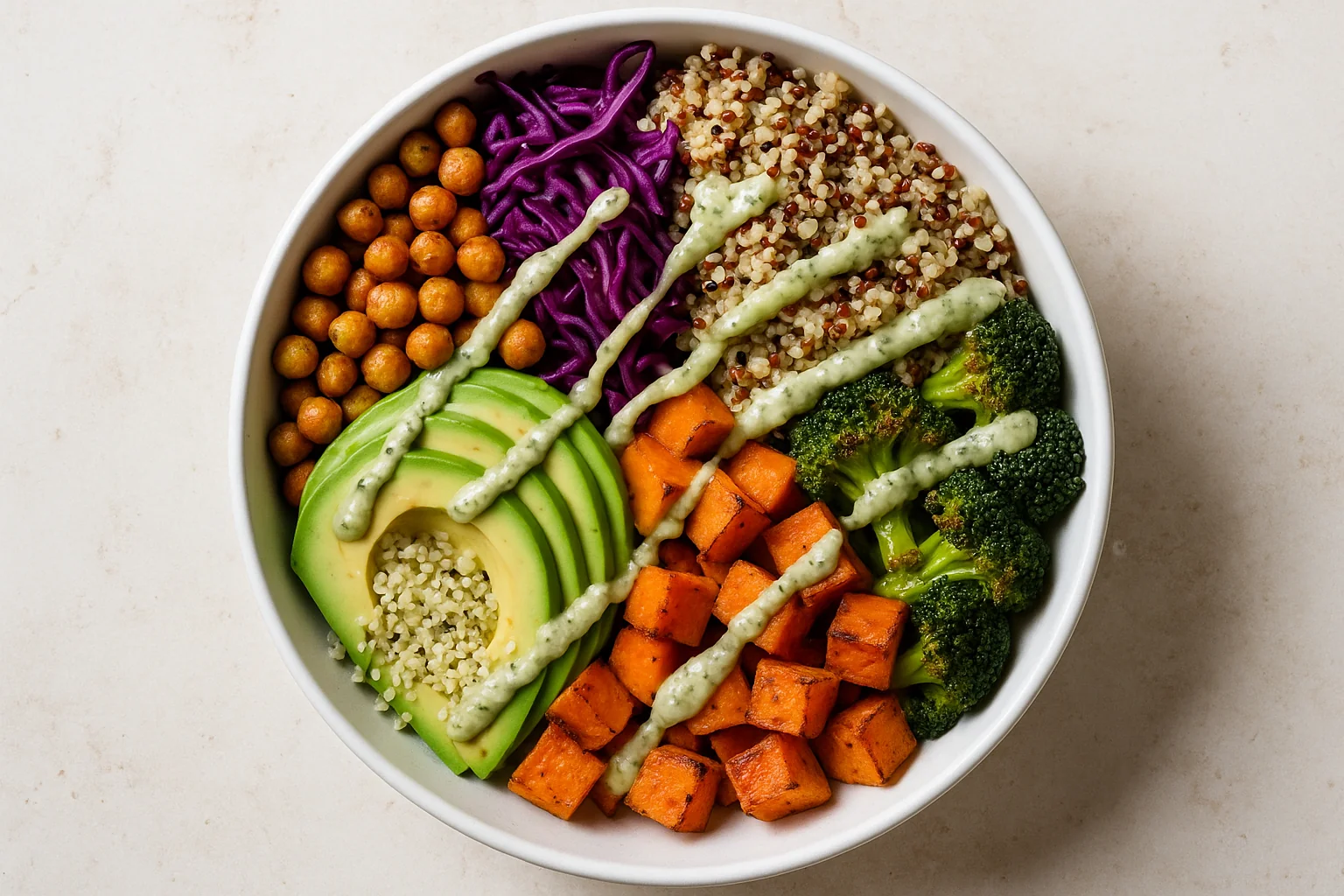
A Buddha bowl is a dish that you can eat with your eyes before it even reaches your mouth. A bowl full of colorful vegetables, creamy avocado, golden quinoa grains, and a vibrant green dressing made from hemp oil. The latter is the heart of the recipe: cold-pressed hemp oil with tahini and lemon creates a creamy, slightly nutty dressing that brings all the ingredients together better than any vinaigrette. Additionally, it enhances the absorption of fat-soluble vitamins from the vegetables. Ready in 35 minutes, perfect for lunch or a light dinner. I will show you how to assemble it step by step.
KEY INFORMATION
• Hemp oil contains about 76–80% polyunsaturated fatty acids (PUFA) (Callaway, Euphytica, 2004).
• A tablespoon of hemp oil (15 ml) provides about 125 kcal, 14 g of fat, and approximately 5 mg of vitamin E (USDA FoodData Central, 2023).
• The omega-6 to omega-3 ratio in hemp oil is about 3:1 – close to the optimal for humans (WHO max 4:1).
• Fats from hemp oil improve the absorption of vitamins A, D, E, K from vegetables – excellent for salads and bowls.
Why does hemp dressing stand out among dressings?
Typical salad and bowl dressings are based on extra virgin olive oil or sunflower oil. Olive oil has a favorable fatty acid profile, but its omega-6 to omega-3 ratio is about 10:1 – far from optimal. Cold-pressed hemp oil provides about 76–80% PUFA and maintains an omega-6 to omega-3 ratio of about 3:1, which Simopoulos (Nutrients, 2016) indicates as a range of anti-inflammatory action in the Western diet. In practice, hemp dressing is one of the simpler ways to improve the fat profile of your daily diet without changing your menu.
The flavor effect is equally convincing. Hemp oil has a characteristic nutty, slightly earthy taste that combines with tahini (sesame paste) in an exceptionally creamy way. USDA FoodData Central confirms that a tablespoon of hemp oil provides about 5 mg of vitamin E – a powerful antioxidant. Combined with vegetables rich in beta-carotene (sweet potatoes, carrots) and vitamin K (spinach, kale), hemp dressing creates a nutritional synergy: the fats from the oil increase the bioavailability of these vitamins by up to 3–5 times compared to a fat-free meal.
From our experience, hemp dressing with tahini emulsifies much better than hemp oil with lemon alone. Tahini acts as a natural emulsifier – the sesame and hemp fats combine with lemon juice and water into a stable, creamy emulsion that does not separate for several hours. The visual effect in the bowl is completely different than with a regular vinaigrette.
Nutritional values – what does this serving provide?
One serving of the Buddha bowl (75 g of quinoa, roasted vegetables, avocado, 2 tablespoons of hemp dressing) provides about 490–530 kcal, 15 g of protein, 24 g of fat (mainly PUFA and monounsaturated), and 54 g of carbohydrates. The fiber from the vegetables and quinoa is about 9 g per serving. Quinoa is one of the few grains with complete protein – it contains all 9 essential amino acids, just like hemp seeds.
Ingredients – what do you need?
Proportions for 2 servings. Preparation time: 10 minutes. Cooking and baking time: 25 minutes (can be done simultaneously).
Base:
- 150 g of quinoa or brown rice
- 1 sweet potato (about 200 g)
- 1 beet (about 150 g) or 1 zucchini
- 1 handful of fresh spinach or arugula
- 1/2 avocado
- 2 hard-boiled eggs or 150 g of tofu (optional as protein)
- 1 tablespoon of baking oil
- salt, cumin for vegetables
Hemp dressing:
- 3 tablespoons of cold-pressed hemp oil
- 1 tablespoon of tahini (sesame paste)
- 1 tablespoon of lemon juice
- 1 teaspoon of honey or maple syrup
- 1 small clove of garlic
- 2 tablespoons of water
- salt to taste
- 1 tablespoon of hulled hemp seeds for sprinkling
How to prepare a buddha bowl with hemp dressing – step by step?
Cooking the grains and roasting the vegetables happen simultaneously, so the whole process takes 30–35 minutes of active time. The dressing takes 2 minutes to make.
Step 1. Preheat the oven and boil water. Set the oven to 200°C. Boil water for the grains. Rinse the quinoa under cold water (this removes the bitter saponin coating). Cook in a 1:2 ratio (quinoa:water) for 15 minutes, until the water is absorbed.
Step 2. Roast the vegetables. Peel the sweet potatoes and cut them into 2 cm cubes. Peel the beetroot and cut it similarly (or use roasted beetroot from the previous day). Transfer to a baking sheet lined with parchment paper, drizzle with oil, and season with salt and cumin. Roast at 200°C for 20–25 minutes until tender.
Step 3. Make the hemp dressing. In a small jar, combine the hemp oil, tahini, lemon juice, honey, garlic pressed through a garlic press, water, and salt. Screw on the lid and shake vigorously for 30 seconds. Alternatively, whisk in a bowl. Taste and adjust: more lemon = tangier, more honey = sweeter, more water = thinner dressing.
Step 4. Prepare the fresh ingredients. Slice the avocado. If using eggs, hard-boil them – 10 minutes from boiling to cold water. Peel and cut in half. Leave the spinach in whole leaves.
Step 5. Assemble the buddha bowl. In each bowl, place a portion of quinoa. Arrange sections on top: roasted vegetables, fresh spinach, avocado, egg or tofu. Drizzle with hemp dressing just before serving. Sprinkle with a tablespoon of hulled hemp seeds. Do not mix – the beauty of the bowl lies in the arrangement of the ingredients next to each other.
Tips and variations
The buddha bowl is an infinitely flexible recipe. Here are a few tried-and-true modification directions:
Winter version. Change the base seasonally: in autumn, use millet with pumpkin and chestnuts, in winter – lentils with roasted carrots and walnuts. The hemp dressing fits every version without changes.
Tofu version. Cut firm tofu into 2 cm cubes. Marinate for 20 minutes in soy sauce, garlic, and ginger. Bake on the same tray as the vegetables for 20–25 minutes. The tofu becomes crispy on the outside and creamy on the inside.
Asian dressing. Modify the dressing: instead of tahini, use a tablespoon of soy sauce, a teaspoon of sesame oil, and a teaspoon of grated ginger. Hemp oil remains the base. It pairs well with a bowl of jasmine rice, carrots, cucumber, and black sesame.
Meal prep. Cook a double portion of grains and roast the vegetables in advance. Store separately in the fridge for up to 4 days. The hemp dressing lasts 5 days in the fridge. Each day, assemble a fresh bowl in 2 minutes.
Also compare our recipe for tabbouleh with quinoa and hemp seeds – another colorful bowl salad with hemp products.
Frequently Asked Questions
What should a good buddha bowl contain?
A classic buddha bowl consists of: (1) a carbohydrate base, (2) plant or animal protein, (3) roasted and fresh vegetables, and (4) dressing. Hemp oil in the dressing provides omega-3 fatty acids in a 3:1 ratio of omega-6 to omega-3 (Callaway, Euphytica, 2004) and enhances the absorption of vitamins A, D, E, K from vegetables.
How many kcal does a buddha bowl with hemp dressing have?
One serving with 75 g of quinoa, roasted vegetables, avocado, and 2 tablespoons of dressing provides about 490–530 kcal, 15 g of protein, and 24 g of fat. A tablespoon of hemp oil provides about 125 kcal and 14 g of fat (USDA FoodData Central, 2023).
How long can hemp dressing be stored?
Store hemp dressing with tahini in the fridge for up to 5 days in a sealed jar. Hemp oil oxidizes when exposed to light and heat, so refrigeration extends its shelf life. If the dressing separates after cooling, shake the jar before use.
Can you make a buddha bowl in advance?
Store cooked grains and roasted vegetables separately in the fridge for up to 4 days. Add fresh ingredients (avocado, lettuce) and hemp dressing just before serving. The fats from hemp oil – including omega-3 ALA – are prone to oxidation, so do not mix the dressing with the salad in advance.
This article is for informational and educational purposes and does not replace consultation with a doctor. If you are pregnant, breastfeeding, taking medications, or have chronic conditions, consult the use of supplements or herbs with a specialist.
Author: Michał Waluk · Published: 2026-05-04 · Updated: 2026-05-04