


Aura Care cleansing: what it is, how it works, and how it differs from regular detox
Aura Care Cleansing consists of seven plant extracts. We check the ingredient list from the product card, evidence in humans, and what promises are allowed by EU law.
Aura Care Cleansing is the name of a specific formula from our catalog, not a general wellness treatment. The adult version contains extracts from seven plants and nothing else: no vitamins, minerals, or sweeteners. The title of this entry promises to explain how this formula differs from a regular detox, so the answer opens the article: in terms of evidence, it is no different. Not a single commercial cleansing treatment has been tested on humans in a randomized study. Below you will find what can be verified: the composition from the product card, research results for individual plants, EU regulations on health claims, and what truly affects the functioning of the liver and intestines.
KEY INFORMATION
• Klein and Kiat's review (Journal of Human Nutrition and Dietetics, 2015) found not a single randomized study of a commercial cleansing treatment in humans.
• The daily dose of the liquid version is 32 drops with seven aqueous extracts, from 288.44 mg of walnut to 47.52 mg of artichoke.
• Health claims for plants remain suspended in the EU until EFSA assessment, so none of these seven ingredients has an approved health promise.
• Plant preparations and supplements account for about 20% of cases of drug-induced liver injury in the American DILIN registry (Hepatology, 2023).
What does Aura Care Cleansing really contain?
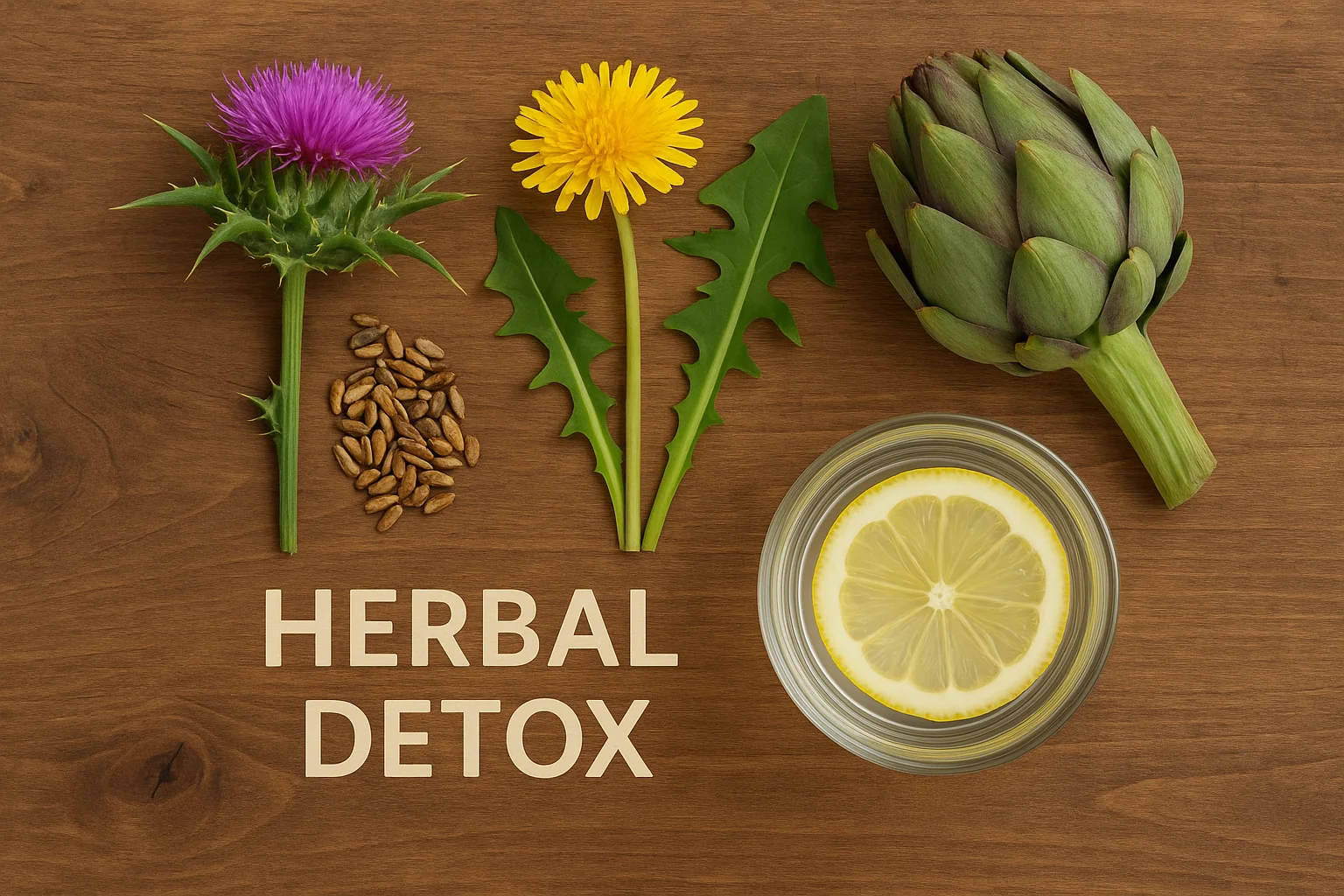
Seven plant extracts and nothing more. The manufacturer declares in the daily dose of the capsule: walnut 130 mg, pumpkin seeds 110 mg, dandelion 80 mg, thyme 60 mg, wild oregano 50 mg, clove buds 45 mg, and artichoke 25 mg. All standardized to DER 4:1, in a plant-based HPMC capsule.
The formula exists in three variants. Capsules of 30 pieces have a daily dose in the form of one capsule with a meal. The 50 ml liquid version contains the same seven plants, but as aqueous extracts based on concentrated raspberry juice, in different masses and with a dose of 32 drops per day. The KIDS version has six ingredients: it does not contain wild oregano or artichoke, but it does include marigold.
We checked this composition in our own store, as the name milk thistle often appears in texts about liver cleansing. The Cleansing formula does not contain milk thistle at all. This plant is present in other products from the same line, including the Healthy Liver variant, so it can be easily confused when purchasing. Another thing to check before opening the package: the formula contains walnut, which is an allergen on the mandatory labeling list.
How does cleansing differ from a regular detox?
In terms of evidence, it is no different. Both concepts are based on the same unverified assumption: that the body accumulates unspecified toxins that need to be flushed out with a preparation or treatment. Klein i Kiat (Journal of Human Nutrition and Dietetics, 2015) they reviewed the literature and found not a single randomized study of a commercial treatment in humans.
The word "detox" has no medical definition. In toxicology, detoxification means biotransformation, or converting substances in the liver into a form that can be excreted. This process occurs continuously and cannot be activated by a treatment. The marketing "detox" is something else: a promise that after a week of a preparation or juices, something will disappear from the body that no one has measured or named.
The differences between products in this category are therefore differences in form and price, not effectiveness. One formula has seven plants, another five, one is in drops, the other in capsules. None of them has been compared to a placebo in humans in terms of cleansing. It is more honest to state this directly than to build an advantage on a word that means nothing. We elaborated on this topic in the entry about spring detox without fasting.
What has been shown in humans for these seven plants?
For none of them has detoxification been demonstrated in humans. Studies involving humans exist, but they concern completely different endpoints, different parts of the plant, and doses measured in grams rather than milligrams. The table below compares the declared masses from the liquid version with what has actually been verified.
| Plant | W porcji dziennej (50 ml) | Co sprawdzono u ludzi |
|---|---|---|
| Walnut | 288,44 mg | The randomized study concerned walnut leaf extract in patients with type 2 diabetes (Hosseini i in., 2014) |
| Pumpkin seeds | 210,68 mg | Pumpkin seed oil and symptoms from the lower urinary tract in benign prostatic hyperplasia (BMC Urology, 2021) |
| Dandelion | 180,80 mg | No randomized studies of dandelion alone in humans; available works concern multi-ingredient preparations. |
| Thyme | 161,16 mg | Syrop z tymianku a kaszel u dzieci z zaostrzeniem astmy (Allergologia et Immunopathologia, 2024) |
| Wild oregano | 147,52 mg | No randomized studies of oral administration in humans in the European PMC database. |
| Clove buds | 107,40 mg | Studies in humans concern mouth rinses and aromatherapy, not oral intake. |
| Artichoke | 47,52 mg | Cochrane review on cholesterol: three studies, 262 participants (Wider i in., 2013); the 2016 version was withdrawn. |
Artichoke illustrates the problem best. The Cochrane review included three studies with leaf extract, administered in doses measured in hundreds and thousands of milligrams per day, and the authors still deemed the evidence insufficient. Here, the daily portion contains 47.52 mg. Even if that effect were certain, such an amount does not share a common scale with it.
What claims can be made on a supplement?
Only those from the EU register. Regulation 1924/2006 allows only health claims that are listed in rejestru Komisji Europejskiej, and attributing healing or disease-preventing properties to food is prohibited without exceptions. This also applies to situations where studies suggest something.
There is almost nothing on this list for plants. Botanical claims have been awaiting EFSA evaluation for several years and during this time remain suspended, so neither dandelion, nor artichoke, nor any other plant from this formulation has an approved health claim. The manufacturer can describe the composition and method of use. They cannot state that the product cleanses the liver.
With vitamins and minerals, the principle is different, but it also has a threshold: a claim can only be made when the portion provides a significant amount of the ingredient, taken as 15% of the reference intake value. This is evident in our catalog. The chromium product provides 40 µg per serving, which is 100% RI, and therefore its label can refer to an allowed claim about glucose levels. Children's drops with magnesium provide 47.7 mg, which is 13% RI, so the threshold is not met and claims about magnesium cannot be included there.
Jak organizm usuwa to, czego nie potrzebuje?
Continuously and without preparations. The liver conducts biotransformation in two stages: first, cytochrome P450 enzymes oxidize fat-soluble substances, then the resulting forms are conjugated with glucuronide, sulfate, or glutathione and become water-soluble. Only in this form are they suitable for excretion.
The kidneys and intestines continue to work. The kidneys filter the blood and remove what is water-soluble. The large intestine receives compounds secreted with bile, and the intestinal barrier determines how much of them returns to the bloodstream. The microbiome ferments fiber into butyrate, which nourishes intestinal epithelial cells and strengthens the integrity of this barrier (Canani i in., World Journal of Gastroenterology, 2011). The skin and lungs complement this system.
Such a system has no standby mode that could be awakened by a treatment. Instead, it has bottlenecks that can be realistically improved or worsened: the amount of fiber in the diet, hydration, sleep, alcohol and medication load. The statement "supports natural cleansing processes" sounds mild, but it says nothing verifiable, as it does not indicate any organ, mechanism, or measurable endpoint.
What really affects the functioning of the liver and intestines?
Four things, none of which require treatment. Fiber from vegetables, fruits, and whole grains shortens the time it takes for contents to pass through the intestine and feeds bacteria that produce butyrate. Regular water intake maintains kidney filtration. Sleep of seven to nine hours is the time for liver regeneration. Reducing alcohol is the biggest single lever here.
Alcohol goes directly to the liver. It is converted to acetaldehyde, which damages liver cells, and with regular drinking leads to fatty liver, then to fibrosis. No cleansing treatment reverses this. A week without alcohol does more for the liver than a week of herbal drops with unchanged drinking, and these two things are often sold together.
We noticed while organizing descriptions in the store that the most frequently purchased products "for cleansing" end up in the cart after holidays and weekends. This is an understandable reflex, but it shifts attention from the cause to the purchase. If after a week of abundant meals you feel heavy, returning to vegetables, water, and regular meal times will work. A plant-based product is an addition here, whose effects no one has measured, not a condition for returning to form.
How to read the composition of a supplement and how does it differ from a drug?
Start with the unit in which the content is provided. The liquid version label provides weights for the entire daily portion, which is 32 drops. After the morning 16 drops, you receive half of each of those values. This is the most common source of misunderstandings with products divided into two doses.
The second thing is the DER notation, which is the ratio of raw material to finished extract. In the liquid version, six ingredients have a DER of 1:1, while wild oregano has a DER of 4:1, so these weights cannot be directly compared with each other. In capsules, all seven items have a DER of 4:1, and only then is the comparison coherent. The third signal is the %RI column filled with a dash: it means that for the given raw material, no reference intake value has been established, so there is nothing to refer to.
Also check if the declarations on the label add up. In one of the products in this line, the manufacturer states 30 billion CFU in total and separately lists the strains, but the listed items do not match the number of thirteen strains. A supplement differs from a drug precisely at this level of control: it is introduced by notification to of the Chief Sanitary Inspectorate, without the obligation to demonstrate efficacy, while a drug undergoes registration with clinical trials.
When do symptoms require a doctor, not a supplement?
Whenever jaundice, dark urine, pale stool, persistent skin itching, or pain under the right rib cage appears. Additionally, unexplained weight loss and fatigue lasting for weeks. These are symptoms for which a plant-based product is not a neutral delay, but a costly one.
Herbs are not automatically milder than drugs. Plant products and dietary supplements account for about 20% of cases of drug-induced liver injury in the American DILIN registry (wytyczne AASLD, Hepatology, 2023). If jaundice or dark urine occurs during the use of any product, stop it and consult a doctor, and do not wait until the end of the package.
Particular caution is warranted for several groups. With prescription medications, ask your pharmacist about possible overlapping effects before adding a multi-ingredient product. During pregnancy and breastfeeding, most plant raw materials have no safety data, so a lack of information does not mean safety here. In children, the decision is made by a pediatrician, not the description on the package or this article.
Frequently Asked Questions
Czy Aura Care Oczyszczanie zawiera ostropest plamisty?
No. The product label lists walnut, pumpkin seeds, dandelion, thyme, wild oregano, clove buds, and artichoke. Milk thistle appears in other formulations in this line, for example in the Healthy Liver product. If you are specifically looking for this plant, check the composition on the label of the specific package.
Czy ta receptura usuwa toksyny z organizmu?
There are no studies that demonstrate this. The review by Klein and Kiat from 2015 found not a single study with randomization of commercial cleansing treatments in humans, and no work has been published measuring toxin excretion in humans for any of these seven plants. The manufacturer describes the product as support for the body's natural processes.
How long does the manufacturer recommend using the product?
For the capsule version, the label provides a cyclic scheme: from 7 to 15 days of use, then a week off, and a total time not exceeding six weeks. The daily portion is one capsule with a meal. In the liquid version, the daily portion is 32 drops in two doses. This is the manufacturer's notation, not an editorial recommendation.
Can a child take the KIDS version?
The manufacturer designates this version as intended from the third year of life and recommends dissolving each dose in 100 ml of water or juice. The formulation contains walnut, which is an allergen from the mandatory labeling list. Before giving any plant-based product to a child, consult a pediatrician.
Is it permissible to state that the supplement cleanses the liver?
No. Regulation 1924/2006 allows only health claims listed in the European Commission register, and claims for plants remain suspended until EFSA evaluation. Attributing healing or disease-preventing properties to food is prohibited without exceptions, regardless of what individual studies suggest.
What to do instead of a cleansing treatment?
Four things have evidence that no treatment has: fiber from vegetables and whole grains, regular water intake, sleep of seven to nine hours, and reducing alcohol. Alcohol is the biggest single lever here, as it burdens the liver directly and with every portion.
You can find the full composition of each formula from this line on the product pages in the section supplements.
This article is for informational and educational purposes and does not constitute medical advice. Before starting supplementation, consult your doctor, especially if you are taking medications regularly, are pregnant or breastfeeding, or have a chronic illness.
Author: Michał Waluk · Opublikowano: 2026-06-22 · Aktualizacja: 2026-08-08