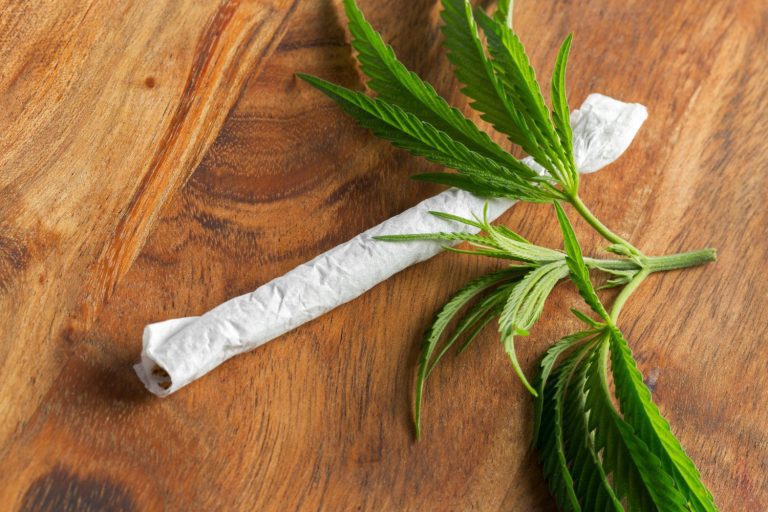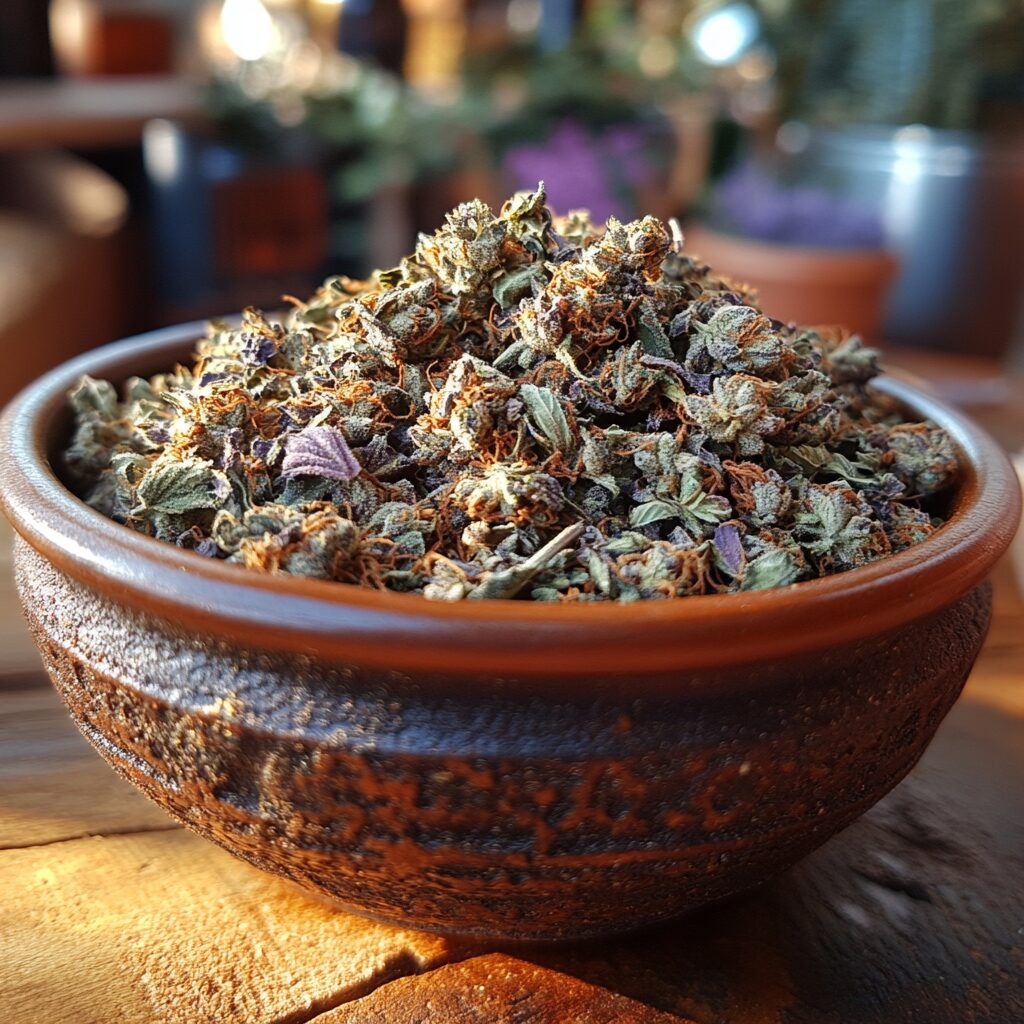

What can you combine herb/cannabis with instead of tobacco? What can you substitute for it in a joint?
The best herbal substitutes for tobacco in a joint: mullein, lavender, chamomile, lemon balm, damiana. 50% less desire to quit (Hindocha 2015). No nicotine, no tar.
Key information
- Short answer: the best herbal substitutes for tobacco in a joint are lemon balm, lavender, peppermint, mullein, chamomile, damiana, and raspberry leaves. They provide their own aromatic profile and contain no nicotine.
- Benefits: no addictive nicotine, no tar from tobacco leaves, milder smoke, and a unique terpene profile that enhances the entourage effect of CBD flower.
- Cons: a joint burns faster and less evenly, requiring more hemp flower, resulting in a shorter session compared to a classic spliff.
- Data: people who smoke cannabis with tobacco are about 50% less likely to attempt to quit compared to those who smoke only the flower (Hindocha et al., Frontiers in Psychiatry, 2015).
- A safer alternative: a dry herb vaporizer reduces the number of toxic combustion products by about 62% compared to smoking (Earleywine and Smucker Barnwell, Harm Reduction Journal, 2007).
- Legal status in Poland: THC flower is illegal (The Act of July 29, 2005, on Counteracting Drug Addiction), CBD <0.3% THC and OTC herbs are legal.
The classic European spliff, a mixture of hemp flower and tobacco, has been the default way of smoking for decades. The problem is that tobacco is the most addictive component of this mixture, and it is tobacco, not cannabis, that most often "tightens the grip" on the smoker's health. Data from the study Hindocha et al. published in Frontiers in Psychiatry (2015) show that 80.8% of European cannabis smokers mix it with tobacco, while in the USA and New Zealand, this percentage is only about 20%. As more and more people in Poland reach for legal CBD flower, it is worth knowing what to sensibly replace tobacco with to maintain the smoking ritual while reducing harm.
Why replace tobacco in a joint at all?
Tobacco is a leaf Nicotiana tabacum that contains nicotine, an alkaloid with one of the highest addictive potentials among legal substances. According to the analysis by Hindocha et al. (2015), cannabis smokers who mix flower with tobacco are about 50% less likely to attempt to quit smoking than those who smoke only the flower. A spliff thus reinforces two habits at once.
Nicotine, tar, and smoke, that is, what you inhale into your lungs
A tobacco leaf releases over 7000 chemical compounds when burned, of which at least 70 are recognized as carcinogenic by the American CDC. Tobacco smoke itself contains carbon monoxide, formaldehyde, benzene, acrolein, and tobacco-specific nitrosamines (TSNA). The latter are formed already during the drying stage of the leaf and are not present in the cannabis plant.
An important nuance: the study Tashkin et al. (Chest, 2002) showed that smoke from pure cannabis flower contains similar amounts of tar as tobacco smoke per gram, but cannabis smokers generally inhale significantly smaller masses of plant material daily. It is the addition of tobacco that increases exposure to tar and significantly prolongs the time of inhaling smoke.
What is the difference between the flower alone and a spliff with tobacco?
A classic review by Voirin et al. published in Cancer Causes & Control (2008) indicated that simultaneous smoking of cannabis and tobacco is associated with significantly higher lung cancer risk in young adults than smoking marijuana alone. Studies on a group of 79 cases vs 324 controls suggested that the risk increases non-linearly with the number of "joint-years".
The practical conclusion is this: most of the "negative health effects of smoking grass" that are commonly blamed on cannabis are actually the result of added tobacco. This distinction is crucial when choosing a consumption style.
According to the study by Hindocha et al. (Frontiers in Psychiatry, 2015), 80.8% of European cannabis smokers mix it with tobacco, and those using this mixture are about 50% less likely to attempt to quit smoking than smokers of pure cannabis flower.
What herbs can be smoked instead of tobacco?
The most commonly recommended tobacco substitutes are mullein, damiana, lavender, chamomile, lemon balm, peppermint, raspberry leaves, and wild lettuce. Each of these plants has a different terpene profile and varying supportive effects. According to the critical review by WHO ECDD (2018), pure CBD in doses up to 1500 mg/day is well tolerated, so combinations of CBD flower with neutral herbs are pharmacologically predictable.
1. Mullein (Verbascum thapsus), a neutral base for a spliff
Mullein is the first choice if you are looking for a true "filler" in the style of tobacco. It has a neutral taste, contains no caffeine, valerian acid, or psychoactive compounds. Its leaves contain saponins and plant mucilage, which have historically been used in folk medicine for respiratory ailments. The smoke is soft and almost tasteless, so mullein does not overpower the terpene profile of the hemp flower.
In practice, in Polish herbal shops, mullein is still easily available as "mullein flower for tea", but shredded leaves work better for smoking. Most ready-made herbal blends in Europe have mullein as 30-50% of the composition.
2. Damiana (Turnera diffusa), mildly euphoric
Damiana is a plant native to Mexico, popular in Dutch coffee shops as an ingredient in spliffs. It contains apigenin, arbutin, and flavonoids with mild anxiolytic effects. When burned, it gives a sweet, spicy aroma and is described as gently uplifting. Animal studies have shown aphrodisiac effects, but evidence in humans is limited.
3. Common chamomile (Matricaria chamomilla), a soothing partner for CBD
Chamomile contains apigenin, which binds to GABA-A receptors and exhibits calming effects. As an addition to a joint with CBD flower, it enhances the subjective feeling of relaxation. The taste is mildly sweet and floral, and the smoke is gentle. Chamomile is also one of the safest plants in terms of allergy profile, although those allergic to Asteraceae (e.g., ragweed) should exercise caution.
4. Lavender (Lavandula angustifolia), linalool terpene
Lavender contains linalool and linalyl acetate, two terpenes also present in many cannabis strains. For this reason, smoking lavender with CBD flower provides a consistent aromatic profile and may enhance the entourage effect. Linalool has shown anxiolytic effects comparable to low doses of benzodiazepines in clinical studies, although with significantly lower intensity.
5. Lemon balm (Melissa officinalis), herbal xanax
Lemon balm contains rosmarinic acid and lemon-citrus terpenes. In meta-analyses from 2010-2020, it showed moderate anxiety-reducing and sleep-improving effects. When smoked, it has a lemon-green aroma and very mild smoke. It is a good choice for those who want an evening spliff "to calm down", not for partying.
6. Peppermint (Mentha piperita), refreshing
Peppermint contains menthol, which cools TRPM8 receptors in the respiratory tract and gives a subjective feeling of freshness. However, it should be used sparingly, as it dominates in flavor and can mask the profile of cannabis flower. Optimal proportions are 5-15% peppermint in the mix, never more.
7. Wild lettuce (Lactuca virosa), an option for sleep
Wild lettuce, despite its name, is a legal plant traditionally used as a mild sedative. It contains lactucarium and lactucopicrin, alkaloids with calming effects. When burned, it produces a bitter, herbal smoke and significantly enhances the feeling of drowsiness. It is not an addition for everyone, but for those with insomnia, it can be more effective than lavender.
8. Raspberry leaves (Rubus idaeus), a cheap base
Raspberry leaves are one of the cheapest and most readily available herbal bases in Poland. The taste is neutral, slightly tea-like, and the smoke is mild. They contain fragarin, a compound traditionally used in folk medicine. They work great as a 30-40% filler in a mix if you want to extend the duration of a joint without adding mullein.
9. Rosehip, hibiscus, nettle, i.e., tea-like threads
Wild rose, hibiscus, and dried nettle are additives that bring acidity, color, and delicate fruity notes to the blend. In practice, they are mainly used in "tea blend smoke" mixtures, in proportions of 5-10%. Nettle is rich in chlorophyll and gives a very "green" taste, while hibiscus adds tartness.
10. The myth of "hospital marijuana"
In Polish online groups, there is a myth that one can smoke "hospital marijuana root" as a legal substitute for THC. This is a misunderstanding: there is no botanically distinct "hospital marijuana" in Poland, and any flower Cannabis sativa with THC above 0.3% is subject to the anti-drug law regardless of which part of the plant is smoked. Cannabis roots do not contain significant amounts of cannabinoids at all. This is a myth that should be left behind.
The critical review by WHO ECDD (2018) confirmed that pure CBD is well tolerated in doses up to 1500 mg per day and does not show addictive potential. Combining CBD flower with neutral herbs, such as mullein or raspberry leaves, maintains this pharmacological safety profile.
Ready-made herbal blends, or what to buy instead of composing your own?
There are at least a dozen brands of ready-made herbal smoking blends available on the European market. According to data from Earleywine and Smucker Barnwell (Harm Reduction Journal, 2007), toxicity reduction is possible not only by changing ingredients but also by changing the method of consumption. Ready-made blends are a convenient entry point.
RealLeaf, a classic from the Netherlands
RealLeaf is a Dutch brand that was the first to popularize "tobacco-free" blends in European coffee shops. It is based on raspberry leaves, lightly flavored with natural oils. It burns evenly, has a neutral taste, and is one of the most recommended blends for beginners.
King Palm and "all natural" blends
King Palm initially specialized in rolling papers made from cordia palm leaves, later introducing a line of herbal smoking blends. The composition typically relies on mullein and damiana, sometimes with additions of mint or lavender.
Ecstasy Plants, Spliffin, and Polish brands
Ecstasy Plants and Spliffin are brands mainly present in online stores, offering "smoke blend" mixtures in packages of 20-40 g. In Poland, more and more small herbal brands (e.g., Pol-Packs and similar local initiatives) are introducing their own compositions, often certified as food or herbs for tea, but also suitable for rolling.
What to pay attention to when choosing a ready-made blend?
- 100% natural composition, without the addition of synthetic flavors, propylene glycol, or preservatives.
- BIO/ECO certificate or declaration as a guarantee of no pesticides.
- Moisture 10-12%, so that the blend burns evenly and does not fall apart in the paper.
- Expiration date, as dried herbs lose terpenes and aroma over time.
- A clear list of ingredients in order of highest percentage content.
How to compose your own blend with cannabis and herbs?
The most commonly recommended proportions are 50/50 herb/cannabis for beginners or 30/70 for those who value intensity. According to informal surveys among users of European harm reduction forums, about 65% of herbal spliff smokers use proportions in the range of 40-60% cannabis flower. The choice of proportions changes the strength, smoking time, and flavor of the final roll.
Step 1: Choose a base
The base should consist of a herb with a neutral taste, such as mullein, raspberry leaves, or damiana. You should dose the base in the largest amount, usually 40-60% of the blend (not counting the hemp material). It is responsible for the structure of the "pull" and the burning rate.
Step 2: Add an aromatic ingredient
The second ingredient is a flavor "accent," such as lavender, chamomile, mint, or lemon balm. Dose it in an amount of 10-25% of the blend. It's important not to add more than two accents at once, as the aromatic profile can clash and become "perfumey."
Step 3: Mix with cannabis flower
Add cannabis flower in a 50/50 ratio (classic herbal spliff), 30/70 with an emphasis on cannabis (for a strong effect), or 70/30 with an emphasis on herbs (if you want to save cannabis or use it therapeutically in microdoses).
Sample ready-made recipes
| Name | Composition | Profile | Time of day |
|---|---|---|---|
| Classic evening | 50% CBD flower, 30% chamomile, 15% lavender, 5% mint | Relaxation, sleep | Evening |
| Dutch spliff | 50% CBD flower, 30% damiana, 20% mullein | Mild euphoria | Afternoon |
| Anti-stress | 40% CBD flower, 30% lemon balm, 20% chamomile, 10% lavender | Anxiolytic | After work |
| Light day | 30% CBD flower, 50% raspberry leaves, 15% mint, 5% hibiscus | Refreshing | Day |
| Deep sleep | 40% CBD flower, 30% wild lettuce, 20% lavender, 10% lemon balm | Sedation | Night |
Our observations of customer preferences in the store indicate that the most frequently repeated request is for "something mild for sleep without tobacco" (about 38% of inquiries in this category) and "daily spliff for concentration without nicotine" (about 22% of inquiries).
The impact of herbs on the smoking method
A herbal spliff smokes differently than a classic tobacco one. Cannabis flower burns quickly and unevenly on its own, so the addition of herbs with higher moisture (e.g., mullein, raspberry leaves) slows down combustion and provides a more even pull. The optimal moisture of the blend is 10-12%; drier will fall apart, and wetter will not hold the ember.
guide on rolling papers and filters
Is a vaporizer a better choice than a herbal spliff?
Yes, a dry herb vaporizer is a safer alternative to any kind of smoking. A classic study Earleywine and Smucker Barnwell (Harm Reduction Journal, 2007) showed that people switching from smoking to vaporization reported 62% fewer respiratory symptoms (cough, wheezing, phlegm). This is the greatest single health gain that a cannabis smoker can achieve.
How does a vaporizer work?
A vaporizer heats the flower to a temperature of 180-220°C, which is below the combustion temperature (about 230°C). This allows terpenes and cannabinoids to be released, but does not produce pyrolysis products: tar, carbon monoxide, benzene, and other carcinogens. It is exactly the same flower, but without smoke.
Can herbs also be used in a vaporizer?
Yes, most of the herbs described in this article (lavender, mint, lemon balm, chamomile, mullein) can be vaporized, but optimal temperatures are lower than for cannabis flower, usually 130-180°C. Some vaporizers allow precise temperature settings, enabling experiments with pure herbs or blends.
It often escapes smokers that the greatest harm reduction does not come from switching from tobacco to herbs, but from changing the method of consumption from combustion to vaporization. A herbal spliff is an intermediate step, but vaporizing pure CBD flower is the ultimate goal from a lung health perspective.
According to the study by Earleywine and Smucker Barnwell (Harm Reduction Journal, 2007), users of cannabis dry herb vaporizers reported about 62% fewer respiratory symptoms (cough, wheezing, phlegm) compared to those smoking only the flower, which represents the largest identified single gain from harm reduction among cannabis smokers.
What are the risks of smoking herbs instead of tobacco?
Smoking any plant material is not neutral for health. According to data Tashkin et al. (Chest, 2002), smoke from any burned plant material contains PM2.5 particles that penetrate deeply into the lung alveoli. Herbs are no exception, although their toxicological profile is significantly more favorable than that of tobacco.
Allergies and intolerances
The most common risk is an allergic reaction. Chamomile, lavender, and catnip belong to the Asteraceae or Lamiaceae families, to which about 5-10% of the European population is allergic. Symptoms include throat itching, tearing, wheezing, and asthma attacks. If you have previously had hay fever or pollen allergies, start with a test using a very small amount.
Pesticides and contaminants
Herbs sold as "for tea" may contain pesticide residues permissible for consumption but not tested for toxicity after burning. Burning pesticides often releases completely different breakdown products than oral consumption. Choose herbs with a BIO/organic certificate as a basic precaution.
Mold and heavy metals
Improperly dried herbs may contain molds of the genus Aspergillus, whose spores are particularly dangerous for immunocompromised individuals. Additionally, certain herbs (e.g., particularly nettle) can accumulate heavy metals from the soil. A verified supplier with laboratory analyses is essential.
Pharmacological interactions
Some herbs may interact with medications. Lavender and lemon balm can enhance the effects of sedatives and antidepressants. Damiana affects sugar metabolism and may be problematic for diabetics. Wild lettuce combined with benzodiazepines can cause significant sedation. Consult your doctor if you are taking medications regularly.
What is the legal status of herbs, CBD, and THC in Poland?
In Poland, the legal status of these substances is clearly divided. According to the Act of July 29, 2005 on counteracting drug addiction, hemp flower with THC content above 0,3% is a controlled substance. CBD flower below this threshold, OTC herbs, and herbal blends are legal for trade.
THC flower, or what is illegal?
Possession, cultivation, trade, and processing of cannabis with THC above 0.3% are illegal in Poland. An exception is medical marijuana by prescription, available in pharmacies since 2017. Standard "market" cannabis remains subject to statutory regulation. This article does not encourage illegal consumption of THC.
CBD flower, or what is legal?
Hemp flower (Cannabis sativa L.) with THC content below 0.3% is legal for trade as a collector's item or for technical applications (aromatherapy, cosmetics). Online and stationary sales are permitted, although trade "for smoking" remains in a regulatory gray area.
Herbs for smoking, or what about blends?
All the mentioned herbs (mullein, damiana, lavender, chamomile, lemon balm, mint, poisonous lettuce, raspberry leaves) are legal and widely available in Poland as food or tea ingredients. The sale of "smoke blend" is legal as long as it does not contain controlled substances.
Legal and health disclaimer: in Poland, possession and consumption of marijuana with THC above 0.3% is illegal (Act of July 29, 2005 on counteracting drug addiction). CBD flower below this threshold and OTC herbs are legal. Smoking anything always burdens the lungs; a vaporizer is the preferred method of harm reduction. Herbs can cause allergies and interact with medications. Consult your doctor, especially if you are pregnant, breastfeeding, or taking medications regularly.
Featured products
If you are looking for CBD flower as a legal, tobacco-free alternative for your herbal blends, below are some proven products available in Poland. All have been selected for their terpene profiles that pair well with the herbs described in the article.
SOOL CBD Oil 5%
Price: 76 PLN
A mild 5% CBD oil with a broad spectrum of cannabinoids, ideal as a complement to an evening ritual with chamomile or lemon balm tea. 5% is a good concentration for those starting their journey with CBD.
SOOL CBD Oil 10%
Price: 99 PLN
A stronger version of SOOL oil with 10% full-spectrum CBD. Recommended for those with more experience, as support for evening relaxation together with lavender or lemon balm.
Cannova CBG Oil 15%
Price: 240 PLN
CBG (cannabigerol) oil 15%, a cannabinoid with a different action profile than CBD. Often chosen as part of a daily routine for concentration, it pairs well with mint and hibiscus.
Mars Dry CBD 9%
Price: 59 PLN
CBD hemp flower 9% with an intense terpene profile, great base for blends with mullein and damiana. Recommended for vaporization as the preferred method of consumption.
FAQ, or frequently asked questions about smoking herbs instead of tobacco
Is smoking herbs instead of tobacco healthier?
Yes, but only relatively. Eliminating tobacco removes nicotine and tobacco-specific nitrosamines (TSNA), which significantly reduces the risk of addiction and some cancers. According to Hindocha et al. (2015), cannabis smokers without tobacco are 50% more likely to attempt to reduce smoking. However, the smoke from herbs still burdens the lungs.
What to combine CBD flower with instead of tobacco to achieve a relaxing effect?
The best relaxing combinations are CBD flower with lavender, lemon balm, or chamomile in proportions of 50/50 or 60/40 in favor of cannabis. Lavender provides linalool, lemon balm rosmarinic acid, and chamomile apigenin. All three herbs synergize with the entourage effect of CBD and are safe for those without allergies to Asteraceae plants.
Can I smoke pure herbal tobacco without cannabis?
Yes, it is legal and often used by people quitting traditional tobacco. Herbal blends without cannabis (such as RealLeaf, Honeyrose) contain, for example, mullein, raspberry leaves, and lavender. They help in the "smoking ritual" without nicotine. However, the effectiveness of quitting smoking is limited, as the habit remains.
What herbs are not suitable for smoking?
Avoid herbs with high essential oil content (e.g., thyme, oregano, nutmeg), as they produce irritating smoke and may contain neurotoxic compounds when burned. Also, do not smoke herbs collected from roadside or unknown sources due to the risk of contamination with heavy metals and pesticides.
Is a vaporizer a better option than a herbal spliff?
Yes, a cannabis dry herb vaporizer is the best change from a lung health perspective. Earleywine and Smucker Barnwell (2007) showed a 62% reduction in respiratory symptoms among those transitioning from smoking to vaporization. Most herbs can also be vaporized, although at lower temperatures (130-180°C) than cannabis flower.
Is CBD flower with THC below 0.3% legal in Poland?
Yes, hemp flower (Cannabis sativa L.) with THC content below 0.3% is legal for trade in Poland according to the Act of July 29, 2005 on counteracting drug addiction. It is usually sold as a collectible product or for aromatherapy. WHO ECDD confirms good tolerance of CBD even in high doses.
Can I be allergic to herbs in the blend?
Yes, allergies to Asteraceae (chamomile, catnip) and Lamiaceae (lavender, lemon balm, mint) affect about 5-10% of the population. Initial symptoms include throat itching, tearing, and coughing. If you have hay fever or pollen allergies, start with a test using a very small amount and observe the reaction for 24 hours before regular use.
What are the optimal herb/cannabis proportions?
The most commonly recommended ratios are 50/50 for beginners and 30/70 (with a cannabis advantage) for those who appreciate intensity. A 70/30 ratio with an herb advantage is used in so-called "micro-spliffs" for concentration during the day. In practice, about 65% of European smokers maintain ratios in the range of 40-60% of hemp material.
Can I add CBD oil to a ready-made herbal spliff?
It is not recommended. CBD oil contains fats and emulsifiers that release harmful aldehydes when burned. CBD oil works best sublingually or orally. If you want to enhance the effect of CBD in a spliff, add more CBD flower to the mix and take the CBD oil separately 30 minutes beforehand.
Where to buy herbs for smoking in Poland?
Herbs for smoking can be purchased in herbal shops, online stores with hemp products (like u Bucha), and organic markets. Choose herbs with a BIO/ECO certificate and a clear description of origin. Avoid synthetically flavored products, those of unknown origin, or without an expiration date.
Summary, what to take away from the article?
If you are already smoking spliffs with tobacco, replacing tobacco with an herbal blend like mullein, lavender, chamomile, or damiana is a real harm reduction. You eliminate nicotine, tobacco-specific tar, and significantly reduce the risk of addiction. According to Hindocha et al. (2015), cannabis smokers without tobacco are 50% more likely to attempt to reduce smoking.
On the other hand, smoking anything is not healthy. The most significant change is switching to a vaporizer, which according to Earleywine (2007) provides a 62% reduction in respiratory symptoms. Treat herbal spliffs as a pleasant ritual, but don't deceive yourself into thinking they are "healthy." In the context of Polish law, THC flower remains illegal, while CBD flower and OTC herbs are allowed, and CBD, even in high doses, is well tolerated (WHO ECDD, 2018).
Experiment with proportions, start with 50/50, use certified herbs, and always remember that vaporization is the optimal goal from a lung health perspective.
guide on desktop and portable vaporizers
Author: Michał Waluk, editorial team at u Bucha. The content is for informational purposes and does not replace medical advice.