
Saffron for depression and mood: what studies say and how to dose the extract
Saffron properties – crocin, crocetin, safranal. 30 mg/d equivalent to SSRIs in mild depression (Akhondzadeh 2005, 2007). Dosage, safety, and warnings. Guide 2026.
Saffron is the most expensive spice in the world - and one of the most interestingly studied plants regarding depression. Several RCTs have shown that saffron extract at a dose of 30 mg/day yields results comparable to fluoxetine (Prozac) and imipramine in mild to moderate depression. This finding has generated significant interest from both the media and researchers, but requires context: the studies were small, short, and conducted in Iran, where saffron is a local plant. This article analyzes what we really know, for whom saffron may be an option, and - equally importantly - when it should absolutely not replace psychiatric treatment.
KEY INFORMATION
• Akhondzadeh et al. (Phytomedicine, 2007) demonstrated that saffron 30 mg/day after 6 weeks yielded results equivalent to fluoxetine 20 mg/day on the HAM-D scale in mild depression in an RCT n=40.
• Active ingredients: crocin and crocetin (serotonin/dopamine reuptake inhibition), safranal (GABAergic, anxiolytic, sedative).
• Dawkowanie: 30 mg/d standaryzowanego ekstraktu (15 mg rano + 15 mg wieczorem) przez minimum 6-8 tygodni.
• Absolute contraindication: pregnancy - saffron is an emmenagogue and may induce uterine contractions and miscarriage.
What is saffron and where does its action come from?
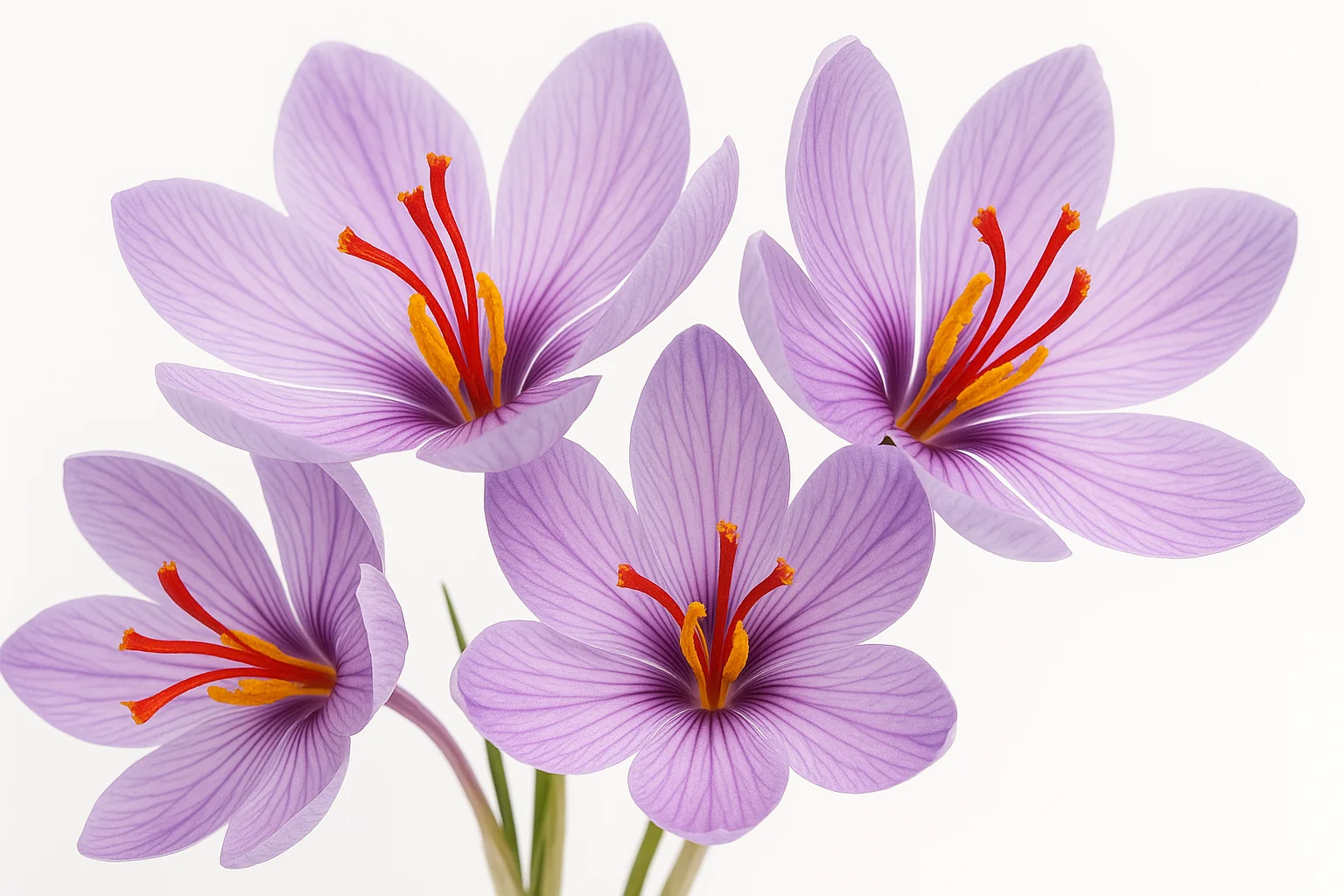
Saffron comes from the stigmas of the flowers of Crocus sativus - the saffron crocus. Each flower produces only 3 stigmas harvested by hand, which explains the price: 1 gram of saffron requires the collection of 150-200 flowers. Major cultivations: Iran (90% of global production), Spain, India, and Kashmir. The stigmas are dried - this form contains the pharmacologically active ingredients.
Crocin and crocetin (diglucoside of crocetin) are water-soluble carotenoids responsible for the intense yellow color of saffron. Crocetin crosses the blood-brain barrier due to its small molecular weight. Safranal (a component of the essential oil) is a monoterpene aldehyde responsible for the characteristic aroma of saffron and its action on the CNS. Picrocrocin (glucoside of safranal) gives a bitter taste.
Why do these compounds work on depression? Crocin and crocetin inhibit the reuptake of serotonin, dopamine, and norepinephrine - a mechanism similar to SSRIs/SNRIs. Safranal modulates GABA-A receptors and exhibits anxiolytic effects. Together, saffron addresses both depressive components (serotonin/dopamine) and anxiety components (GABA), which may explain its effectiveness in often co-occurring anxiety-depressive disorder.
Badania kliniczne - szafran vs SSRI przy depresji
A series of studies conducted by Akhondzadeh and colleagues from Tehran University of Medical Sciences provided key clinical data. Akhondzadeh et al. (Journal of Ethnopharmacology, 2005) In a randomized, double-blind RCT with 40 patients suffering from mild to moderate depression (MDD), they compared saffron 30 mg/d with imipramine 100 mg/d over 6 weeks. Result on the HAM-D scale: comparable antidepressant effect with significantly fewer side effects (saffron) - particularly less dry mouth and sedation.
Akhondzadeh et al. (Phytomedicine, 2007) They compared saffron 30 mg/d with fluoxetine 20 mg/d in 40 patients over 8 weeks. Result: comparable efficacy on the HAM-D and CGI-S scales, with a significant difference - saffron caused fewer sexual dysfunctions (less libido and orgasm disorders) than fluoxetine. This is an important clinical difference, as sexual disorders are one of the main reasons for discontinuing SSRI treatment.
Meta-analyses of saffron - a broader picture
Hausenblas et al. (Journal of Integrative Medicine, 2015) They conducted a meta-analysis of 12 RCTs with a total of 604 participants evaluating saffron for depression, anxiety, and PMS. Results: saffron significantly reduced symptoms of depression and anxiety vs placebo (moderate effect, Cohen's d ~0.54). No significant differences vs active comparators (SSRIs, TCAs) in mild depression. However, the authors noted limitations: small sample sizes, short observation periods (6-8 weeks), and most studies from a single center in Iran - which increases the risk of publication bias.
Important methodological context: none of these studies had sufficient statistical power to exclude differences. Equivalence (non-inferiority) to fluoxetine with n=40 is weak evidence - it could have been a random observation. Larger, independent RCTs (especially outside Iran) are necessary to confirm clinical significance. Nevertheless, the direction of the effect is consistent across many studies.
Saffron dosing - how to use it safely?
The effective and safe dose of saffron extract is 30 mg/d - this is the dose used in all cited clinical studies. Dosing schedule: 15 mg in the morning and 15 mg in the evening (or 30 mg at once, although splitting into two doses is preferred for more stable blood concentrations).
Culinary saffron vs extract: 30 mg of extract corresponds to about 0.5 g (500 mg) of dried saffron stigmas. This is a larger amount than used in cooking - hence, supplementation with standardized extract is more convenient, cheaper, and provides predictable concentrations of crocin and safranal regardless of the batch of raw material. The extract should be standardized for safranal content (2-3%) and crocin (>2%).
Time to effect: 4-6 weeks of regular use, similar to SSRIs - neuroplasticity and neurotransmitter regulation take time. Do not expect results after a week. If there is no clear improvement after 8 weeks - consult a psychiatrist. In cases of even mild depression, self-treatment with herbs should not replace specialist assessment and diagnostics.
Our observations: Saffron as a supplement is an interesting option for individuals with mild depression who want to avoid SSRIs due to concerns about sexual dysfunction - one of the most common reasons for discontinuing pharmacotherapy. The effect on libido is a clinically documented advantage of saffron over fluoxetine. However, in cases of moderate to severe depression, active suicidal thoughts, or previous episodes of depression, saffron is not an appropriate therapeutic option - psychiatric consultation is necessary.
Szafran a depresja poporodowa i inne stany nastroju
Beyond classical major depression (MDD) and PMS, saffron is being studied for several other mood-related indications. Postpartum depression affects 10-15% of women after childbirth and is often undertreated. Kashani et al. (Phytotherapy Research, 2022) They conducted a pilot study with 60 women with mild postpartum depression - saffron 30 mg/d for 6 weeks was comparable to sertraline 50 mg/d in reducing symptoms. Important: the study included non-pregnant women (postpartum), breastfeeding - during breastfeeding, saffron in therapeutic doses is not recommended without medical consultation, as there is insufficient safety data for lactation.
Saffron also exhibits neuroprotective effects: crocin crossing the blood-brain barrier shows protective effects against the neurotoxic influence of amyloid beta in in vitro studies and animal models. In the context of Alzheimer's disease, a preliminary clinical study (Akhondzadeh et al., 2010) with 46 patients with mild Alzheimer's dementia showed that saffron 30 mg/d for 16 weeks demonstrated comparable efficacy to donepezil 10 mg/d in cognitive tests ADAS-cog and CDR, with fewer gastrointestinal side effects. These are preliminary and require replication data, but the direction of research is promising.
Depression in older adults is another area of interest - in this population, SSRIs more frequently cause hyponatremia and falls, so a safer alternative is particularly desirable. Available studies involving older participants yield consistent results with the general population at saffron 30 mg/d.
Szafran w codziennej diecie - kulinarny vs suplementy
Culinary saffron (a few threads for risotto, paella, or tea) provides minimal amounts of active ingredients - far below the therapeutic dose of 30 mg of extract. A typical dish with saffron contains 0.05-0.1 g of stigmas, which corresponds to 3-6 mg of extract - the pharmacological effect is marginal. Culinary consumption is safe during pregnancy (a few threads), while therapeutic supplements are not.
Saffron tea (4-6 threads per cup of hot water) may provide a subtle relaxing effect and mood improvement - especially if consumed regularly as a ritual. Crocin extracts well into water (which explains the yellow color of the tea). However, the effects will be weaker than with standardized extract in capsules.
When choosing a supplement: look for products with a declaration of standardization for safranal content (≥2%) and crocin (≥2%). Avoid products described only as "saffron powder" - they have unknown, variable concentrations of active ingredients. Cycle duration: 8-12 weeks, after which effects should be assessed by a doctor or psychiatrist.
Saffron for PMS and premenstrual mood
In addition to depression, saffron has shown effects in premenstrual syndrome (PMS). Agha-Hosseini et al. (BJOG, 2008) They conducted an RCT with 50 women with clinical PMS symptoms. Saffron 30 mg/d for 2 menstrual cycles significantly reduced PMS symptoms on the DRSP (Daily Record of Severity of Problems) scale vs placebo - including irritability, premenstrual depression, and pain. Response rate: 75% in the saffron group vs 8% in the placebo group.
Mechanism: crocin modulates estrogen receptors and affects serotonin metabolism, which is particularly important in the luteal phase (after ovulation), when changes in progesterone and estradiol levels destabilize mood in women with PMS. Saffron may be an option for women with PMS who do not wish to use oral contraceptives (often recommended for severe PMS) or SSRIs.
Saffron and memory, concentration, and neuroprotection
In addition to its effects on mood, saffron is being studied as a potential neuroprotective and nootropic agent. Crocetin, due to its small molecular weight, effectively crosses the blood-brain barrier and can directly affect neurons. In animal models, crocetin has shown effects against beta-amyloid deposition and protection of hippocampal neurons from oxidative stress.
In healthy adults, saffron may improve working memory and information processing speed. Lopresti et al. (Journal of Clinical Medicine, 2019) In a randomized study with 80 adults (ages 35-65) with subjective memory complaints, they found that saffron 28 mg/d for 16 weeks significantly improved working memory (WMS-IV) and composite memory score vs placebo. The effects were moderate but statistically significant and clinically noticeable by participants.
Safranal - besides its anxiolytic effect - shows neuroprotective action in laboratory models by inducing antioxidant enzymes (SOD, CAT, GPx) and inhibiting microglial activation (neuroinflammation). The neurological action of saffron may be particularly relevant in depression with an inflammatory component (depression as neuroinflammatory disease) - a new trend in biological psychiatry.
Safety of saffron - warnings and interactions
Saffron in therapeutic doses (30 mg/d extract) is well tolerated by most healthy adults who are not pregnant. Possible side effects at standard dosing: dry mouth, mild drowsiness, nausea - usually transient after the first week of use. At doses >60 mg/d: intensified headaches, anxiety, nausea, and vomiting. Raw saffron herb in amounts >5 g/d can be toxic: cases of hemorrhagic bleeding from mucous membranes, thrombocytopenia, and hepatotoxicity with elevated liver enzymes have been reported.
Pregnancy - absolute contraindication: Saffron is an emmenagogue - it stimulates uterine contractions and may lead to miscarriage or premature birth. Women of childbearing age using saffron should employ effective contraception. If there is any possibility of pregnancy, discontinue saffron use.
Drug interactions: Saffron may enhance the effects of antidepressants (SSRIs, SNRIs, TCAs) - there is a risk of serotonin syndrome when combined. In psychiatric pharmacotherapy, saffron should be used ONLY under psychiatric supervision. It may also enhance the effects of antihypertensive medications and lower blood pressure.
Check lavender as a safer option for mild anxiety and stress
Frequently Asked Questions
Below you will find answers to the most frequently asked questions regarding saffron as a supplement for depression and mood.
Which saffron components are responsible for antidepressant effects?
Three main active ingredients: crocin and crocetin (inhibiting the reuptake of serotonin and dopamine - a mechanism like SSRIs/SNRIs) and safranal (GABAergic and anxiolytic effects). Together, they create an activity profile addressing both depressive and anxiety components, with fewer side effects on the sexual sphere than fluoxetine.
What is the dosage of saffron for depression?
30 mg/d of standardized extract (15 mg in the morning + 15 mg in the evening). Effects accumulate over 6-8 weeks. Do not exceed 30 mg/d - higher doses do not provide better clinical effects, and doses >5 g of raw herb daily can be toxic. Use standardized extract, not culinary saffron powder.
Czy szafran jest tak samo skuteczny jak SSRI?
In small RCTs, Akhondzadeh et al. (2005, 2007) found saffron 30 mg/d to have comparable efficacy to imipramine 100 mg/d and fluoxetine 20 mg/d in mild depression after 6-8 weeks. Meta-analysis by Hausenblas (2015) confirmed the effect. However, the studies were small (n=40), short, and from a single center - requiring confirmation in larger trials.
Can saffron be taken during pregnancy?
No - this is an absolute contraindication. Saffron stimulates uterine contractions (emmenagogic effect) and can lead to miscarriage. Pregnant women should not use saffron in any therapeutic doses. Using it as a culinary spice (a few threads in a dish) is considered safe.
How does saffron affect mood and PMS symptoms?
A study by Agha-Hosseini et al. (BJOG, 2008) involving 50 women showed that 30 mg/d of saffron over 2 cycles significantly reduced PMS symptoms (irritability, premenstrual depression, pain) compared to placebo - response rate 75% vs 8%. Mechanism: modulation of serotonin and estrogen receptors by crocin in the luteal phase.
Does saffron help with anxiety?
Safranal exhibits anxiolytic effects by modulating GABA-A and serotonin receptors. Clinical studies (Khaksarian et al., 2019) confirmed improvement in subjective anxiety symptoms compared to placebo in a randomized study. The effects are weaker than with specific anxiolytic medications such as benzodiazepines, but in anxiety accompanying mild depression, saffron may address both components simultaneously, without the addiction risk characteristic of benzodiazepines.
This article is for informational and educational purposes and does not constitute medical advice. Before starting to use cannabis or CBD for therapeutic purposes, consult a doctor, especially if you are taking other medications, are pregnant, or breastfeeding.
Author: Michał Waluk · Published: 2026-05-04 · Updated: 2026-05-04