
Protein cheesecake with hemp protein - a light dessert
Protein cheesecake with hemp protein – step-by-step recipe. A light dessert with high protein content, free from refined sugar. Ready in 60 minutes.
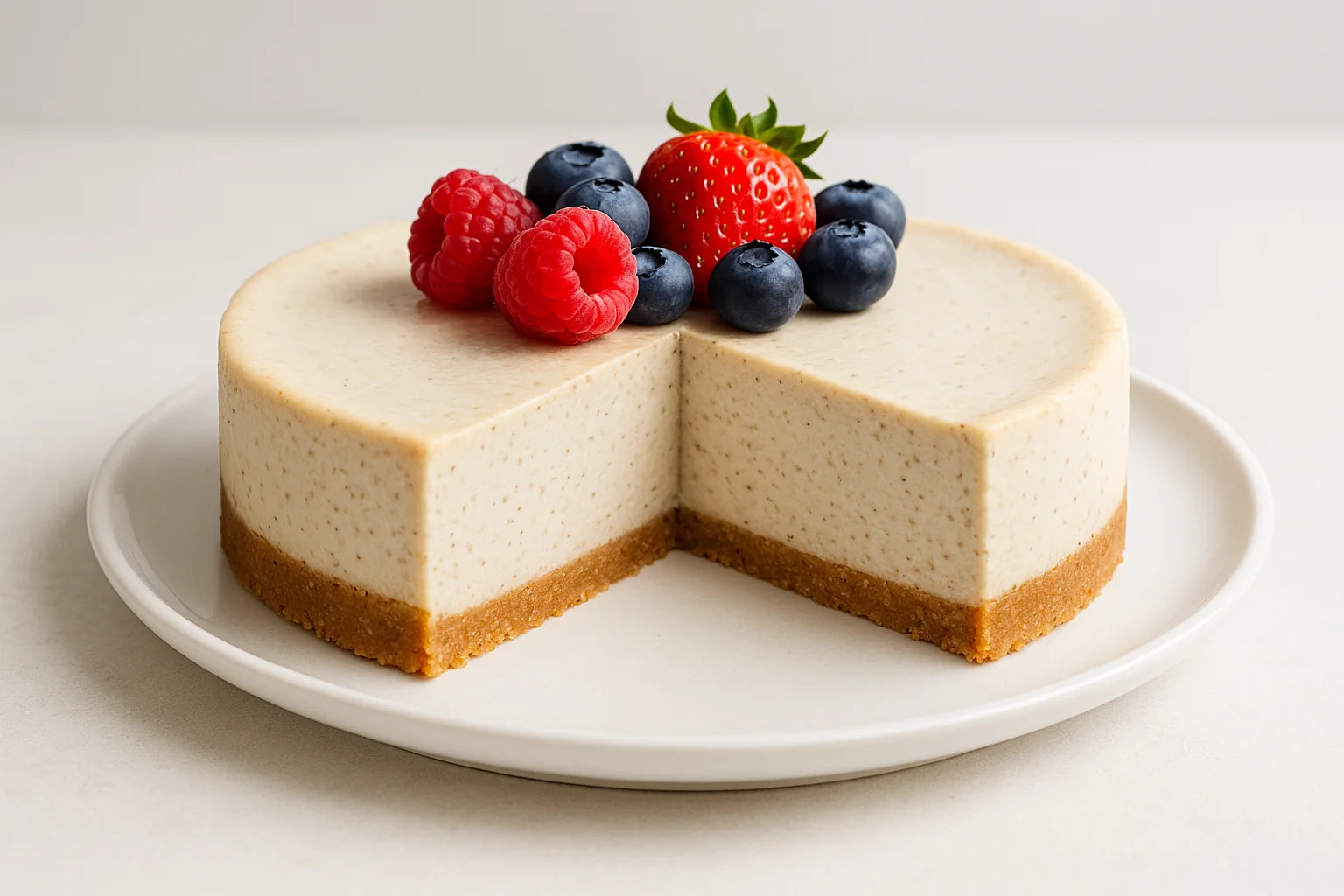
Protein cheesecake with hemp protein is a dessert that requires no compromise. Cottage cheese provides casein and whey, hemp protein brings edestin and albumins with a complete amino acid profile, and the whole has a distinctly higher protein content than a classic cheesecake - with similar caloric value and much less sugar. One serving provides about 12-14 g of protein. I will show you step by step how to bake a cheesecake that doesn't crack, has a creamy texture, and tastes like a regular dessert.
KEY INFORMATION
• Hemp protein contains about 50% edestin and 33% albumins - fractions that are well absorbed, especially after physical activity (Schuler et al., Nutrients, 2023).
• A 30 g serving of hemp protein powder: 15-18 g of protein, 5-7 g of fiber (USDA FoodData Central, 2023).
• The digestibility of hemp protein (PDCAAS about 0.63-0.66) is higher than that of pea protein (0.59) (Tang et al., Journal of Food Science, 2010).
• One serving of cheesecake (about 80 g): about 155 kcal, 12-14 g of protein, 6 g of fat, 11 g of carbohydrates.
What does hemp protein contribute to the cheesecake?
Hemp protein in the cheesecake enhances the protein profile - cottage cheese and eggs are already good sources of protein, but hemp protein complements them with edestin, a globulin very similar in structure to human blood immunoglobulins. Schuler et al. (Nutrients, 2023) they demonstrated that the edestin fraction is particularly metabolically active after physical exertion. Three tablespoons of hemp protein for the entire cheesecake (12 servings) is a discreet addition - each serving gains about 1.5 g of additional protein, but the cumulative effect throughout the day is real.
The taste of hemp protein in the cheesecake is surprisingly neutral with 3 tablespoons for the entire mixture. The earthy aftertaste, which is prominent in smoothies or protein bars, disappears behind the flavors of cottage cheese and vanilla. It is crucial not to exceed 3-4 tablespoons (about 25-30 g) for the entire cheesecake mixture - more gives a distinct grassy aftertaste and too dense a consistency. Hemp protein absorbs moisture from the cheesecake mixture, so the amount of liquid ingredients should also be increased proportionally - hence in the recipe below, honey is liquid, not in powdered sugar form.
Nutritional values - what does one serving provide?
One serving of cheesecake (about 80 g) provides about 150-160 kcal, 12-14 g of protein, 6 g of fat, and 11 g of carbohydrates. Fiber from hemp protein: about 1.5 g per serving. Compared to a classic cheesecake made with cream cheese and sugar (the same serving: about 200 kcal, 6 g of protein, 13 g of fat, 18 g of carbohydrates) - the hemp cheesecake has twice as much protein, less fat, and significantly less sugar. USDA FoodData Central (2023) confirms the nutritional values of hemp protein: 50-60% protein in dry matter with 5-7 g of fiber per 30 g serving.
Ingredients - what do you need?
- 500 g of semi-fat cottage cheese or ricotta (drained of excess whey)
- 3 tablespoons (about 25 g) of BIO hemp protein powder
- 2 medium-sized eggs
- 3 tablespoons of honey or agave syrup (or 4 tablespoons of erythritol)
- 1 teaspoon of vanilla extract
- a pinch of salt
- For the base: 120 g of oats (ground), 30 g of peanut butter, 2 tablespoons of honey, a pinch of salt
- optional: zest of half a lemon or lime, 100 g of fresh raspberries or blueberries for decoration
How to prepare protein cheesecake with hemp protein - step by step?
Preheat the oven to 160°C before starting (lower temperature than a classic cheesecake - hemp protein will harden at higher temperatures). Active working time: about 20 minutes, baking 40-45 minutes plus a minimum of 3 hours of cooling.
Step 1. Make the base. Grind the oats in a blender into flour. Mix with peanut butter, honey, and salt. The mixture should be sticky and moldable. Press it evenly into the bottom of a springform pan (24 cm). Chill in the refrigerator while preparing the filling.
Step 2. Prepare the cheesecake filling. Combine cottage cheese, hemp protein, eggs, honey, vanilla, and salt in a large bowl. Blend or mix with a hand mixer for 2-3 minutes until completely smooth. No lumps of hemp protein - lumps create hard, grainy spots in the finished cheesecake.
Step 3. Check the consistency. The mixture should flow slowly from the spoon - like thick Greek yogurt. If too runny: add a tablespoon of hemp protein and mix. If too thick: add a tablespoon of milk or yogurt. Taste - if not sweet enough, add a tablespoon of honey.
Step 4. Pour onto the base and bake. Pour the mixture onto the chilled base, smooth the surface. Bake at 160°C for 40-45 minutes. The cheesecake is ready when the edges are firm and slightly set, and the center wobbles gently when the pan is shaken - it should not move like liquid.
Step 5. Cool gradually. Turn off the oven and leave the cheesecake with the door ajar for 15 minutes. This is a key step to prevent cracks - sudden cooling pulls the outer layer. Remove, cool to room temperature (1 hour), then refrigerate for a minimum of 3 hours.
Tips and variations
The protein cheesecake with hemp protein is a flexible base for many flavor variations:
We noticed in tests that ricotta instead of cottage cheese gives a distinctly creamier cheesecake mixture, but requires longer cooling (4-5 hours in the refrigerator instead of 3 hours). Ricotta has more water than cottage cheese - the cheesecake may seem too soft when removed from the oven, but after a few hours of cooling, it becomes firm and smooth. Do not shorten the cooling time for the ricotta version.
Lemon version. Add the zest of 1 lemon and 2 tablespoons of lemon juice to the mixture. Reduce honey by a tablespoon - citrus adds natural acidity. This is a classic combination for cheesecakes made with cottage cheese, and lemon masks the earthy aftertaste of hemp protein very well.
Chocolate version. Add 2 tablespoons of raw cocoa to the cheesecake mixture and increase honey by a tablespoon (the bitterness of cocoa requires sweetening). The mixture will turn dark brown and resemble chocolate mousse. After baking and cooling, sprinkle with fresh raspberries - chocolate, hemp, and raspberries make a very good combination.
More dessert inspiration with hemp protein can be found in the article about baked donuts with hemp protein.
Frequently Asked Questions
How much protein does the protein cheesecake with hemp protein contain?
One serving (about 80 g) provides about 12-14 g of protein. A 30 g serving of hemp protein powder contains 15-18 g of protein (USDA FoodData Central, 2023). The total protein content in the cheesecake (12 servings) is about 140-160 g from three sources.
Can the cheesecake with hemp protein be made without baking?
Yes - replace the eggs with 2 tablespoons of gelatin or agar. The no-bake version is creamier. Hemp protein (PDCAAS about 0.63-0.66, Tang et al., Journal of Food Science, 2010) retains its full value without thermal processing.
How long should you store protein cheesecake?
In the refrigerator for up to 5 days. Frozen for up to 2 months - take it out 30 minutes before serving. Hemp protein contains about 50% edestin (Schuler et al., Nutrients, 2023) - a fraction that remains stable during freezing.
What can you substitute for cottage cheese in hemp cheesecake?
Ricotta (creamier), full-fat Philadelphia (thicker), cashew cream (vegan - cashews + lemon juice). Each substitute requires an adjustment of hemp protein and cooling time due to varying water content.
Why does protein cheesecake crack on top?
Too high baking temperature or too rapid cooling. Bake at 160°C, not 180°C. After turning off the oven, leave the door ajar for 15 minutes. Hemp flour contains about 30% protein (Mattila et al., 2018) - the proteins will harden and pull the top when there is a sudden temperature change.
This article is for informational and educational purposes and does not replace consultation with a doctor. If you are pregnant, breastfeeding, taking medications, or have chronic conditions, consult the use of supplements or herbs with a specialist.
Author: Michał Waluk · Published: 2026-05-04 · Updated: 2026-05-04