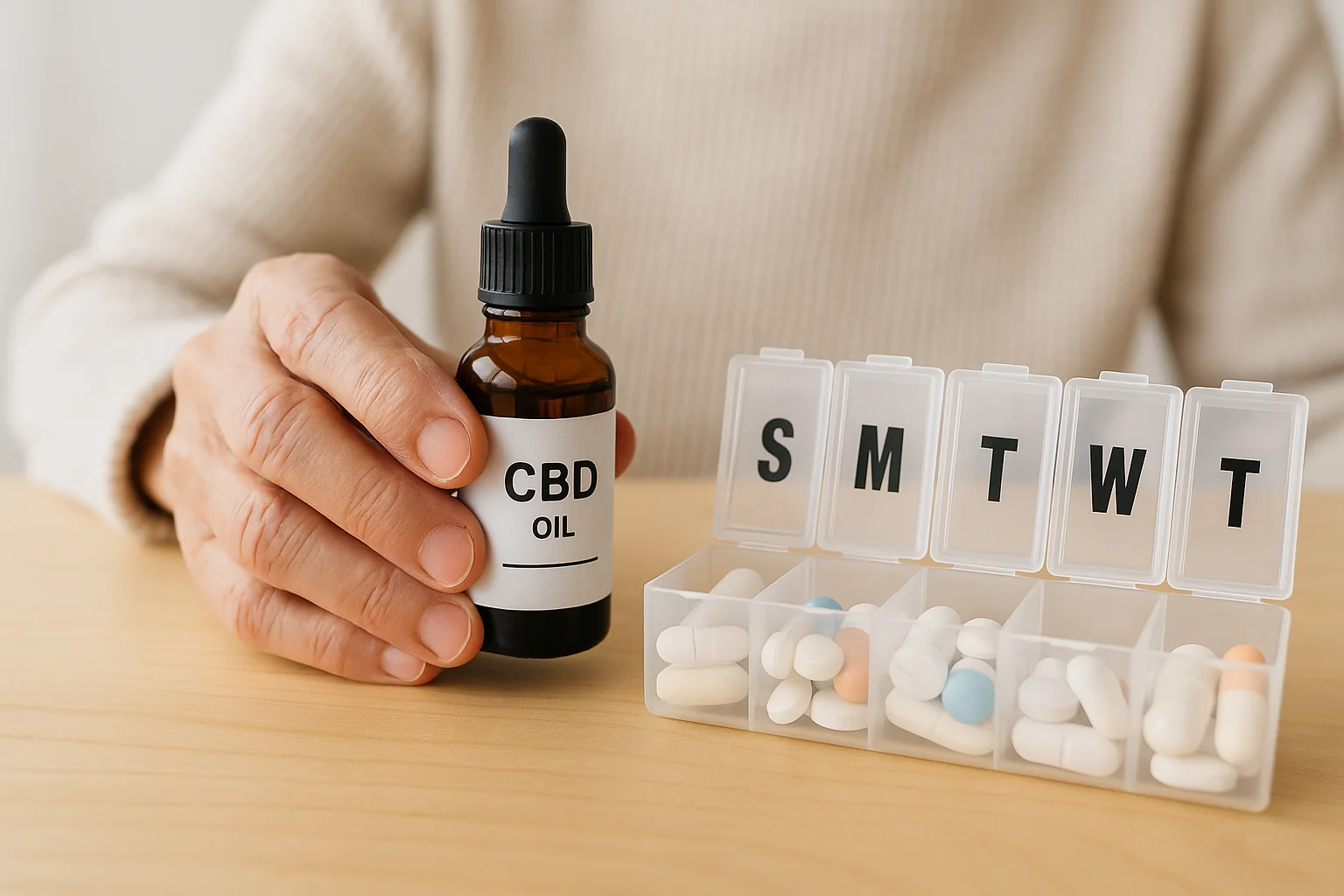

Seniors, polypharmacy, and CBD oil - can cannabis reduce the number of medications
Seniorzy, polipragmazja i olej CBD: odpowiedzi oparte na badaniach naukowych. u Bucha.
The average senior in Poland takes between 5 to 9 medications simultaneously - this phenomenon is referred to as polypharmacy. Each additional preparation increases the risk of interactions and side effects, and many people over 65 are looking for alternatives or supplements to their current pharmacotherapy. CBD is gaining increasing interest in this context, especially after the study by Abuhasira and colleagues, which showed a real improvement in quality of life for seniors using medical cannabinoids (European Journal of Internal Medicine, 2018). This article explains what science says about CBD in older patients, what the limitations are, and why talking to a doctor is a necessary condition - not an option.
KEY INFORMATION
• Over 50% of seniors over 65 meet the criteria for polypharmacy (WHO, 2019).
• CBD is metabolized by the same liver enzymes as dozens of common medications, including warfarin and statins.
• A study involving 2736 patients over 65 showed improvements in sleep quality and pain reduction with regular CBD use (Abuhasira et al., 2018).
• The activity of CYP enzymes decreases with age by 20-40%, which alters the pharmacokinetics of CBD in seniors.
• CBD is not a medication - it does not replace pharmacotherapy without a doctor's consent.
What is polypharmacy and why does it particularly affect seniors?
Polypharmacy means taking five or more medications simultaneously. According to WHO data, more than half of people over 65 meet this criterion, and one in three people over 75 takes more than 10 preparations daily. The problem is not theoretical: every two medications added to a regimen double the risk of clinically significant drug interactions.
Why so many medications? Most seniors struggle with several chronic conditions simultaneously - hypertension, type 2 diabetes, osteoarthritis, sleep disorders, and depression. Each condition generates its own treatment regimen. Primary care physicians, cardiologists, orthopedists, and psychiatrists prescribe medications independently, rarely having a complete overview of all the preparations used. The result is predictable: polypharmacy becomes the norm, not the exception.
We have noticed that patients often ask about CBD precisely when they feel worse instead of better - despite 'proper' pharmacotherapy. Fatigue, drowsiness, memory problems, constipation - many of these symptoms are the result of drug interactions, not disease progression. It is understandable that they are looking for something different. The question is: is CBD a safe option in this context?
What do studies say about CBD in seniors?
The study by Abuhasira and colleagues, published in European Journal of Internal Medicine in 2018, included 2736 patients over 65 treated in the Israeli network of medical cannabis clinics. After 6 months of cannabinoid use, 93.7% of patients reported an improvement in their health status. The most common improvements were: sleep quality (60% of patients), intensity of chronic pain (58%), and overall quality of life. Importantly, the percentage of patients who discontinued opioid medications due to 'sufficient symptom control' was 18.1% (Abuhasira et al., European Journal of Internal Medicine, 2018).
Another study - a systematic review by Weyent and colleagues - analyzed the use of cannabinoids in people over 60 and confirmed that the most common indications were chronic pain, sleep disorders, and anxiety (Weyenth et al., Drugs & Aging, 2019). However, the authors noted that clinical trials involving only seniors remain a gap in the literature - most data comes from population-based studies.
Citation capsule (Abuhasira et al., 2018): In a cohort of 2736 seniors treated with cannabinoids for 6 months, 93.7% reported an improvement in health status, and 18.1% discontinued opioid medications. The researchers emphasized that the safety profile was acceptable, but further prospective clinical studies are required (Abuhasira et al., European Journal of Internal Medicine, 2018).
CBD interactions with medications - why is this so important for seniors?
CBD is primarily metabolized by cytochrome P450 enzymes - specifically CYP3A4 and CYP2C19. These same enzymes break down dozens of medications commonly used by seniors: warfarin, digoxin, statins, antiepileptic drugs, benzodiazepines, and angiotensin-converting enzyme inhibitors. When CBD occupies the enzymes, medications metabolized through the same pathway can accumulate in the blood to dangerous levels - or conversely, be eliminated too quickly (Huestis et al., Frontiers in Pharmacology, 2019).
A key context for seniors: with age, the activity of liver enzymes CYP decreases by 20-40%. This means that the same dose of CBD will result in a higher concentration of CBD in the blood and a longer duration of action in a 75-year-old than in a thirty-year-old. This is not theory - it is a mechanism that changes the dosing calculation and risk profile.
The most important interactions are:
- Warfarin (anticoagulant): CBD inhibits CYP2C9, causing warfarin levels to rise - the risk of bleeding increases significantly. Cases have been described in the clinical literature.
- Statins: inhibition of CYP3A4 may increase the concentration of simvastatin and lovastatin, raising the risk of myopathy.
- Benzodiazepines: accumulation when using CBD simultaneously may enhance sedation.
- Antiepileptic drugs: CBD interacts with valproic acid - possible increase in hepatotoxicity.
What doses of CBD should seniors use?
There is no approved CBD dosage for seniors. The only CBD-based medication registered by the FDA and EMA is Epidiolex, used in specific childhood epilepsies - and even there, dosing is strictly adjusted. In the context of wellness, studies suggest the principle 'start low, go slow' - begin with a low dose and gradually increase under symptom control.
A pilot study from 2019, published in Permanente Journal, suggested that doses of 25-75 mg of CBD daily were well tolerated in the context of sleep disorders and anxiety (Shannon et al., Permanente Journal, 2019). For seniors, the starting dose should be lower - specialists from the Realm of Caring suggest 5-10 mg as a starting point, with the possibility of gradually increasing every 2-4 weeks. Any dose change should be recorded and discussed with the doctor who monitors the entire pharmacotherapy.
Can CBD help reduce the number of medications?
This is a question that both patients and doctors ask themselves. The answer is cautiously optimistic - but only in selected contexts and under medical supervision. The Abuhasira study showed that 18% of seniors using cannabinoids discontinued opioids. This is not a small number. Chronic pain in seniors is often treated with opioids, whose long-term risks (addiction, falls, constipation) are well documented.
The same logic applies to benzodiazepines used for sleep and anxiety disorders. CBD may improve sleep quality through different mechanisms than benzodiazepines - without the risk of physical dependence. However, the decision to discontinue benzodiazepines must be planned and gradual; sudden withdrawal risks seizures, especially in individuals who have been using them for years.
We have noticed that discussions about CBD in seniors often take place in the reverse order than they should. The patient starts using CBD oil independently and then wonders whether to tell the doctor. Meanwhile, the proper sequence is: first, a review of pharmacotherapy with the doctor, discussion about the potential of CBD in the context of specific symptoms, and only then possible inclusion under supervision. This order protects against unnoticed interactions.
Practical tips for seniors and their caregivers
If you are considering using CBD as a supplement to therapy, here are specific steps that increase safety:
Make a complete list of all medications, supplements, and herbs you are taking - including dosages and times of administration. This is the foundation for a conversation with your doctor. Many people are unaware that popular herbs (St. John's Wort, ginkgo, garlic in supplements) also interact with medications.
Before adding CBD, ask your doctor or pharmacist to verify interactions. A pharmacist with access to the SOLVATIO system or a similar tool can check whether CBD is risky with your current medication set. This service is available in many pharmacies.
Choose products with a CoA (Certificate of Analysis) from an independent laboratory. The document should confirm the CBD content, that the THC limit is not exceeded, and that there are no contaminants. This is particularly important because studies show that the labeling of CBD products can be inaccurate.
Frequently Asked Questions
Can seniors safely use CBD oil with multiple medications?
Only after consulting with a doctor. CBD is metabolized by CYP450 enzymes, which also break down many medications used by seniors - warfarin, statins, antiepileptic drugs. Without medical supervision, it is difficult to predict how the concentrations of these medications in the blood change (Bielawski et al., Pharmacology, 2021).
What is polypharmacy and why is it a problem for seniors?
Polypharmacy is the use of five or more medications simultaneously. According to WHO, over 50% of people over 65 meet this criterion. Each additional medication increases the risk of interactions and side effects, significantly affecting quality of life and the number of hospitalizations.
What symptoms in seniors may respond to CBD?
The study by Abuhasiry and colleagues (European Journal of Internal Medicine, 2018) showed that in patients over 65 years of age, the most common improvements were: sleep quality, pain intensity, and overall quality of life. Effects were observed with regular use for at least 6 months.
Can CBD replace medications in seniors?
CBD is not a medication or a substitute for prescribed medications. It can be a complementary element of therapy, but medications should never be discontinued without consulting a doctor. The decision to modify pharmacotherapy rests solely with the attending physician.
How is CBD metabolized in older adults?
With age, the activity of liver enzymes CYP3A4 and CYP2C9 decreases by 20-40%. This means that CBD is metabolized more slowly and its concentration in the blood may be higher than in younger adults at the same dose. Seniors should start with doses at least 2 times lower (Shannon et al., Permanente Journal, 2019).
This article is for informational and educational purposes and does not constitute medical advice. Before starting to use cannabis or CBD for therapeutic purposes, consult a doctor, especially if you are taking other medications, are pregnant, or breastfeeding.
Author: Michał Waluk · Published: 2026-05-04 · Updated: 2026-05-04