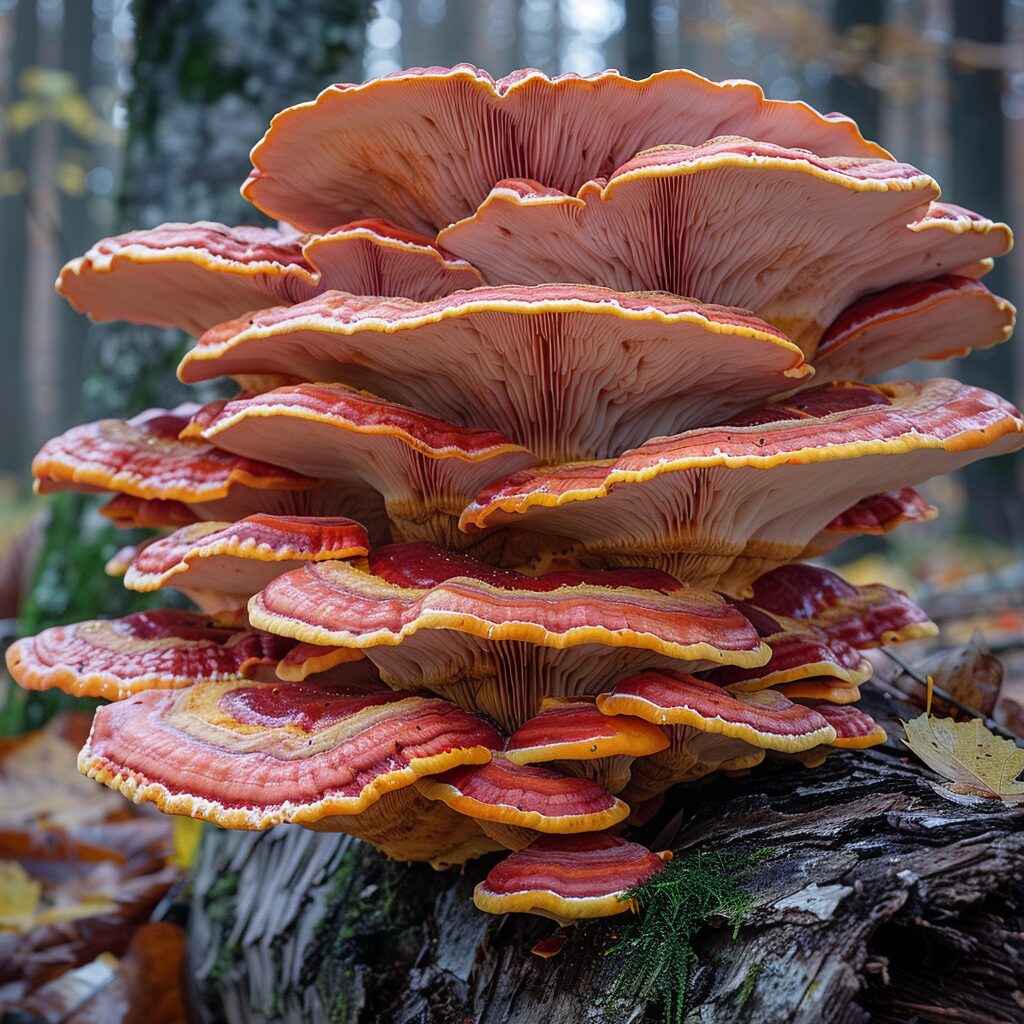

Reishi mushroom (Ganoderma Lucidum) – how does it affect the human body?
Reishi mushroom (Ganoderma Lucidum) – how does it affect the human body?
Reishi mushroom has become the subject of numerous contemporary scientific studies, suggesting its potential as a basis for antidepressant, immunomodulatory, anti-inflammatory, and anticancer drugs. This article describes the results of several studies on the reishi mushroom.
Reishi – the longevity mushroom in traditional Chinese medicine (TCM)
Reishi mushroom (Ganoderma lucidum) has been traditionally used in China by Buddhist Taoist monks to support their meditation practices, cultivate inner peace, improve concentration, and pave the way to a long, healthy life.
The characters that make up the Chinese name for the Reishi mushroom represent magical or divine properties, and it has been referred to as the "mushroom of immortality," the "mushroom of spiritual power," and the "spiritual plant.".
Reishi was listed among the highest-class tonics in the renowned Chinese medicine text, Shen Nung Ben Cao Jing (206 BC – 8 AD). Plant substances of this class were particularly valued, believed to prolong life, prevent aging, strengthen chi, and make the body light and flexible.
Reishi was said to relieve chest tightness, strengthen the heart, nourish the center, sharpen the mind, and improve memory. It was also said to have a beneficial effect on "character virtues.".
Modern scientific research on the Reishi mushroom
According to modern scientific knowledge, mushrooms can be used as functional foods or medicines in the prevention and treatment of several chronic diseases because they are a rich source of bioactive metabolites.
W research review conducted between 2015 and 2020, we read that preclinical studies have shown the pharmacological potential of Reishi in diabetes, inflammation, epilepsy, neurodegeneration, cancer, anxiety, sedation, heart disease, depression, liver disease and immune disorders.
How does Reishi affect the body?
Reishi polysaccharides and the immune system
Ganoderma lucidum contains compounds that are commonly used in medicine, nutrition, and cosmetology. Of particular note, according to researchers, deserve the polysaccharides (polysaccharides, complex sugars) found in Reishi, which are its most important bioactive compounds.
According to the data collected in the study, polysaccharides are responsible for the anticancer, anti-inflammatory, and immunomodulatory effects of reishi. Polysaccharides from reishi mushrooms may potentially be used to regulate the immune system.
The active polysaccharides of Ganoderma play an important role in regulating the immune response, which may include immune defense against cancer, viruses, bacteria, and fungal pathogens. It acts through lymphocytes and myeloid cells (cells with immunosuppressive activity, expressed through, among other things, the activation of regulatory T cells and the inhibition of cytotoxic T cell activity).
Furthermore, communication between different cells of the immune system leads to enhanced production of cytokines and antibodies, even in the presence of other stimuli such as LPS and pro-inflammatory factors.
Reishi polysaccharides and depression and anxiety
W study Reishi extract was found to produce a rapid and effective antidepressant effect in mice within 60 minutes of administration. This effect persisted after 5 days of treatment with the mushroom extract. Reishi extract did not induce hyperactivity in the mice studied. The antidepressant effect was confirmed in a mouse model of chronic social stress-related depression (CSDS).
The researchers suggested that the antidepressant effect was due to the polysaccharides in reishi interacting with specific Dectin-1 receptor cells in the mouse brains. This study identified reishi, which activates Dectin-1, as a potential new and rapid antidepressant with clinical potential and multiple beneficial mechanisms, particularly in regulating the neuroimmune system.
Scientists point to the need to collect clinical data that would allow for the study of the safety and efficacy of specific doses of reishi extract, which in turn would allow for the development of therapeutic drugs. However, it seems that this is still ahead of us, as data on functional mushrooms is steadily growing.
Sources:
-
Nahata A et al, Ganoderma lucidum: A Potent Medicinal Mushroom with Numerous Health Benefits, Pharmaceut Anal Acta 2013: https://www.researchgate.net/profile/Alok-Nahata/publication/259493336_Ganoderma_lucidum_A_Potent_Medicinal_Mushroom_with_Numerous_Health_Benefits/links/00b7d52c3d2e1e8986000000/Ganoderma-lucidum-A-Potent-Medicinal-Mushroom-with-Numerous-Health-Benefits.pdf
-
https://onlinelibrary.wiley.com/doi/10.1002/ptr.7215
-
Haoran L et al, Ganoderma lucidum polysaccharides ameliorated depression-like behaviors in the chronic social defeat stress depression model via modulation of Dectin-1 and the innate immune system, Brain Research Bulletin, 2021: https://www.sciencedirect.com/science/article/abs/pii/S0361923021000721
-
Ren L et al, Immunomodulatory activities of polysaccharides from Ganoderma on immune effector cells, Brain Research Bulletin, 2021: https://www.sciencedirect.com/science/article/abs/pii/S0308814620317957