
Why Use Lion's Mane Extract? A Comprehensive Guide to Lion's Mane Benefits in 2026
Lion's Mane extract 2026: types of extracts (water, alcohol, dual), ratios 1:1 to 10:1, dosage 500-3000 mg/day, stacks with CBD and adaptogens, how to read the label.
Key information, Lion's Mane extract 2026:
- The gold standard is an 8:1 extract with dual extraction (water + alcohol), standardized to a minimum of 20% beta-glucans, from the fruit body, not from mycelium on grain.
- Dosage depends on the purpose: 500-1000 mg/day for cognitive functions, 1500-3000 mg/day for neuroregeneration, 500 mg/day for immune support, divided into 2-3 doses with a meal containing fat.
- Hericenones and erinacines stimulate NGF and BDNF, as confirmed by the study by Mori et al. 2009 on patients with mild cognitive impairment (3 g/day for 16 weeks, significant improvement on the Hasegawa scale).
- The first cognitive effects appear after 2-4 weeks, neurogenesis and structural changes in the hippocampus require 6-12 weeks of regular supplementation.
- Best stacks: Lion's Mane + Cordyceps (cognitive energy), + Reishi (sleep and anxiety), + L-theanine (focus), + omega-3 (BDNF), + CBD (neuroprotective synergy).
Lion's Mane extract, known as Lion's Mane (Hericium erinaceus), in 2026 ceased to be a niche curiosity and became one of the most purchased natural nootropics in Poland. The global market for medicinal mushrooms is expected to reach $65.8 billion by 2030, with an average growth of 9.5% per year (Grand View Research, 2024). The problem is that most consumers do not know the difference between a 1:1 extract and an 8:1 extract, why "dual extraction" matters, or how to read the label to avoid a product with worthless mycelium on rice. This guide breaks down the formats of extracts, dosing, stacks, and quality criteria based on data from clinical studies and observations of the Polish market.
on species, biology, and history
A brief answer to why it is worth choosing an extract instead of dried mushrooms
An 8:1 extract with dual extraction contains 20-30% beta-glucans and measurable concentrations of hericenones (>0.5%) and erinacines (>0.3%), while dried fruiting bodies have only 3-5% beta-glucans and unpredictable bioavailability (Friedman, 2015). The concentrated form provides repeatable dosing and predictable clinical effects.
Why dried mushrooms are not enough
Raw powder from the fruiting body is a decent culinary base, but as a supplement, it has three issues. First, the cell wall of mushrooms made of chitin is practically indigestible for humans. Without thermal extraction, beta-glucans remain locked in a matrix that our enzymes cannot break down.
Second, hericenones, which are key neurotrophic compounds, are lipophilic and do not dissolve in water. Lion's Mane consumed as a dish releases only a fraction of its potential.
Third, dosing the raw material is impractical. To achieve a clinical dose equivalent to 1 g of an 8:1 extract, one would need to consume about 8 g of dried material, which becomes unfeasible at the price of high-quality powder.
[CITATION-CAPSULE]: According to the chemical analysis by Friedman (2015), published in Journal of Agricultural and Food Chemistry, dual extraction (water + ethanol) allows for the isolation of both water-soluble beta-glucans and alcohol-soluble hericenones and erinacines, which is not provided by either the dried material or single-phase water extraction.
What types of Lion's Mane extracts are there?
The Polish market is dominated by four formats of extracts: water, alcohol, dual extract, and beta-glucan isolate. Each has a different bioactive profile and application. The water extract contains an average of 25% beta-glucans, the alcohol extract up to 10% terpenoids, the dual extract combines both (gold standard), and the isolate reaches 90%+ beta-glucans (Spelman et al., 2017).
Water extract (hot water extraction)
The oldest and cheapest method. The dried material is boiled in water under pressure for 4-12 hours, then filtered and concentrated. The result is a brown powder rich in polysaccharides and beta-glucans. This is the basic form in traditional Chinese and Taiwanese medicine.
Its strength is the high concentration of immunomodulatory beta-glucans, while its weakness is the low content of hericenones. If the goal is immune support, the water extract works great. For cognitive effects, less so.
Alcohol extract (ethanol)
Ethanol macerate 40-70% extracts non-polar compounds, mainly hericenones, erinacines, and terpenoids. These molecules are responsible for stimulating NGF and BDNF, which is why ethanol tinctures are a favorite among those using Lion's Mane for memory and concentration.
The downside is the almost complete lack of beta-glucans. Alcohol does not dissolve them, so the immunomodulatory aspect of the mushroom is overlooked.
Dual extract, or the gold standard
Dual extraction combines both techniques, first water extraction, then alcohol extraction, and then mixing both fractions into one product. The result is a full-spectrum extract containing both polysaccharides and terpenoids. This form is recommended by most clinicians using medicinal mushrooms.
: The Polish market is just catching up to the West in terms of dual extraction. As recently as 2022, over 70% of Lion's Mane products on local shelves were single-phase water extracts. By 2026, at least four Polish brands will offer certified dual extracts with a percentage declaration of hericenones on the label.
Beta-glucan isolate (90%+)
A narrowly specialized product, in which practically all other compounds have been removed. Used in complementary immunotherapy protocols, in patients with immunosuppression, or in intensive immune support during infection seasons. For the typical user seeking cognitive support, this is excessive; the isolate does not contain hericenones.
What do the extraction ratios 1:1, 4:1, 8:1, and 10:1 mean?
The extraction ratio describes how many kilograms of raw fruiting body are needed to obtain 1 kg of finished extract. The higher the first number, the stronger the concentration. An 8:1 extract means that 8 kg of dried material has been reduced to 1 kg of powder, meaning effectively 1 g of product corresponds to 8 g of raw material (Spelman et al., 2017).
1:1, basic "extract"
Often this is simply powdered fruiting body with minimal processing. Marketed as an extract, but technically it is ground raw material. Low price, poor bioavailability, high doses (3-5 g to achieve anything).
4:1, medium concentration
Standard in mass products from Asia. Provides a reasonable concentration of beta-glucans (10-15%), but requires doses of 1500-2000 mg daily for cognitive effects. An acceptable price-quality compromise.
8:1, clinical sweet spot
The most popular ratio in products aimed at the conscious consumer. Standardized to 20-30% beta-glucans, measurable hericenones and erinacines. The clinical dose falls within 500-1500 mg, corresponding to protocols from the studies by Mori and Lai.
10:1 and above, premium extracts
The strongest concentration, often with additional standardization on specific markers. The price is higher, but the effective dose drops to 300-600 mg per day, so the annual cost of supplementation can be close to 8:1. In practice, differences above 10:1 require laboratory verification; a declaration of "20:1" without a COA means little.
How to read the label of Lion's Mane extract?
A good extract label contains seven pieces of information: species (Hericium erinaceus), part of the mushroom (fruit body, not mycelium), extraction method (dual or separately water/alcohol), extraction ratio (e.g., 8:1), percentage of beta-glucans (minimum 20%), percentage of hericenones (>0.5%), and confirmation of third-party testing (COA). The absence of even one of these items is a warning sign (Friedman, 2015).
Fruit body vs mycelium
This is the biggest trap in the market. Hericenones and erinacines mainly form in the fruiting body (the white "mane") during the mushroom's fruiting. Mycelium grown on oat or rice grain contains trace amounts of these compounds, and the product itself is 50-80% ground substrate grain.
: An independent analysis commissioned by ConsumerLab in 2023 showed that products claiming "Lion's Mane" based on mycelium-on-grain had, on average, five times lower beta-glucan content than products from the fruiting body. If you see "mycelial biomass" on the label or a lack of declaration of the part of the mushroom, it is almost certainly a grain-based product.
Percentage standardization
The minimum acceptable is 20% beta-glucans (not polysaccharides in general; this parameter is misleading as it also includes starch from the substrate). Hericenones above 0.5% and erinacines above 0.3% are indicators of a premium product. Total polysaccharides are a weak marker, easily falsified.
COA, certificate of analysis
An independent laboratory should confirm the manufacturer's claims. Reputable brands publish COAs online, usually with two tests: for bioactive compounds and for contaminants (heavy metals, pesticides, microbiology, mycotoxins). The absence of a COA in 2026 is a red flag.
[CITATION-CAPSULE]: Friedman (2015) in Journal of Agricultural and Food Chemistry showed that the chemical profile of the fruit body and mycelium of Hericium differs qualitatively, not just quantitatively. Hericenones A-H occur almost exclusively in the fruit body, while erinacines A-K mainly in mycelium grown under liquid fermentation conditions, not on grains.
What are the key benefits of Lion's Mane extract?
Lion's Mane extract shows six main areas of action supported by research: cognitive functions, neurogenesis, mood and anxiety, peripheral nerve regeneration, immune system support, and gastrointestinal protection. The strongest evidence concerns cognitive improvement in individuals with MCI, with an average change of 4 points on the Hasegawa scale after 16 weeks (Mori et al., 2009).
1. Cognitive functions and memory
The strongest clinical evidence comes from the study by Mori et al. 2009. 30 Japanese seniors (aged 50-80) with mild cognitive impairment received 3 g of dried fruiting body daily for 16 weeks. After 8, 12, and 16 weeks, the Lion's Mane group showed statistically significant improvement on the Hasegawa Dementia Scale compared to placebo. Four weeks after discontinuation, the effect disappeared.
Practical conclusion? Lion's Mane works, but it requires continuity. The clinical dose, converted to an 8:1 extract, is about 375 mg three times a day.
2. Neurogenesis and BDNF
Hericenones act on the central nervous system by stimulating NGF (nerve growth factor) synthesis. Erinacines do this more directly, as their lower molecular weight allows them to cross the blood-brain barrier. Brandalise et al. 2017 demonstrated in a mouse model that supplementation with Hericium for 2 months increased neurogenesis in the hippocampus and improved recognition memory (Brandalise et al., 2017).
3. Mood, anxiety, and menopausal symptoms
Nagano et al. 2010 studied 30 women in menopause with unspecified complaints (CMI). 4 weeks of supplementation with cookies containing Hericium significantly reduced symptoms of anxiety and irritability compared to placebo (Nagano et al., 2010). The mechanism likely combines BDNF action with modulation of the HPA axis.
4. Peripheral nerve regeneration
Lai et al. 2013 showed in a rat model that Hericium extract accelerates the regeneration of the peroneal nerve after surgical transection. After 14 days, the group receiving the extract had significantly better reinnervation of the calf muscle than the control group (Lai et al., 2013). This is the basis for using Lion's Mane in diabetic and post-accident neuropathy.
5. Immune system support
Beta-glucans activate dectin-1 receptors on macrophages, NK cells, and neutrophils. The effect is increased phagocytosis, greater production of pro-inflammatory cytokines in response to pathogens, and better coordination of the adaptive response. For a healthy person, this means fewer viral infections during the fall-winter season.
6. Protection of the gastric mucosa
Traditional Chinese medicine used Hericium erinaceus for "stomach tumors" and peptic ulcers long before the identification of Helicobacter pylori. Modern studies confirm its cytoprotective and anti-inflammatory effects on the gastric mucosa, partly through modulation of the microbiota (Mori et al., 2008).
What is the optimal dosage of Lion's Mane extract?
The optimal dose of an 8:1 extract from the fruiting body ranges from 500-3000 mg daily, depending on the purpose. For cognitive functions, 500-1000 mg is sufficient, for neuroregeneration after injuries 1500-3000 mg, for immune support 500 mg. Dividing into 2-3 daily doses with a meal containing fat increases the bioavailability of hericenones (Spelman et al., 2017).
Protocols by purpose
- Mild brain fog, concentration, learning, 500-1000 mg of 8:1 extract daily, 2 times 250-500 mg, in the morning and at noon.
- Neuroregeneration after injuries, neuropathy, support after stroke (always with a doctor), 1500-3000 mg daily, 3 times 500-1000 mg, meals with fat.
- Seasonal immune support, 500 mg of water or dual extract, once daily with a meal.
- Neurodegeneration prevention in individuals >50 years old., 1000 mg daily, long-term, divided into 2×500 mg.
What to take with to increase bioavailability
Hericenones are lipophilic, so it is worth taking the extract with a meal containing 5-10 g of fat (eggs, nuts, avocado, salmon, oil). Beta-glucans work independently of meals, but calcium may reduce their absorption, so simultaneous calcium supplementation is not optimal.
Cyclicality, are breaks needed?
There is no clinical data indicating the need for breaks. Most practitioners suggest a scheme of 5 days of use, 2 days off, or 8 weeks of use, 1-2 weeks off, but this is based on general principles of adaptogen therapy, not on studies of Hericium.
After how long do the effects of using the extract appear?
Subjective effects (better focus, less brain fog) are usually reported after 2-4 weeks of regular supplementation. Measurable changes in cognitive tests appear after 8-16 weeks, as confirmed by Mori et al. 2009 with significant improvement after 8 weeks and deepening of the effect to 16 weeks (Mori et al., 2009).
Timeline of typical effects
- Week 1-2: some report subtly sharper thinking, others feel nothing. The absence of effect in this window does not mean the product does not work.
- Week 2-4: the most commonly reported window of subjective improvement in concentration, motivation, and sleep quality.
- Week 4-8: measurable improvement in memory tasks, reduction of anxiety symptoms, better mood.
- Week 6-12: neurogenetic effects, structural changes in the hippocampus (animal studies), long-term neuroregeneration.
- 4 weeks after discontinuation: the cognitive effect gradually fades (Mori 2009).
: In store practice, we observe that customers most often discontinue Lion's Mane between the 10th and 20th day because "they feel nothing." This is the moment of the highest drop-off. Those who endure a full month report noticeable improvement in over 70% of cases and continue supplementation for at least three months.
What are the best stacks with Lion's Mane?
Combinations with other adaptogens and supplements enhance or broaden the effects of Lion's Mane. The most commonly used stacks are: + Cordyceps for energy and concentration, + Reishi for sleep and anxiety, + L-theanine for focus without stimulation, + omega-3 for BDNF, + CBD for neuroprotective synergy. Each combination makes sense in a different context (Spelman et al., 2017).
Lion's Mane + Cordyceps
Cordyceps increases aerobic endurance and ATP production, while Lion's Mane supports cognitive functions. Together, they create an ideal stack for students during exams, programmers after 12-hour days, and athletes combining training with mental work. A typical ratio is 500 mg of 8:1 extract from each, taken in the morning.
Lion's Mane + Reishi
Reishi works in the evening, calming and improving sleep quality. Lion's Mane supports nerve regeneration, which mainly occurs during deep sleep. This stack is favored by those with chronic stress and insomnia. Lion's Mane in the morning, Reishi in the evening.
Lion's Mane + L-theanine
L-theanine (200 mg) generates alpha waves in the brain, creating a state of "calm concentration." Combined with Lion's Mane (500 mg) and possibly caffeine (100 mg), it forms a classic stack for deep work. This combination is favored by biohackers.
Lion's Mane + omega-3 (DHA/EPA)
DHA is the main fatty acid in neuronal membranes. Without it, BDNF stimulated by Lion's Mane lacks the material to build new connections. 1-2 g of EPA+DHA daily creates a foundation on which Lion's Mane can work effectively.
Lion's Mane + Bacopa monnieri
Bacopa supports long-term memory consolidation, while Lion's Mane promotes neurogenesis. This stack is chosen by language learners, lawyers preparing for exams, and anyone who needs to memorize large amounts of material. However, Bacopa requires 8-12 weeks of regular use.
Lion's Mane + CBD
CBD has anti-inflammatory and neuroprotective effects, while Lion's Mane is neurotrophic. This combination is potentially synergistic, especially for individuals with neuropathy or chronic stress. Additionally, CBD alleviates anxiety, which may be the first subjective effect users seek. There is a lack of solid studies on this combination in humans, but the rational basis is strong.
Is Lion's Mane extract safe?
Hericium erinaceus is classified by EFSA as traditional food and shows a very good safety profile. In clinical studies with doses up to 3 g daily for 16 weeks, no significant adverse effects were reported (Mori et al., 2009). The main risks relate to mushroom allergies and lack of data for pregnant women.
Most common side effects
Mild and rare. Possible gastrointestinal symptoms (nausea, discomfort) at the beginning of supplementation, usually resolving after 3-7 days. Individuals with allergic reactions to mushrooms (oysters, shiitake, button mushrooms) should exercise caution; cross-reactivity of mushroom proteins is described in the literature.
Contraindications
- Mushroom allergy, an absolute contraindication.
- Pregnancy and breastfeeding, lack of safety data, avoid outside of consultation.
- Anticoagulants, beta-glucans may theoretically affect platelet aggregation, consult a doctor.
- Autoimmune diseases, immunostimulatory beta-glucans may worsen the course, caution advised.
- Planned surgical procedures, discontinue 2 weeks prior.
Disclaimer
Lion's Mane extract is a dietary supplement, not a medicine. It does not replace pharmacological treatment, especially one should not independently discontinue psychotropic or neurological medications based on supplementation. In cases of cognitive disorders (suspected MCI, dementia, Parkinson's disease), always consult a neurologist first. Choose products with current COA and a declaration of at least 20% beta-glucans from the fruit body.
What does the Polish Lion's Mane extract market look like in 2026?
The Polish medicinal mushroom market is growing in double digits, and Lion's Mane is the most popular product in the category of natural nootropics. By 2026, at least a dozen brands will offer products containing Hericium, but only some meet the gold standard criteria (dual extract, fruiting body, COA, ≥20% beta-glucans). Recognizable names include Lion's Head, Brainy, Mushroom4Life, and Naturana, each with different pricing and quality positioning.
What distinguishes Polish brands in 2026
Three trends are clear. First, increasing consumer awareness of the difference between fruit body vs mycelium. Second, standardization on specific markers (not just polysaccharides in general). Third, publication of COA on the product page as a standard, not an exception.
Regulatory context
In Poland, Hericium erinaceus is allowed as a dietary supplement ingredient, and the manufacturer must notify the GIS before introducing the product to the market. Extracts are classified as "novel food" only when the extraction process significantly deviates from traditional methods (e.g., supercritical CO2 extraction), which does not apply to most products in practice.
How does Lion's Mane interact with CBD and cannabis?
The combination of Lion's Mane extract with CBD is one of the most promising synergies in the natural nootropic segment. CBD acts anti-inflammatorily on the nervous system by modulating CB2 receptors and TRPV1 channels, while Lion's Mane stimulates neurogenesis through NGF and BDNF. In practice, these mechanisms complement each other; CBD reduces neuroinflammation, and Lion's Mane rebuilds damaged structures (Spelman et al., 2017).
Who is this stack sensible for
Individuals with chronic stress, sleep problems, diabetic neuropathy, or recovery from nervous system injuries. CBD provides a quick, noticeable anxiolytic effect within the first few days, while Lion's Mane builds long-term neuroregeneration. Subjectively, the user does not feel the "boredom" of the first weeks of Lion's Mane, as CBD is already working.
Practical dosing together
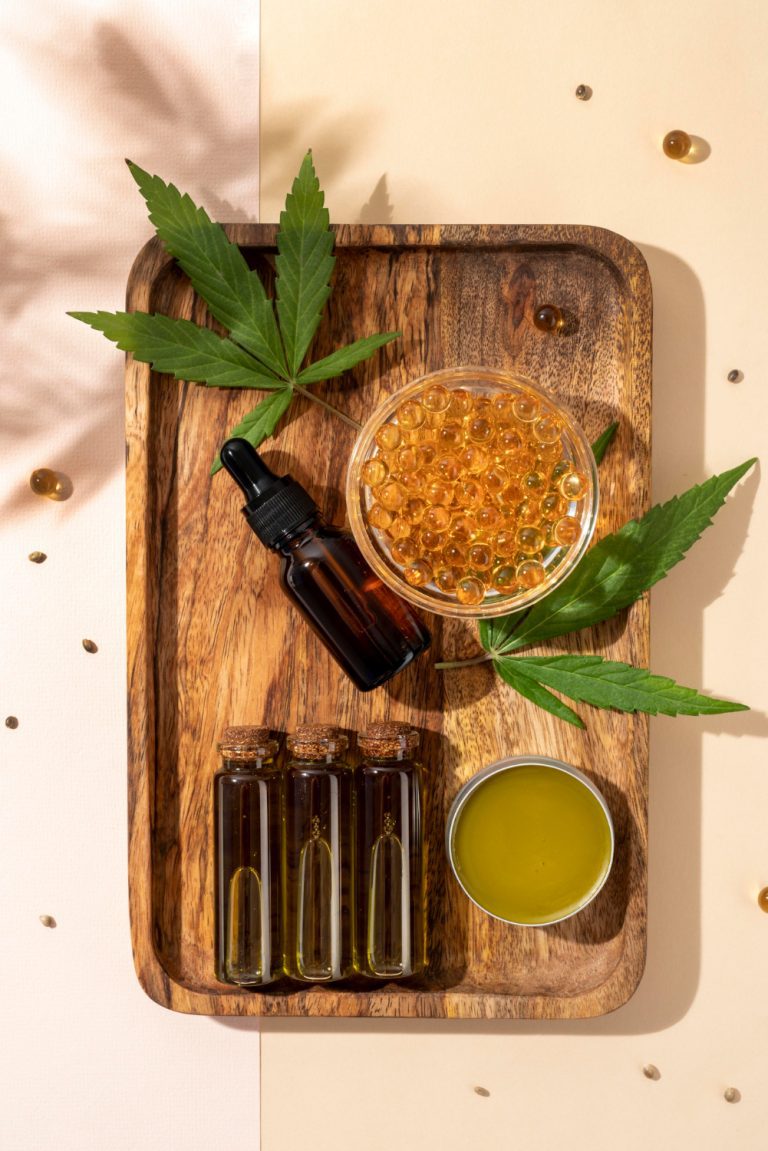
CBD 15-30 mg daily (oil 5-10%), Lion's Mane 500-1000 mg of 8:1 extract daily. CBD oil in the evening, Lion's Mane in the morning. The fat in CBD oil additionally supports the absorption of hericenones if both products are taken together.
on CBD neuroprotection
CBD products supporting the stack with Lion's Mane (store offer):
- SOOL CBD 5%, 76 PLN, a mild starting dose of CBD for the daily stack with mushroom extract.
- SOOL CBD 10%, 99 PLN, medium concentration for those with more demanding neuroregeneration protocols.
- Cannova CBG 15%, 240 PLN, cannabigerol supporting concentration, an alternative or supplement to CBD in the stack.
- Mars Dry CBD 9%, 59 PLN, hemp flower for vaporization as a complementary form to the daily ritual.
FAQ, frequently asked questions about Lion's Mane extract
1. Which Lion's Mane extract is best, water or dual extract?
Dual extract (water + alcohol) is the gold standard because it contains both water-soluble beta-glucans and alcohol-soluble hericenones and erinacines. A purely water extract misses the neurotrophic side of the mushroom, while the alcohol extract misses the immunomodulatory side. Friedman 2015 clearly indicates dual extraction as the optimal method for a full spectrum of bioactive compounds (Friedman, 2015).
2. How many mg of Lion's Mane extract should I take daily?
The dose depends on the purpose. For cognitive support, 500-1000 mg of 8:1 extract daily is sufficient. For intensive neuroregeneration, 1500-3000 mg. For immune support alone, 500 mg of water extract is enough. Mori et al. 2009 used 3 g of dried material (equivalent to ~375 mg of 8:1 extract three times a day) and achieved significant clinical effects in seniors with MCI.
3. What does the 8:1 designation on the package mean?
An 8:1 extract means that 8 kg of dried fruiting body has been condensed into 1 kg of finished product. The higher the first ratio, the higher the concentration of active compounds and the smaller the dose needed for effect. The clinical standard in 2026 is 8:1 standardized to ≥20% beta-glucans from the fruit body.
4. How long until I feel the effects of Lion's Mane?
Subjectively, better focus and less brain fog appear in most people after 2-4 weeks of regular supplementation. Measurable changes in cognitive tests are confirmed from the 8th week (Mori et al., 2009). Neurogenesis and structural changes in the hippocampus require 6-12 weeks. After discontinuation, the effect fades within 4 weeks.
5. Can Lion's Mane extract be taken with antidepressant medications?
There are no documented serious interactions, but Lion's Mane, by modulating BDNF, affects the same pathways as some psychotropic medications. This combination requires consultation with a psychiatrist. One should not independently discontinue SSRIs or other neurological medications in favor of Lion's Mane. Dietary supplements do not replace pharmacological therapy for mental disorders.
6. Is the fruiting body or mycelium better?
The fruiting body is qualitatively better. Hericenones, key neurotrophic compounds, are mainly produced during the fruiting of the mushroom. Mycelium grown on oat or rice grain contains 50-80% ground substrate and trace amounts of active compounds. Independent tests show 5 times lower beta-glucan content in mycelium-on-grain products compared to the fruiting body (Friedman, 2015).
7. Does Lion's Mane help with anxiety and depression?
Yes, there is evidence of anxiolytic and antidepressant effects. Nagano et al. 2010 demonstrated a significant reduction in anxiety symptoms in menopausal women after 4 weeks of supplementation. The mechanism likely combines BDNF stimulation with modulation of the HPA axis. Lion's Mane does not replace clinical therapy for depression but can be a valuable addition (Nagano et al., 2010).
8. Can I take Lion's Mane with coffee?
Yes, the combination is popular and safe. Caffeine provides an acute stimulating effect, while Lion's Mane offers long-term neuroregeneration. There are no known negative interactions. Many users add Lion's Mane extract powder directly to their morning coffee. Remember, hericenones are better absorbed with fat, so coffee with milk or MCT is optimal.
9. Can Lion's Mane be taken daily without breaks?
Yes, there is no clinical data indicating the need for cyclicity. The Mori 2009 study used daily supplementation for 16 weeks without reported side effects. Some practitioners suggest breaks of 2 days a week or 1-2 weeks after 8 weeks of use, but these recommendations are based on general principles of adaptogen therapy, not on evidence for Hericium.
10. What are the signs of good quality Lion's Mane extract?
Five criteria: the declaration of "fruit body" on the label, dual extraction, a minimum ratio of 8:1, standardization to ≥20% beta-glucans with a percentage declaration of hericenones (>0.5%) and erinacines (>0.3%), and a publicly available COA from an independent laboratory on the manufacturer's website. The absence of even one of these elements lowers trust in the product.
Summary and recommendations
Lion's Mane extract in the form of dual extract 8:1 from the fruit body is currently the best-documented natural intervention supporting cognitive functions, neurogenesis, and nervous system regeneration. Three clinical studies (Mori 2009, Nagano 2010, plus numerous animal studies Lai 2013, Brandalise 2017) confirm effects on memory, anxiety, and nerve regeneration. The Polish market in 2026 offers products meeting clinical standards, but consumers must learn to read labels, fruit body, dual extraction, COA, percentage of beta-glucans. The stack with CBD, omega-3, and adaptogens (Cordyceps, Reishi, Bacopa) enhances effects. First results after 2-4 weeks, full potential after 8-16 weeks. Consultation with a doctor is necessary in cases of cognitive disorders and psychotropic medications.
About the author: Michał Waluk runs the u Bucha store specializing in natural hemp supplements and medicinal mushrooms. The text is prepared based on current clinical research and observations of the Polish adaptogen market in 2026.
on medicinal mushrooms