
Caring for a loved one using CBD - child, senior, chronically ill person
Care for a loved one using CBD: research-based and practical answers. u Bucha.
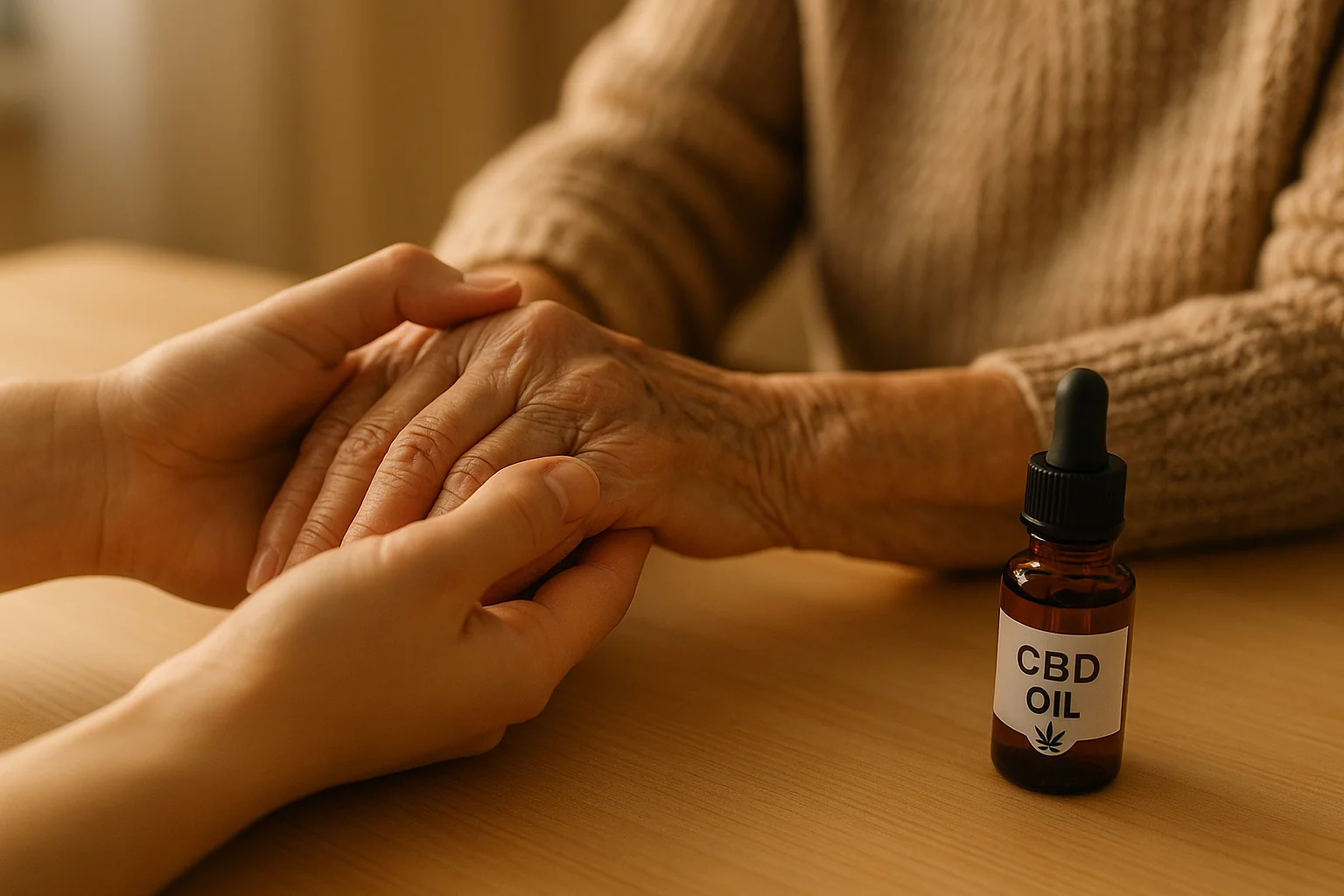
When it is not us, but a loved one who starts using CBD, the role changes: we not only observe the effects but also share responsibility for safety. Caregivers of children with drug-resistant epilepsy, adult children of seniors, and partners of people with chronic illnesses are groups that increasingly manage someone else's CBD supplementation - often without clear guidance. A study by the Realm of Caring Foundation, involving over 600 caregivers, showed that 72% of them did not receive any information from the doctor about the CBD used by the patient (Realm of Caring Foundation, 2021). This article fills that gap: it explains how to safely monitor CBD use in the three most demanding groups - children, seniors, and chronically ill individuals.
KEY INFORMATION
• 72% of caregivers using CBD for their charges did not receive any guidance from a doctor (Realm of Caring, 2021).
• CBD is metabolized by the same liver enzymes as many drugs used in chronic diseases.
• In children, the only approved CBD medication is Epidiolex - all other products require pediatric consultation.
• A symptom monitoring journal is the simplest tool that a caregiver can implement independently.
• Caregivers should have access to the product's CoA certificate for the CBD used by the person they care for.
The caregiver as a second observer - why is this so important?
A person using CBD - especially a child or senior with cognitive impairments - often cannot independently assess subtle changes in their condition. It is the caregiver who first notices that grandpa is sleepier than usual, that the child is sleeping worse, or that mom has a changed mood. This observer role is irreplaceable by any laboratory test.
At the same time, caregivers often lack medical knowledge and may confuse the effects of CBD with disease progression or the effects of other medications. Meanwhile, this is where the greatest risk lies: lack of monitoring leads to unnoticed interactions or - conversely - to hasty discontinuation of CBD that was actually helping.
We have noticed that caregivers who keep a regular symptom diary are much more likely to identify when a dose needs adjustment. This does not require medical knowledge - just consistency and the ability to describe what you see.
CBD in children - special caution and limits
The only CBD-based preparation registered by the European Medicines Agency (EMA) for use in children is Epidiolex - a medication used exclusively for severe, drug-resistant epilepsies: Dravet syndrome and Lennox-Gastaut syndrome. The registration was based on clinical studies showing a 41% reduction in seizure frequency in children using CBD compared to placebo (Devinsky et al., New England Journal of Medicine, 2017).
Outside of this context - that is, for children without drug-resistant epilepsy - the use of over-the-counter CBD oils is an area without registration and without approved dosages. This does not automatically mean a ban, but it does mean a lack of safety guarantees for a specific child. Any such decision should go through a pediatrician or pediatric neurologist who knows the child's full medical history.
Parents and caregivers of children using CBD should particularly monitor: sleep quality and duration, appetite and body weight, level of activity and concentration, and any changes in behavior. In children taking medications (e.g., anticonvulsants), any change in these parameters requires consultation with a doctor - not just with the caregiver.
CBD in seniors - what should the caregiver observe?
Seniors metabolize CBD more slowly than younger adults - the activity of liver enzymes CYP decreases with age by 20-40%, which means higher concentrations of CBD in the blood at the same dose (Huestis et al., Frontiers in Pharmacology, 2019). For caregivers of seniors, this is important information: what is a safe dose for a 40-year-old may be excessive for a 75-year-old.
The most important signals that should raise the caregiver's alertness:
- Increased drowsiness or balance disorders - may indicate an interaction between CBD and benzodiazepines or other sedative medications.
- Changes in INR results in people on warfarin - CBD inhibits CYP2C9, which metabolizes warfarin, causing its concentration to rise and increasing the risk of bleeding.
- Lowered blood pressure - CBD may slightly lower blood pressure; in seniors with hypertension being treated pharmacologically, this can lead to hypotension and falls.
- Mood changes or increased confusion - especially in individuals with dementia or mild cognitive impairments.
The caregiver of a senior should keep a diary in which they daily - for the first 4-6 weeks of CBD use - note: the dose, time of administration, mood assessment on a scale of 1-10, sleep quality, and any adverse symptoms. Such a diary is invaluable during a doctor's visit.
CBD in individuals with chronic diseases
Chronic diseases - rheumatoid arthritis, fibromyalgia, multiple sclerosis, inflammatory bowel diseases - are the most common reasons adults turn to CBD as a supplement to treatment. A study published in Journal of Pain Research found that 62% of CBD users use it specifically to alleviate pain, inflammation, and anxiety associated with chronic diseases (Corroon & Phillips, Journal of Pain Research, 2018).
The caregiver of a chronically ill person must remember that CBD interacts not only with medications but also with the disease process. For example, in individuals with liver diseases, CBD is metabolized more slowly, which alters its safety profile. In individuals with kidney diseases, the excretion of CBD metabolites may be impaired.
Practical rule: any change in the treatment of a chronic disease is a moment when the caregiver should return to the doctor and discuss CBD again. A new medication may interact with CBD in a way that did not exist with the previous treatment regimen.
How to keep a CBD monitoring journal?
The monitoring diary does not need to be complicated. A simple table with five columns is enough: date, CBD dose, time of administration, assessment of the patient's condition (sleep, mood, pain on a scale of 1-10), and notes. Even if kept for 4 weeks, it provides the doctor with valuable data on whether CBD is working, in what direction, and whether any warning signs are appearing.
The Realm of Caring Foundation, a non-profit organization supporting caregivers and users of medical cannabis, provides free templates for such a diary. Their database contains observations from over 30,000 patients - and it is the data from caregivers' diaries that formed the basis for many analyses published by this organization.
From our experience, caregivers who regularly keep a diary for the first 6-8 weeks of CBD use are able to describe the effects to the doctor much more precisely than those who rely solely on general impressions. A doctor who sees specific data - "INR increased from 2.1 to 2.8 after 3 weeks of CBD" - reacts very differently than to the statement "I think something has changed."
Frequently Asked Questions
How to monitor CBD use in seniors?
Keep a journal with the dose, time of administration, and observed effects. Regularly check if the senior shows any signs of drug interactions: increased drowsiness, balance problems, mood changes. The effects of CBD in seniors may be stronger than in younger adults due to slower liver metabolism (Huestis et al., Frontiers in Pharmacology, 2019).
Can children use CBD?
The only CBD approved by the EMA for use in children is Epidiolex - a medication used for specific drug-resistant epilepsies. The use of over-the-counter CBD oils in children should always be preceded by a consultation with a pediatrician or pediatric neurologist.
What should a caregiver know about CBD interactions with medications?
CBD inhibits CYP450 enzymes, particularly CYP3A4 and CYP2C19, which metabolize many medications. In children taking antiepileptic drugs and in seniors taking warfarin or statins, the risk is particularly real. The caregiver should have a complete list of the dependent's medications and provide it to the doctor before starting CBD.
How to talk to a doctor about CBD used by the dependent?
Bring to the office: a list of all medications and supplements the patient is taking, information about the CBD product being used along with its CoA certificate, and specific questions about interactions. The Realm of Caring Foundation recommends preparing a list of symptoms you want to monitor - this helps the doctor assess the appropriateness and safety of using CBD.
What warning signs should concern the caregiver?
Consult a doctor when you notice: sudden changes in mood or behavior, significant increase in drowsiness, coordination problems, changes in appetite or body weight, and in seniors - changes in INR results or blood pressure. These symptoms may indicate an interaction between CBD and the medications being taken.
This article is informational and educational in nature. It contains internal links to products available in the u Bucha store. Prices and specifications may change - please check the current data on the product page before purchasing.
Author: Michał Waluk · Published: 2026-05-04 · Updated: 2026-05-04