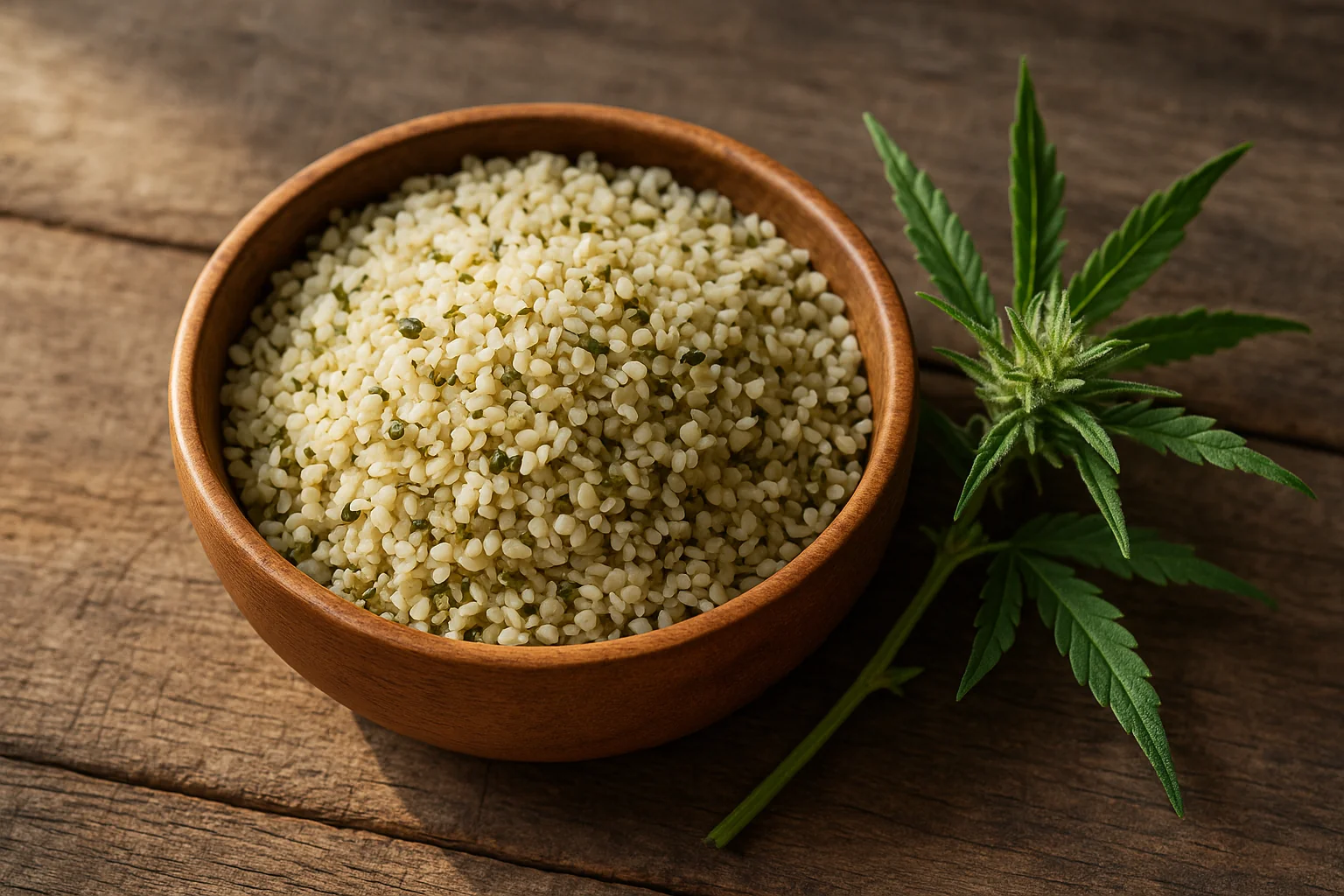

Hemp seeds: nutritional properties, how much protein they contain, and how to eat them daily
Shelled hemp seeds contain 31.6 g of protein and 553 kcal per 100 g. Check what a serving of 20-30 g realistically provides, what the PDCAAS is, and how to add seeds to meals.
Three tablespoons of hemp seeds are not the same as one hundred grams from the ingredient table, and most guides count exactly those one hundred grams. Shelled hemp seeds contain 31.6 g of protein per 100 g according to the USDA FoodData Central database (item 170148), but the actual serving weighs 20-30 g, so the protein comes out to 6-10 g. Hemp seeds are ordinary food: they do not contain cannabinoid doses, do not have a dosage, and do not have psychoactive effects. Below you will find values converted both per serving and per 100 g, the result of the only proper study of hemp protein quality, and three numbers that are simply incorrect in Polish descriptions of hemp seeds.
KEY INFORMATION
• 100 g of shelled hemp seeds contains 553 kcal, 31.6 g of protein, and 48.8 g of fat (USDA FoodData Central, item 170148).
• A 30 g serving provides 9.5 g of protein, 210 mg of magnesium, and 166 kcal.
• The PDCAAS of shelled seeds is 63-66 percent, with lysine being the first limiting amino acid (House et al., 2010).
• Witaminy E jest niewiele: 0,8 mg alfa-tokoferolu na 100 g.
How much protein do hemp seeds have and is it complete protein?
Shelled hemp seeds contain 31.6 g of protein per 100 g, and a 30 g serving provides 9.5 g (USDA FoodData Central, item 170148). This is a lot for a seed. However, hemp protein is not complete in the technical sense of the word: lysine is the first limiting amino acid.
The difference matters because a shorthand is repeated in the descriptions of hemp seeds. Seeds indeed contain all nine essential amino acids, but the presence of an amino acid is not the same as having a sufficient amount to meet demand. House, Neufeld i Leson (Journal of Agricultural and Food Chemistry, 2010) They tested thirty batches of hemp products, measured protein digestibility in a bioassay on rats, and calculated the PDCAAS index against the FAO and WHO standards for children aged 2-5 years. For hulled seeds, digestibility was 83.5-92.1 percent, and PDCAAS was 63-66 percent. Lysine turned out to be the first limiting amino acid in all tested forms.
In comparison, milk casein achieves a maximum of 100 percent on this scale. The authors summarized that hemp protein is on par with some grains, nuts, and legumes or higher, but does not match the protein of milk or soy.
The practical conclusion is the opposite of what many guides suggest. Since lysine limits hemp protein, grains are not a good complement for hemp seeds because they have exactly the same deficiency. Legumes complement them: lentils, chickpeas, and beans provide lysine in surplus, while they are low in methionine, which is the opposite of hemp. Therefore, a bowl of lentils with a tablespoon of hemp seeds is better than the same seeds added to bread. The USDA reports 4.55 g of arginine, 2.16 g of leucine, 1.28 g of lysine, and 0.933 g of methionine per 100 g of seeds.
What fatty acids are hidden in hemp seeds?
Fat accounts for almost half the mass of the seeds: 48.8 g per 100 g, of which 38.1 g is polyunsaturated fatty acids. The most abundant is linoleic acid (27.4 g), followed by alpha-linolenic acid (8.68 g) and gamma-linolenic acid (1.34 g). There are only 4.6 g of saturated acids.
The ratio of omega-6 to omega-3 from these numbers is about 3.3 to 1. Among vegetable oils, this is rare, as sunflower and corn oils have this ratio several dozen times higher. The profile was described Callaway (Euphytica, 2004) in a review dedicated to hemp seeds as a nutritional resource, and most of the subsequent repetitions of this number come from this work.
Separately, it is worth looking at GLA, or gamma-linolenic acid. There are few plants that produce it: hemp, evening primrose, and borage. The body usually receives it only after converting linoleic acid through delta-6 desaturase, and this pathway can be inefficient. Horrobin (American Journal of Clinical Nutrition, 2000) It was described that in people with atopic dermatitis, there is no deficiency of linoleic acid in the blood, but there are clearly fewer of its metabolites, which indicates poor conversion.
A 30 g serving provides 8.2 g of linoleic acid, 2.6 g of alpha-linolenic acid, and 0.40 g of GLA. The first omega-3 must still be converted by the body into EPA and DHA, and the efficiency of this conversion in humans is low. Therefore, hemp seeds will not replace fatty fish or algal oil. However, they add fats to the diet that are not found in canola oil.
Which vitamins and minerals are actually in hemp seeds?
Hemp seeds are a very good source of magnesium, phosphorus, and manganese, and a decent source of zinc. However, they contain little vitamin E: the USDA reports 0.8 mg of alpha-tocopherol per 100 g, not 80-90 mg as many Polish descriptions claim.
| Ingredient | na 100 g | w porcji 30 g | procent RWS w porcji |
|---|---|---|---|
| Magnesium | 700 mg | 210 mg | 56 |
| Fosfor | 1650 mg | 495 mg | 71 |
| Mangan | 7,6 mg | 2,3 mg | 114 |
| Zinc | 9,9 mg | 3,0 mg | 30 |
| Iron | 7,95 mg | 2,4 mg | 17 |
| Copper | 1,6 mg | 0,48 mg | 48 |
| Tiamina | 1,28 mg | 0,38 mg | 35 |
| Vitamin E | 0,8 mg | 0,24 mg | 2 |
RDA is the reference intake value from EU food labeling regulations, the same one that producers print on labels. Magnesium performs best here: 210 mg from three tablespoons is more than from any other popular seed.
We noticed, while organizing our older texts, that the mistake regarding vitamin E has one source. The figure of 80-90 mg circulates in Polish internet because it refers to tocopherols in general in one hundred grams of pressed hemp oil, where fat constitutes the entire mass of the product. In seeds, fat is less than half, and the USDA measures only alpha-tocopherol, omitting the dominant gamma fraction in hemp. The true content lies somewhere between these values, but certainly not where it is usually reported.
How many hemp seeds should you eat daily and how should you serve them?
A realistic portion is 2-3 tablespoons, or 20-30 g. Thirty grams provide 166 kcal, 9.5 g of protein, 14.6 g of fat, and 2.6 g of carbohydrates, including 1.2 g of fiber. Hemp seeds are food, so they have neither official dosing nor an established upper limit.
The limitation is caloric content, not safety. Five tablespoons a day is already over 270 kcal from one meal addition, which starts to be noticeable on a 2000 kcal diet. If you increase the portion for protein, subtract that energy from elsewhere.
Hulled seeds are soft and have a mild, nutty flavor, so there is no need to mask them with anything. Add them to yogurt, oatmeal, or smoothies, sprinkle them on salads or sandwiches with vegetable paste, or mix them into hummus. For soups and pasta, add them after removing the pot from the heat: temperatures above one hundred sixty degrees oxidize polyunsaturated acids, which constitute 38.1 g of the 48.8 g of fat.
The same principle applies to hemp oil, only more strictly. Do not heat hemp oil at all, even at low temperatures in a pan. It is suitable for sauces, pastes, and drizzling over finished dishes, while for frying, use fat with a predominance of monounsaturated or saturated acids. Store an opened package of seeds in the refrigerator in an airtight container and smell before use. A bitter or fishy smell indicates that the fat has gone rancid, and the batch should be discarded. We have gathered more ideas for using hemp seeds and flour in a post Konopie w kuchni, a same zastosowania oleju opisuje Olej konopny w kuchni.
What are the differences between hulled seeds, whole seeds, and hemp protein?
The hull changes three things at once: the protein content, its digestibility, and the amount of fiber. House and colleagues measured 24.0 percent protein in whole seeds, 35.9 percent in hulled seeds, and 40.7 percent in the cake remaining after cold pressing oil.
Behind these numbers lies quality. PDCAAS was 49-53 percent for whole seeds, 63-66 percent for hulled seeds, and 46-51 percent for the cake. Removing the hull improves both digestibility and the final protein rating, while the cake, despite having the highest protein content, performs the worst because pressing and drying affect the amino acids.
Fiber goes in the opposite direction. After removing the hull, seeds contain 4.0 g of fiber per 100 g, which is little; the rest was in the hard shell. Whole seeds are therefore a better choice if you care about your intestines, but they need to be ground just before use; otherwise, a large part will pass through the digestive tract untouched.
Store-bought hemp protein powder is ground and sifted cake, sometimes additionally defatted. It works well in smoothies and baking, but it is not the same product as whole seeds: it has less fat, less GLA, and a lower PDCAAS. For daily consumption, hulled seeds are more sensible, while for post-workout protein supplementation, powder.
Do hemp seeds perform better than chia and flaxseed?
There is no single winner here, as these three seeds complement each other. Hemp leads in protein and magnesium, chia in fiber, and flaxseed in alpha-linolenic acid. The choice depends on what is currently lacking in your diet.
| Na 100 g | Hulled hemp seeds | Chia | Linseed |
|---|---|---|---|
| Protein | 31.6 g | 16.5 g | 18.3 g |
| Fat | 48.8 g | 30.7 g | 42.2 g |
| Fiber | 4.0 g | 34.4 g | 27.3 g |
| Kwas alfa-linolenowy | 8,68 g | 17,8 g | 22,8 g |
| Kwas linolowy | 27,4 g | 5,84 g | 5,9 g |
| Kwas gamma-linolenowy | 1,34 g | none | none |
| Magnesium | 700 mg | 335 mg | 392 mg |
All data comes from the USDA FoodData Central database. It shows that hemp's advantage in protein is almost double, while the difference in fiber is equally large, only in the opposite direction. Hemp is the only one of the three with a measurable amount of GLA.
Practically, it looks like this: a spoonful of ground seeds in the morning and two tablespoons of hemp seeds in the evening provide a better profile together than a double portion of anything individually. I would reserve chia for baking and puddings, as its ability to bind water is useful there, not in a bowl of yogurt.
What do studies say about the impact of hemp seeds on health?
There is little hard data, and it mostly pertains to oil rather than the seeds themselves. The best-documented result comes from a twenty-week randomized study involving individuals with atopic dermatitis, in which hemp oil reduced skin dryness and itching.
Callaway et al. (Journal of Dermatological Treatment, 2005) compared hemp oil with olive oil in an alternating scheme. After the phase with hemp oil, levels of linoleic acid, alpha-linolenic acid, and GLA increased in the blood, dryness and itching scores improved (p equals 0.027), and the use of ointments decreased (p equals 0.024). Water loss through the epidermis decreased, but the result did not reach statistical significance (p equals 0.074). However, the study was small and single-blinded, so treat it as a premise, not proof.
The rest of the repeated claims have weaker foundations. The assertion that hemp seeds lower cholesterol is based on the fat profile and the role of arginine as a precursor to nitric oxide, rather than on clinical studies with hard endpoints. The work Callawaya z 2004 roku, which most such texts refer to, is a review of the composition of seeds, not a study on humans.
A sober summary is this: hemp seeds are a nutrient-dense food product with an unusual fat profile and decent plant protein. That much is certain and enough to make sense in a daily menu. Everything beyond that is currently a hypothesis.
Frequently Asked Questions
How much protein does a serving of hemp seeds provide?
Shelled hemp seeds contain 31.6 g of protein per 100 g (USDA FoodData Central, item 170148). A 30 g serving, or three level tablespoons, provides 9.5 g of protein, while two tablespoons offer about 6.3 g. That's roughly the amount found in one large egg, with a clearly higher caloric content.
Do hemp seeds contain THC or CBD?
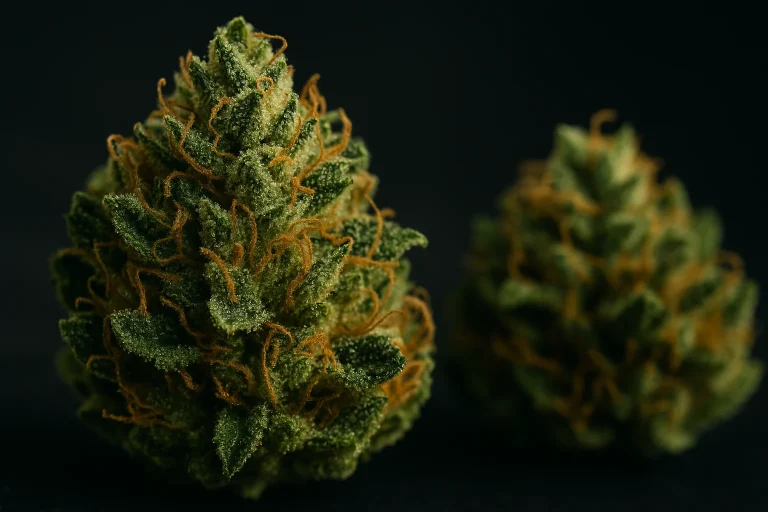
Hemp seeds are a food product, not a source of cannabinoids. These substances are produced in the resin glands on the flower clusters and leaves, not in the seeds. Trace amounts may come from contamination of the shell with plant material during harvesting. The seeds do not have psychoactive effects and do not have a dosage.
Do hemp seeds need to be ground or soaked?
Shelled seeds do not require preparation. They are soft, edible right away, and do not need soaking or cooking. Whole seeds, in a hard shell, should be ground just before use, as the shell hinders digestive enzymes' access to the inside of the seed and reduces protein digestibility.
Ile magnezu jest w nasionach konopi?
USDA states that there are 700 mg of magnesium per 100 g of shelled hemp seeds. Therefore, a 30 g serving provides 210 mg, which is about 56 percent of the reference intake value. This is one of the highest magnesium contents among edible seeds: chia seeds have 335 mg, and flaxseeds have 392 mg per 100 g.
Can hemp seeds and hemp oil be used for frying?
No. Polyunsaturated fatty acids account for 38.1 g of the 48.8 g of fat in the seeds and oxidize at high temperatures. Do not heat hemp oil at all, and add seeds to warm dishes after removing them from the heat. For frying, use fats that are predominantly monounsaturated or saturated.
Do hemp seeds have a lot of vitamin E?
No. The USDA reports 0.8 mg of alpha-tocopherol per 100 g of shelled seeds, which is about 2 percent of the reference daily intake for a 30 g serving. The figure of 80-90 mg repeated in Polish descriptions refers to tocopherols in total in 100 g of pressed hemp oil, not the seeds themselves.
In the category hemp food At u Bucha, you will currently find hemp teas and herbal blends. There are no seeds or edible oil available at the moment, so look for them where you buy loose products.
This article is for informational and educational purposes and does not constitute medical advice. Before starting supplementation, consult your doctor, especially if you are taking medications regularly, are pregnant or breastfeeding, or have a chronic illness.
Author: Michał Waluk · Opublikowano: 2026-06-22 · Aktualizacja: 2026-08-08