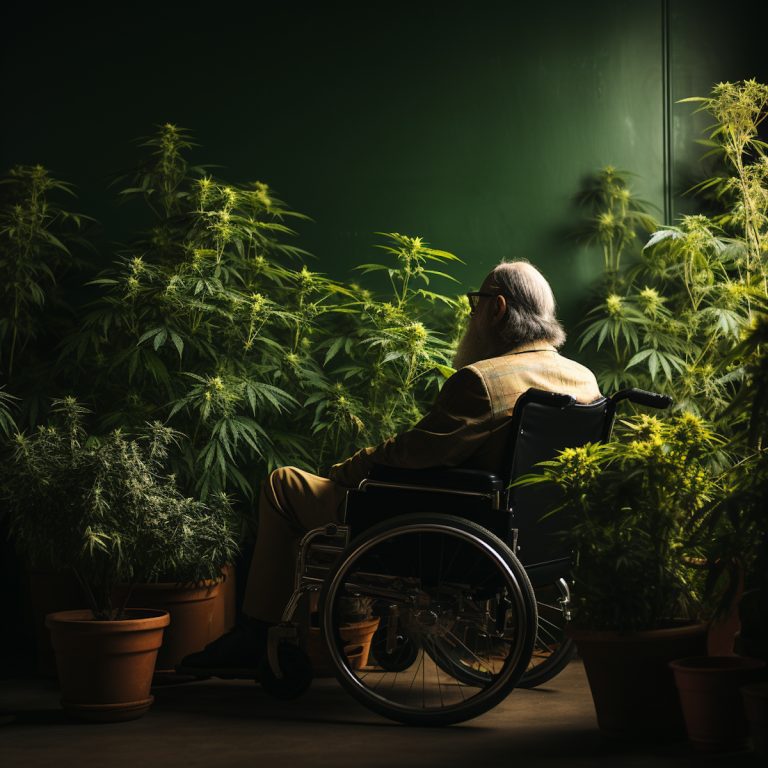

More Americans benefiting from marijuana legalization, but fewer with prescriptions for anti-anxiety drugs: New study sheds light on changing mental health dynamics
Studies by Bachhuber 2014, Bradford 2017, Crippa 2009, and Blessing 2015 on the legalization of marijuana in the USA, the decrease in benzodiazepine prescriptions, and CBD as an anxiolytic. The Polish perspective 2025.
Key information
- Correlation, not causation: Bradford et al. (Health Affairs, 2017) found a decrease in Medicare prescriptions for benzodiazepines by about 12% annually in states with medical marijuana, but this is still observational data, not experimental.
- Consumption scale in the USA: The NSDUH 2023 report (SAMHSA) indicates that about 61.9 million Americans (over 12 years old) used marijuana in the past year, which corresponds to 21.8% of the population.
- The THC paradox: at low doses, it acts anxiolytically, while at high doses it increases anxiety and can trigger cannabinoid-induced psychosis, as confirmed by studies by Crippa et al. (2009).
- CBD as an anxiolytic: A review by Blessing et al. (Neurotherapeutics, 2015) demonstrated the effectiveness of CBD in GAD, PTSD, social anxiety, and OCD with a good safety profile.
- Poland 2025: medical marijuana has been available by prescription Rpw since 2017, but anxiety is not the primary indication; CBD with up to 0.3% THC remains a legal support supplement.
There is increasing talk that the American market for anxiolytic drugs is shrinking where marijuana has become legal. According to data NSDUH 2023 (SAMHSA), about 61.9 million Americans over the age of 12 used cannabis in the past 12 months. This is a historic record. Concurrently, a study by Bradford et al. (2017) in Health Affairs showed a decrease in Medicare prescriptions for benzodiazepines in states with medical marijuana. Are we dealing with a substitution effect or just a coincidence of trends? In this text, we explain the mechanisms, methodological limitations, and the Polish perspective.
Does the legalization of marijuana in the USA really reduce the number of prescriptions for benzodiazepines?
Yes, the data suggest a correlation, but do not prove simple causation. The most frequently cited study by Bradford et al. (Health Affairs, 2017) estimated a decrease in daily doses of benzodiazepines in Medicare Part D by about 12% annually in states that introduced medical marijuana. This is a statistically significant signal, but econometric, not clinical.
What exactly did the Medicare data show?
The Bradford team analyzed prescriptions reimbursed by Medicare Part D from 2010 to 2013. In states with functioning medical marijuana programs, decreases were noted in categories: anxiolytics, antidepressants, pain medications, antipsychotics, and anti-nausea drugs. The strongest effect was observed for pain medications, but benzodiazepines and SSRIs also decreased.
A second study by Bradford et al. published in 2018 in JAMA Internal Medicine included Medicaid (low-income individuals) and confirmed the same direction of changes. This reinforced the substitution hypothesis, although critics point out that confounding factors may be at play, such as increasing awareness of the risk of benzodiazepine addiction.
Why is correlation not yet proof?
The decline in prescriptions may result from changes in clinical guidelines, educational campaigns regarding the safety of benzodiazepines, and greater availability of cognitive-behavioral therapy. During the same period, American medical societies actively limited long-term prescribing of benzodiazepines, which in itself could explain part of the observed trend.
Citation Capsule: According to by Bradford et al. (Health Affairs, 2017), in US states with legal medical marijuana, the number of daily doses of drugs reimbursed by Medicare Part D decreased by about 12% annually in five key categories, including benzodiazepines and antidepressants, compared to states without such programs.
pillar article on the properties of CBD
How many US states legalized marijuana by 2025?
According to NSDUH 2023 and current compilations from NORML and NCSL, as of early 2025, medical marijuana is legal in 38 states plus DC, and recreational use is allowed in 24 states plus DC. This is a massive change in just a decade and the political dynamics continue.
Map of legalization in 2025
The first state with medical marijuana was California (1996, Proposition 215). Colorado and Washington legalized recreational use in 2012. Since then, the wave of legalization has accelerated. In 2024, Ohio joined (recreational), while Florida and Pennsylvania remain political battlegrounds. Federally, marijuana still appears as Schedule I in the Controlled Substances Act, although a process to reclassify it to Schedule III is ongoing.
What does the consumer structure look like?
The report NSDUH 2023 indicates 21.8% usage over the year in the 12+ population. The highest rates are recorded among young adults (18-25 years), reaching about 38%. It is also important that 6.7% of Americans meet the criteria for Cannabis Use Disorder (CUD) according to DSM-5, which translates to about 19.2 million people.
What did the Bachhuber 2014 study say about opioids and marijuana?
A pioneering study Bachhuber et al. (JAMA Internal Medicine, 2014) found that in US states with medical marijuana, the annual mortality rate from opioid overdoses was 24.8% lower than in states without such programs. This analysis covered the years 1999-2010 and included 13 states.
Mechanism of the substitution hypothesis
Bachhuber proposed that patients with chronic pain who have access to medical marijuana are more likely to reduce or replace opioids with it. This reduces exposure to the risk of fatal overdose. The conclusion was cautious: correlation, not causation, but at the population level, the signal was surprisingly strong.
Later criticism and replications
Replication by Shover et al. (Stanford, 2019) showed that when the observation window was extended to 2017, the effect from 2014 reversed. States with medical marijuana recorded even higher rates of opioid mortality in later years. This shows how carefully one must interpret a single point in time.
From the perspective of cannabinoid educators, we observe in Polish practice that clients often hear a simplified version of these studies ("marijuana replaces medications"). Meanwhile, the reality is more complex, and no cannabinoid should be treated as an automatic alternative to opioid addiction therapies.
Citation Capsule: Study Bachhuber et al. (JAMA Internal Medicine, 2014) reported a 24.8% lower annual mortality rate from opioid overdoses in US states with medical marijuana from 1999 to 2010, however, later replications on data up to 2017 did not confirm this effect, signaling the limitations of observational analyses.
Does THC act anxiolytically or rather increase anxiety?
THC has a biphasic effect, and this is one of the most controversial aspects of cannabinoid pharmacology. At low doses (usually 5-7.5 mg), it exhibits an anxiolytic effect, while at high doses (above 15-20 mg), it often increases anxiety, paranoia, and can trigger a panic attack. This phenomenon is described in works including Crippa et al. (2009).
U-shaped response curve
CB1 receptors in the prefrontal cortex and amygdala moderate the fear response. Low doses of THC reduce the hyperactivity of the amygdala, which explains the calming effect. High doses overload the system, leading to disinhibition of fear circuits. This is why recreational users sometimes experience "bad trips," especially after edibles, whose effects begin after 60-120 minutes.
Who is most at risk?
Individuals with a genetic predisposition (COMT Val158Met variant), a family history of psychosis, youth with an immature brain (up to about 25 years old), and individuals with PTSD react with hyperarousal. Most commercial marijuana in legal US states has 18-30% THC, which is several times more than products from the 90s, radically changing the risk profile compared to older studies.
Why does CBD raise such high hopes in anxiety therapy?
Review Blessing et al. (Neurotherapeutics, 2015) systematically summarized preclinical and clinical evidence indicating that CBD exhibits anxiolytic effects in GAD, social anxiety, PTSD, and OCD. Importantly, CBD does not induce dependence and has a favorable safety profile confirmed by WHO ECDD (2018).
Mechanism of action of CBD
CBD does not directly bind to CB1 or CB2 receptors in an agonistic manner. It acts in multiple ways: it is an agonist of the 5-HT1A receptor (serotonergic system), a modulator of the TRPV1 receptor, an inhibitor of fatty acid amide hydrolase (FAAH, which raises anandamide levels), and affects adenosine receptors. This polypharmacology explains why CBD has such broad potential applications.
Key clinical evidence
Crippa et al. (2009) demonstrated in SPECT that a single dose of 400 mg of CBD reduced subjective anxiety levels and activation in limbic areas in patients with social anxiety. Bergamaschi et al. (2011) confirmed the benefit in a simulated public speaking test (SPST). Shannon et al. (2019) reported improved sleep and anxiety in 79% of patients after taking 25-75 mg of CBD daily for a month.
Citation Capsule: Review Blessing et al. (Neurotherapeutics, 2015) showed that cannabidiol (CBD) exhibits significant anxiolytic effects in animal models and in humans with anxiety disorders (GAD, social anxiety, PTSD, OCD), without addictive effects. WHO ECDD (2018) confirmed the safety of CBD in the absence of abuse potential.
What do these data mean for patients with PTSD, OCD, and GAD?
In patients with PTSD, it is estimated that 15-30% do not respond to standard SSRI treatment or EMDR (Stein et al., 2017). This is a group particularly interested in alternatives. According to a meta-analysis by Black et al. (Lancet Psychiatry, 2019), evidence for the effectiveness of medical marijuana in PTSD is still limited, but sufficient to justify further clinical research.
PTSD and cannabinoids
Patients with PTSD have reduced levels of anandamide (an endogenous cannabinoid) and increased availability of CB1 receptors, suggesting a deficit in endocannabinoid signaling. Hypothesis: cannabinoid supplementation may restore homeostasis. Studies by Jetly et al. (2015) demonstrated the effectiveness of nabilone (a synthetic THC analogue) in reducing nightmares in veterans.
OCD and compulsions
Small clinical studies (Kayser et al., 2020) suggest that CBD may reduce the severity of compulsions in SSRI-resistant OCD. The mechanism is related to the modulation of cortico-striato-thalamic circuits. However, large randomized trials are needed.
GAD – generalized anxiety disorder
Crippa, Zuardi, Hallak, and their team consistently show that CBD in doses of 300-600 mg daily reduces subjective anxiety levels in individuals with GAD. The effect is not immediate. It often requires 2-4 weeks of regular use, similar to SSRIs.
What risks are associated with using marijuana instead of medications?
According to DSM-5 and data NSDUH 2023, about 6.7% of adult Americans meet the criteria for Cannabis Use Disorder (CUD), and among daily consumers, this rate reaches 30%. This shows the scale of the risk of self-medication without medical supervision, especially with highly concentrated products from the legal market.
Cannabis Use Disorder (CUD)
CUD includes loss of control over consumption, tolerance, withdrawal syndrome (irritability, insomnia, lack of appetite), and continuation despite harm. The risk of CUD increases when cannabis is used for "self-medication" of anxiety, as it is easy to fall into the negative conditioning mechanism: relief after use reinforces the repetition of the behavior.
Cannabinoid Hyperemesis Syndrome (CHS)
CHS is a paradoxical syndrome of symptoms: nausea, vomiting, and abdominal pain in long-term, heavy cannabis consumers. Partial relief comes from taking a hot bath. The number of cases in the USA is rapidly increasing with the legalization of highly concentrated products.
Cannabinoid-induced psychosis
A meta-analysis by Marconi et al. (2016) showed that daily use of high-THC marijuana increases the risk of psychosis by 3-5 times. A study by Di Forti et al. (Lancet Psychiatry, 2019) in the London population indicated that about 30% of first episodes of psychosis could be linked to skunk use.
It often goes unnoticed that American recreational products from 2020-2025 have THC concentrations 3-5 times higher than those studied in works from the 90s and 2000s, so historical conclusions about the "mildness" of cannabis may not apply to the current market.
Citation Capsule: Data NSDUH 2023 (SAMHSA) indicates that 6.7% of adult Americans (about 19.2 million people) meet the criteria for Cannabis Use Disorder according to DSM-5, and among daily consumers, this rate reaches 30%. This is a significant argument for not treating cannabis self-medication as a safe alternative to supervised pharmacotherapy.
How do American results translate to Polish realities in 2025?
Direct transfer is not possible. In Poland, possession of THC is illegal (Act on Counteracting Drug Addiction of July 29, 2005), medical marijuana has been functioning since 2017 only by prescription Rpw, and anxiety is not among the typical primary indications. CBD with up to 0.3% THC is legal as a dietary supplement or cosmetic, but it is not a medicine.
Medical marijuana in Poland – who is it for?
The Act of July 7, 2017, allowed the use of pharmaceutical cannabis raw material. The most common indications are: chronic pain resistant to standard treatment, spasticity in multiple sclerosis, nausea after chemotherapy, drug-resistant epilepsy (Dravet, Lennox-Gastaut). Anxiety and depression are not listed as standard indications, although a doctor may consider off-label therapy.
Procedure for obtaining a prescription Rpw
A prescription is issued by a specialist doctor after standard treatment methods have been exhausted. The patient must go to a pharmacy that will order the raw material (most often from Canada, Germany, or Poland – Spectrum Therapeutics, Aurora, Pharmedica). The uninsured cost is approximately 50-90 PLN per gram of dried flower.
CBD in Poland – legal status
CBD oils and dried flowers derived from hemp (Cannabis sativa L.) with THC content up to 0.3% are legal. Their trade is regulated by food regulations (supplements/food), cosmetics, or hemp products. CBD is not registered as a medicine in Poland, so it cannot be advertised as anxiety therapy.
Citation Capsule: In Poland, possession of THC is punishable under the Act on Counteracting Drug Addiction of July 29, 2005, medical marijuana has been functioning since 2017 exclusively by prescription Rpw for narrow indications (chronic pain, spasticity, drug-resistant epilepsy), and CBD with up to 0.3% THC remains a legal supplement without the status of a medicinal product.
step-by-step guide
Can CBD be a legal alternative for support in Poland?
Yes, but only as part of self-care, not as a disease therapy. According to the report WHO ECDD (2018), CBD has a favorable safety profile, shows no potential for abuse, and does not cause dependence. This is a key difference compared to benzodiazepines, where the risk of addiction is significant after just 4-6 weeks of use.
How to choose CBD oil for stress support?
First, check laboratory certificates (HPLC) for cannabinoid content. Second, pay attention to the type of extract: isolate (pure CBD), broad spectrum (CBD plus other cannabinoids without THC), or full spectrum (with THC up to 0.3%). Third, choose manufacturers who disclose the source of the raw material and the extraction method (supercritical CO2 is the gold standard).
Recommended products from our offer
In our store practice, the four most frequently chosen products for support during periods of increased stress are:
- SOOL CBD Oil 5% (76 PLN) – mild concentration of 500 mg CBD in 10 ml, good for beginners and sensitive individuals.
- SOOL CBD Oil 10% (99 PLN) – 1000 mg CBD in 10 ml, a popular choice for regular use.
- Cannova CBG Oil 15% (240 PLN) – an alternative with dominant cannabigerol (CBG), studied for its neuroprotective and anti-inflammatory properties.
- Mars Dry CBD 9% (59 PLN) – hemp flower for vaporization, for those who prefer inhalation (legal only for collection purposes, according to regulations).
Ethics, medical supervision, and safe discontinuation of medications
According to the guidelines by Bradford et al. (2017) and Polish psychiatric societies, self-discontinuation of benzodiazepines (alprazolam, lorazepam, clonazepam, diazepam) or SSRIs (escitalopram, sertraline, fluoxetine) is dangerous. It can cause withdrawal syndrome, including seizures, increased anxiety, and blood pressure spikes.
Why is medical supervision essential?
Benzodiazepines act on the GABA-A receptor and create physical dependence. Discontinuation requires a gradual dose reduction (taper) lasting weeks or months, supervised by a psychiatrist. Adding CBD to the regimen does not replace this process and may affect drug metabolism through the cytochrome P450 system.
Interactions of CBD with medications
CBD is an inhibitor of CYP3A4 and CYP2C19 enzymes, so it may raise levels of: warfarin, some SSRIs, calcium channel antagonists, clobazam, and others. Any decision to combine CBD with pharmacotherapy should be consulted with the attending physician, preferably with access to serum drug concentration measurements.
Ethics of support in a cannabis shop
Our store policy is not to make diagnoses or recommend discontinuing any medications. Customers with active psychiatric therapy are always referred back to their attending physician. CBD can be a valuable support supplement, but it should never replace professional mental health care.
FAQ – frequently asked questions about marijuana and anti-anxiety medications
1. Can I stop taking Xanax if I start taking CBD oil?
No. Alprazolam (Xanax) and other benzodiazepines require gradual, supervised discontinuation under the care of a psychiatrist. According to the guidelines of the Polish Psychiatric Association, sudden discontinuation can trigger withdrawal syndrome, increased anxiety, insomnia, seizures, and even status epilepticus. CBD does not replace this process and there are no studies confirming such substitution in humans.
2. Can I get medical marijuana for anxiety in Poland?
Anxiety is not on the list of standard indications for medical marijuana in Poland. A prescription Rpw is mainly issued for chronic pain resistant to treatment, spasticity in multiple sclerosis, drug-resistant epilepsy, and nausea after chemotherapy. A doctor may theoretically consider off-label therapy, but such practice is rare, and most specialists prefer documented SSRIs and cognitive-behavioral therapy.
3. What doses of CBD are used in anxiety studies?
In clinical studies such as Crippa et al. (2009), Bergamaschi et al. (2011) and Shannon et al. (2019), doses range from 25 mg to 600 mg of CBD at a time. Stores offer oils where the typical daily dose is 20-50 mg. CBD supplementation is not considered treatment for anxiety disorders under Polish law, and manufacturers cannot advertise it as such.
4. Does THC help with anxiety or increase it?
The action of THC is biphasic (U-curve). At low doses (5-7.5 mg), it may have a calming effect on some individuals, but at higher doses (above 15-20 mg), it regularly increases anxiety, paranoia, and can trigger a panic attack, as described by Crippa et al. (2009) and Blessing et al. (2015). Individuals predisposed to psychosis, youth, and patients with PTSD are most at risk for side effects.
5. What is Cannabis Use Disorder?
It is a cannabis use disorder described in the DSM-5 classification. According to NSDUH 2023 (SAMHSA) criteria, about 6.7% of adult Americans meet the criteria. Symptoms include loss of control over consumption, development of tolerance, withdrawal syndrome (irritability, insomnia, loss of appetite), and continuation despite social, professional, or health harms. The prevalence rises among daily consumers to 30%.
6. Does CBD have side effects?
According to the report WHO ECDD (2018), CBD is well tolerated. Possible side effects include drowsiness, dry mouth, diarrhea, fatigue, and occasionally changes in appetite. The most important are interactions with drugs metabolized by cytochrome P450, so individuals on pharmacotherapy should consult CBD supplementation with their attending physician.
7. Can American studies be transferred to Poland?
Only partially and with great caution. The United States has liberal legislation, access to recreational products with THC up to 30%, and a different mental health culture. In Poland, THC remains illegal without a Rpw prescription, and the psychiatric care system is based on reimbursed SSRI medications and cognitive-behavioral therapies. The "substitution" mechanism cannot occur on a large scale.
8. What does WHO say about CBD?
The WHO Expert Committee on Drug Dependence (ECDD) in its 2018 report stated that CBD is generally well tolerated, has a favorable safety profile, shows no potential for abuse or causing physical dependence. WHO recommended that pure CBD not be subject to international drug control, although products containing THC remain covered by conventions.
9. Is CBD oil legal in Poland in 2025?
Yes. CBD oils derived from hemp (Cannabis sativa L.) with THC content up to 0.3% are legal in Poland. They can be sold as dietary supplements, cosmetics, or hemp products. However, the manufacturer or seller cannot advertise them as a medicine or suggest therapeutic properties reserved for registered medical products.
10. What alternatives do I have if I don't want to take benzodiazepines?
It is best to discuss this with a psychiatrist. Standard alternatives include SSRIs (escitalopram, sertraline), SNRIs (venlafaxine), pregabalin, hydroxyzine, and above all, cognitive-behavioral therapy (CBT), which has the strongest evidence in generalized anxiety. Lifestyle modifications (sleep, physical activity, reducing caffeine and alcohol), relaxation techniques, and mindfulness are good complements. CBD can be a background support supplement.
Summary – what do American studies indicate?
Data from the USA show an interesting correlation: in states with legal medical marijuana, the number of prescriptions for benzodiazepines and opioids is decreasing. Bradford et al. (2017) estimate the effect at about 12% annually, while Bachhuber et al. (2014) reported a 24.8% lower mortality from opioids, although later replications tempered enthusiasm. However, these are population correlations, not randomized clinical trials. The mechanism likely stems from the substitution hypothesis, education about the risks of benzodiazepines, and simultaneous changes in clinical guidelines.
In Poland, the legal and clinical ecosystem in 2025 is different. Medical marijuana is available by prescription Rpw for narrow indications, and anxiety is not among the standard ones. CBD with up to 0.3% THC remains a legal supplement, the effectiveness of which in GAD, social anxiety, and PTSD is confirmed by studies Blessing et al. (2015) i Crippa et al. (2009), but often in doses higher than in commercial oils.
The most important conclusion: never discontinue benzodiazepines or SSRIs without a doctor's supervision, treat CBD as support, not a replacement for treatment, and do not succumb to simplified media narratives about "marijuana instead of medications." Therapeutic decisions require individual assessment, and reasonable use of scientific data is linked to knowledge of the local legal context and your health status.
product category page
Disclaimer and legal notices
This article is for informational and educational purposes only. It does not replace medical consultation, diagnosis, or treatment. The American studies cited in the text do not translate one-to-one to Polish realities due to legal, cultural, and clinical differences. In Poland, possession of THC outside of prescription Rpw is punishable under the Act on Counteracting Drug Addiction of July 29, 2005. CBD with up to 0.3% THC is legal as a dietary supplement or cosmetic, but it is not a medicinal product and cannot be advertised as a therapy for diseases. Never discontinue benzodiazepines, SSRIs, or other psychotropic medications on your own. Make therapy decisions in consultation with your attending physician.