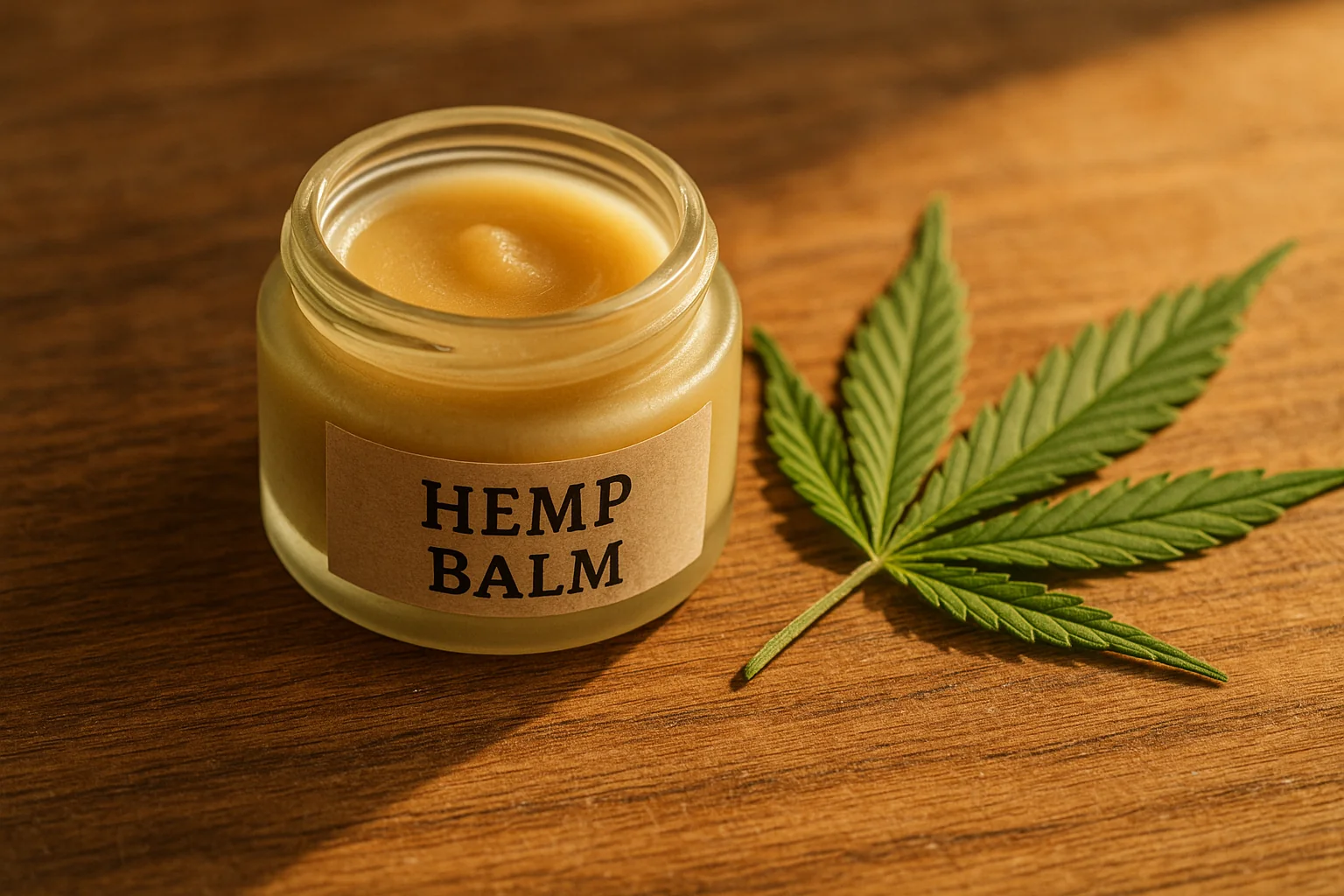

CBD hemp ointment: what it helps with, how to use it, and does it work
Hemp CBD ointment – what does it help with, how to use it, and does it work? CB2 receptors in the skin, Hammell study 2016, joint and muscle pain. Practical guide 2026.
CBD Hemp Ointment is one of the fastest-growing segments of the Polish wellness market. It promises local action for joint, muscle pain, and skin inflammation - without the systemic effects associated with oral CBD oil use. But do studies confirm these promises? And how to choose a product that actually contains enough CBD to be effective? In this article, we will go through the mechanism of action, clinical data - with the key study by Hammell et al. (2016) - and specific usage tips.
KEY INFORMATION
• The study by Hammell et al. (European Journal of Pain, 2016) showed that transdermal CBD gel reduced arthritis and nociceptive pain by 50-60% in a preclinical model.
• Human skin expresses CB1 and CB2 receptors - CBD acts locally without the need to enter the bloodstream.
• Effective therapeutic concentration in products from studies: 250-500 mg of CBD per 30 g of product (8-17 mg/g).
• Effects for joint and muscle pain: onset 15-45 min, full effectiveness after 1-2 weeks of regular use.
How CBD Hemp Ointment Works - Receptors in the Skin
Topical CBD acts through endocannabinoid receptors located directly in the skin and subcutaneous tissues. Human skin has its own endocannabinoid system - independent of the central one - with CB1 and CB2 receptors on keratinocytes, fibroblasts, fat cells, and immune cells (mast cells, macrophages). Tóth et al. (Trends in Pharmacological Sciences, 2014) They described this local endocannabinoid system as the "cutaneous guardian of homeostasis" - regulating cell proliferation, inflammation, and sebum production.
Topical CBD activates CB2 receptors in inflammatory tissues, inhibiting the release of pro-inflammatory cytokines - TNF-α, IL-1β, and IL-6 - directly at the application site. It does not need to enter the bloodstream. This is a fundamental difference compared to orally administered CBD oil: ointment acts locally and purposefully, which has advantages for joint and muscle pain where we want a tissue effect without a systemic effect.
An additional mechanism is the blocking of TRPV1 receptors (vanilloid receptors) in the dermis - the same ones that respond to capsaicin and heat. CBD reduces TRPV1 sensitivity, which translates to an increased pain threshold in the application area. Costa et al. (Pain, 2004) They demonstrated that transdermal CBD applied to tissues adjacent to the joint produced a TRPV1-dependent analgesic effect comparable to local capsaicin application, but without the discomfort of burning.
What the Hammell et al. 2016 study says - key evidence for transdermal CBD
Study Hammell et al. (European Journal of Pain, 2016) is one of the most cited in the context of topical CBD and remains a benchmark for the entire segment. The study used transdermal CBD gel at four concentrations (0.6; 3.1; 6.2 and 62.3 mg/day) for 4 days in rats with induced arthritis. Results: the two higher concentrations (6.2 and 62.3 mg/day) significantly reduced joint swelling, histopathological markers of inflammation, and nociceptive pain (measured by the Von Frey test) by 50-60%. Key: CBD was not detected in the blood at systemic levels - the action was purely local.
Study limitations: animal model, the gel contained propylene glycol as a skin-penetrating enhancer, which is not standard in commercial ointments. Translating to humans requires caution. However, the biological mechanism is biologically plausible, and observational studies in humans confirm subjective improvement with topical CBD.
Our observations: The effectiveness of CBD ointment largely depends on its formulation - not just the amount of CBD. Ointments with permeation enhancers (e.g., propylene glycol, eucalyptus, menthol) penetrate deeper than pure fat-based ointments. If the ointment acts "on the surface" and quickly rubs off, it probably does not reach joint tissues. Look for products with penetration activators in the composition.
What CBD Hemp Ointment Helps With - Indications and Realistic Expectations
Topical CBD has the most justified applications where inflammation and pain localize close to the skin surface or in superficial tissues. For deeper structures - articular cartilage, bones, intervertebral discs - effectiveness is uncertain, as CBD penetration through the skin is limited even with good formulations.
Joint pain (osteoarthritis, injuries): The best-studied area. For knee, elbow, wrist pain, using CBD ointment 2-3 times a day may alleviate superficial pain and tension in the joint capsule. An observational study Vela et al. (Journal of Cannabis Research, 2022) included 428 patients with osteoarthritis - 76% reported improvement in pain assessment with CBD use (orally or topically). This is not an RCT, but the scale is clinically significant.
Muscle pain after exertion (DOMS): Topical CBD may shorten recovery time by reducing local inflammation and muscle tension. Professional athletes using topical CBD for muscle pain report a quicker return to form. Mechanism: CB2-dependent reduction of inflammatory cytokines in damaged muscle tissue.
Minor injuries (sprains, bruises, tendonitis): CBD may help through anti-inflammatory action and a possible effect on connective tissue healing (fibroblasts have CB2 receptors). However, clinical data here is still very preliminary - we mainly rely on biological mechanisms and anecdotal reports.
Skin inflammations this is a separate topic - a detailed discussion of eczema and psoriasis can be found in the article Hemp ointment for eczema and itchy skin.
How to Use CBD Hemp Ointment - Step by Step Instructions
Effective use of CBD ointment requires a few principles that are often overlooked on packaging. The difference between "the ointment doesn't work" and "the ointment works" often lies not in the product, but in the application method.
Step 1 - Patch Test: Before the first use, apply a small amount of the ointment to the inner side of your wrist or the bend of your elbow. Wait for 24 hours. If there is no redness, itching, or allergic reaction - you can use it on the targeted area. This applies even to "natural" products - beeswax, essential oils, and lanolin can cause reactions in sensitive individuals.
Step 2 - Skin cleansing: Apply the ointment to clean, slightly damp skin. Moisture improves lipid absorption. Do not use on skin with cream or lotion - they block CBD penetration.
Krok 3 - Aplikacja z masowaniem: Apply a pea-sized amount to the painful area and massage in circular motions for 1-2 minutes. Massaging mechanically improves microcirculation and penetration. For joint pain, massage from the edges to the center; for muscle pain - along the muscle fibers.
Step 4 - Regularity: 2-3 times a day for at least 2 weeks. Initial effects may appear after a few hours, but CBD accumulates in subcutaneous fat tissue and works cumulatively. One application is not enough to assess the product's effectiveness.
When not to use: On open wounds, cracked or severely reddened skin, areas with active infections (fungal, bacterial). If pregnant, breastfeeding, or on blood-thinning medications - consult a doctor.
How much CBD in ointment is enough? How to evaluate the product
The CBD ointment market is full of products of very different quality - from preparations with a symbolic amount of CBD (which have no chance of therapeutic action) to products with concentrations similar to doses from clinical studies. How to distinguish one from another?
In the study by Hammell et al. (2016), 6.2-62.3 mg of CBD was used per day (in a dosed gel). Converting to commercial products: an effective ointment should contain 250-500 mg of CBD per 30 g of product - which gives 8-17 mg of CBD per gram. A typical dose (0.5 g) then provides 4-8 mg of CBD per application. With 3 applications a day, that's 12-24 mg of CBD locally - close to experimental doses.
Products on the market with 50 mg of CBD per 30 g (~1.7 mg/g) almost certainly do not reach therapeutic concentrations. Unfortunately, such products often dominate drugstore shelves - because they are cheaper to produce and easier to sell at an attractive price. Always check the total amount of mg of CBD per package and convert to grams.
CBD Ointment vs CBD Oil - what to choose for local pain?
A common question arises: since I have CBD oil, why do I need ointment? And conversely - is ointment alone sufficient? The answer depends on the nature of the problem and expectations.
CBD oil taken orally (sublingually) works systemically: it enters the bloodstream, modifies the inflammatory response of the entire body, regulates pain through the CNS, and influences sleep and mood. This approach makes sense for chronic pain in multiple areas, systemic inflammation (RA, autoimmune diseases), and sleep problems due to pain.
CBD ointment works locally: it concentrates CBD exactly where it is needed, bypassing liver metabolism and systemic effects. This approach is sensible for pain in a single joint or muscle group, after a sports injury, or in cases of tendonitis or bursitis.
The most effective strategy is a combination: CBD oil orally (15-25 mg/day) for overall effect + CBD ointment topically for local effect. Badanie obserwacyjne Vela et al. (Journal of Cannabis Research, 2022) It has been shown that patients using CBD both orally and topically reported greater improvement than those using only one method.
Complementary ingredients in hemp ointments - what enhances the action of CBD?
A good hemp CBD ointment is not just CBD - it is a formulation in which CBD interacts with other active ingredients. Many commercial preparations combine CBD with substances that have documented anti-inflammatory and analgesic effects, which can enhance effects or improve penetration.
Mentol i kamfora: Classic "cooling" ingredients activate TRPM8 receptors, providing an immediate cooling sensation and temporary pain relief. They also have analgesic effects through opioid receptors. The combination with CBD - which acts more slowly but deeper and longer - is a sensible pairing: menthol provides a quick effect, while CBD builds a lasting one.
Arnika i harpagofyt: Plant extracts with anti-inflammatory effects. Arnica (Arnica montana) contains helenalin - a sesquiterpene lactone that inhibits NF-κB and reduces swelling. Devil's claw (Harpagophytum procumbens) has shown effectiveness in lumbosacral pain comparable to diclofenac in systematic reviews (Chrubasik et al., Phytomedicine, 2007). Both ingredients synergize with CBD in reducing local inflammation.
Essential oils: Rosemary (borneol, camphor), eucalyptus (1,8-cineole), lavender (linalool) - improve skin penetration as natural permeation enhancers and have their own anti-inflammatory effects. CBD flower rich in these same terpenes suggests that terpene extracts enhance the action of CBD in ointments - the entourage effect in cosmetic formulation.
When choosing a CBD ointment: the composition should be transparent, CBD with a COA certificate, and the ingredient list - verifiable. Avoid products where CBD is listed far down the INCI list (INCI ingredients are listed in descending order by concentration) or where only "hemp extract" is provided without information on CBD content.
Frequently Asked Questions
What does CBD hemp ointment help with?
CBD hemp ointment applied topically can help with joint and muscle pain, skin inflammation, sports injuries, and morning stiffness. Hammell et al. (European Journal of Pain, 2016) demonstrated that transdermal CBD reduced inflammation and nociceptive pain in an arthritis model by 50-60% without systemic effects.
How much CBD should an effective hemp ointment contain?
Effective topical CBD preparations from clinical studies contained 250-500 mg of CBD per 30 g of product (8-17 mg/g). Products on the market with lower content (<50 mg CBD per 30 g) may not achieve therapeutic concentrations. Check the total amount of mg CBD per package and convert to grams; do not rely solely on percentages.
How to use CBD hemp ointment for joints?
Apply a thin layer of ointment to the skin over the painful joint and gently massage in circular motions for 1-2 minutes. Use 2-3 times a day, regularly for at least 2 weeks. Before the first use, perform a patch test on the inner side of your wrist.
Does CBD hemp ointment enter the bloodstream?
Only to a minimal extent. Topical CBD primarily acts in subcutaneous and muscular tissues. Hammell et al. (2016) they demonstrated that CBD gel achieved therapeutic concentrations in the joint without detectable systemic levels. An occlusive ointment penetrates deeper than a cream but still acts mainly locally.
What is the difference between CBD hemp ointment and hemp cream?
Ointment is a fat-based preparation with little or no water - better penetration through the epidermis, higher occlusion. Cream is a water-in-oil emulsion: lighter, absorbs faster, but lower occlusion. For deeper pain (joints, muscles), ointment is usually more effective than cream with the same amount of CBD.
When does CBD hemp ointment start to work?
Initial effects may be felt 15-45 minutes after application. For chronic joint pain, full effects require regular use for 7-14 days. CBD accumulates in subcutaneous fat tissue and works cumulatively. Also check: What is CBD flower for comparison with other forms of CBD.
Is CBD hemp ointment safe for long-term use?
Yes, with proper formulation. Topical CBD has a favorable safety profile - potential reactions are contact dermatitis to excipients (e.g., waxes, essential oils), not to CBD itself. WHO (2018) considered CBD to be well tolerated with no risk of addiction. Long-term topical use does not lead to tolerance.
Summary - what you should know about hemp CBD ointment
CBD hemp ointment is a well-justified tool for local support in joint, muscle pain, and skin inflammation. The biological mechanism (CB2 and TRPV1 receptors in the skin) is well described, and the study by Hammell et al. (2016) provides the first solid data on transdermal CBD for arthritis. Realistic expectations: it’s not about eliminating severe pain, but about reducing its intensity and improving mobility with regular use.
Key principles for selection and use: check the concentration of CBD in mg per gram of product (minimum 8 mg/g for therapeutic effects), use regularly 2-3 times a day for at least 2 weeks, massage during application. Ointment is a complement, not a substitute - for chronic systemic pain, consider combining with oral CBD for systemic effect.
This article is for informational and educational purposes and does not replace consultation with a doctor. If you are pregnant, breastfeeding, taking medications, or have chronic conditions, consult the use of supplements or herbs with a specialist.
Author: Michał Waluk · Published: 2026-05-04 · Updated: 2026-05-04