
Creatine: what it does, when to take it, and whether it is only for strength athletes
Creatine monohydrate – what it does, when to take it, dosage, and safety. Muscle mass, strength, anaerobic endurance, brain. Who it really works for.
Creatine is the supplement with the most clinical research in the history of sports science - over 1000 published RCTs and systematic reviews. The International Society of Sports Nutrition calls it "the most effective nutritional ergogenic aid available to athletes." And yet, myths circulate about it: that it damages kidneys, that it is only for bodybuilders, that it causes water retention. This article precisely answers all questions - based on facts, not marketing.
KEY INFORMATION
• Creatine monohydrate increases 1RM by 5-15% and muscle mass by 0.5-2 kg after 4 weeks of training - meta-analysis by ISSN (Kreider et al., J Int Soc Sports Nutr, 2017).
• Creatine improves working memory and reduces cognitive fatigue - meta-analysis by Avgerinos et al. (2018, Experimental Gerontology).
• Dosage: 5 g of monohydrate daily - loading phase is NOT necessary, the end effect is identical.
• Vegans and vegetarians show a greater response to creatine because their baseline levels of phosphocreatine in muscles are lower.
What is creatine and how does it work?
Creatine is an organic chemical compound (beta-methylguanidinoacetic acid) synthesized mainly in the liver and kidneys from glycine, arginine, and methionine. Under natural conditions, we also obtain it from the diet - red meat and fish contain about 1-2 g of creatine per 100 g of product. In muscles, creatine is phosphorylated to phosphocreatine (PCr) - a reservoir of quick energy for ATP resynthesis.
ATP is the energy currency of every cell, but its reserves last for only 1-3 seconds of maximum effort. Phosphocreatine rebuilds ATP within seconds - without the involvement of oxygen and without producing lactic acid. Creatine supplementation increases the concentration of PCr in muscles by 20-40%, which directly translates to the ability to perform high-intensity short-term and interval efforts and faster recovery between training sets.
Our observations: Creatine is one of the few supplements where the effect has been consistently replicable in independent laboratories around the world for over 30 years. This is not a placebo effect or the influence of a single manufacturer. The consistency of results across such a large number of studies is a rare phenomenon in supplement science - studies usually yield conflicting results.
Co konkretnie daje kreatyna - efekty potwierdzone naukowo
Maximum strength - meta-analyses show an increase in isometric and dynamic strength of 5-15% compared to placebo with the same training protocol. ISSN Position Stand (Kreider et al., 2017) states that "creatine is the most effective supplement for increasing strength and endurance during intense training." The effects are strongest during strength training with heavy loads.
Muscle mass - an increase in muscle mass of 0.5-2 kg after 4-12 weeks of training with creatine compared to placebo. Mechanisms: higher training volumes (more repetitions, heavier weights) stimulate a stronger anabolic stimulus; the direct effect of creatine on the expression of satellite muscle cells (myogenic effect). Part of the mass increase is intracellular water - a beneficial effect for muscle metabolism, not aesthetically unfavorable "swelling".
Performance in sprints and intervals - an increase in peak power of 5-26% in Wingate tests and repeated sprint protocols. This makes creatine particularly valuable not only for bodybuilders but also for sprinters, swimmers, rowers, football players, and anyone who trains intensely with short breaks.
Cognitive benefits - phosphocreatine is also an energy reservoir for the brain. Metaanaliza Avgerinos et al. (Experimental Gerontology, 2018) analyzed 6 RCTs and showed a significant improvement in working memory and information processing speed with creatine supplementation in healthy adults. The effects are particularly noticeable in cases of sleep deprivation and in vegetarians/vegans with low baseline levels of phosphocreatine in the brain.
When and how to take creatine - dosing without myths
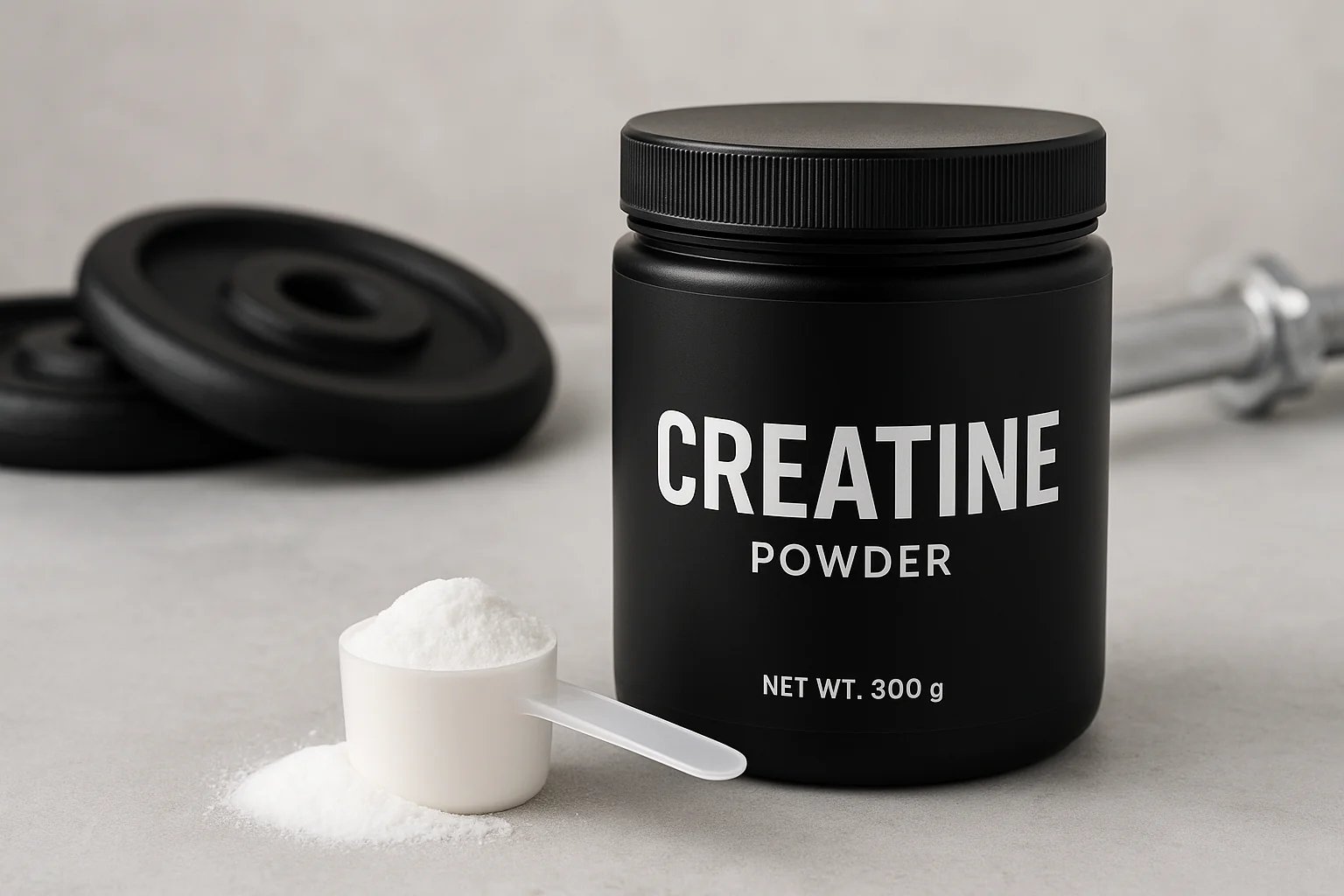
Standard dosing: 5 g of creatine monohydrate daily. Simple, cheap, effective. The monohydrate form is the cheapest and most well-researched - other forms (creatine ethyl ester, buffered Kre-Alkalyn, creatine malate, creatine hydrochloride) have not shown an advantage over monohydrate in direct comparisons and cost several times more.
Loading phase - 20 g/d (4 x 5 g) for 5-7 days, then 5 g/d for maintenance. Muscle saturation with creatine occurs faster (in 5-7 days instead of 3-4 weeks at 5 g/d), but the final effect is identical. Loading is not necessary unless you want quick effects before competitions or an intense training block.
Timing: regularity is more important than timing. Data suggest a slight advantage to taking it post-workout (higher transport to muscles via insulin and increased blood flow). On non-training days - in the morning or evening, it doesn't matter. With water or juice (carbohydrates may slightly improve transport). There is no need to "cycle" creatine (take breaks) - there is no scientific basis for this.
Is creatine just for bodybuilders? - other applications
Creatine is particularly effective in disciplines requiring explosiveness and repeated intense efforts: swimming (interval training), rowing, track and road cycling TT, combat sports, racquet sports (tennis, squash), soccer, and volleyball. Even among long-distance runners, creatine can improve interval training performance, which indirectly translates to marathon results.
Older adults - creatine preserves muscle mass (sarcopenia) and functional strength in individuals over 60 years old. Combined with resistance training, it reduces the risk of falls and prolongs independence. Review by Lanhers et al. (European Journal of Sport Science, 2017) confirmed that creatine, along with resistance training, significantly increases strength and muscle mass in older adults.
Vegetarians and vegans - lower baseline levels of phosphocreatine in muscles (lack of creatine from meat) mean greater "headroom" for supplementation. Studies consistently show a stronger ergogenic response in individuals on a plant-based diet: higher increases in PCr concentration in muscles, stronger improvements in strength and muscle mass compared to omnivores with the same protocol. For vegans and vegetarians, 5 g/d of monohydrate is one of the best-considered dietary supplements.
Myths and facts about creatine - debunking the most popular mistakes
Myth: "Creatine damages the kidneys." Facts: Creatine is metabolized to creatinine, which is excreted by the kidneys. This raised alarms because creatinine is a marker of kidney function - but the increase in creatinine with creatine supplementation is a result of increased creatine metabolism, not kidney damage. Long-term studies (5 years of supplementation) have shown no kidney damage in healthy individuals. If there is existing kidney disease, consult a nephrologist - not because creatine "damages the kidneys," but because it interferes with diagnostic markers.
Myth: "Creatine causes hair loss." A study from 2009 on 20 rugby players showed an increase in DHT (dihydrotestosterone) with creatine supplementation. DHT is associated with androgenic alopecia. However, DHT did not rise above the laboratory norm in this study, and no other study has replicated either the DHT result or the hair loss effect. There is no basis for this claim.
Myth: "You need to take a break from creatine." There is no scientific basis for cycling creatine. Long-term studies (years of continuous supplementation) have shown no negative effects or "resistance." Cycling is a myth from the early years of the supplement's popularity, unsupported by any research.
Myth: "Expensive forms of creatine work better." Kre-Alkalyn, malate, ethyl ester, HCl, micronized - none of these forms have shown an advantage over monohydrate in direct comparisons. Creatine monohydrate is the cheapest, best-researched, and sufficiently effective.
What to combine with creatine and what to avoid?
Creatine with carbohydrates: insulin improves the transport of creatine to muscles. After training with fruit juice or a carbohydrate meal - a slight but real optimization. Creatine with protein: simultaneous supplementation of creatine and whey or plant protein is effective and does not interact.
Creatine with caffeine: for years it was believed that caffeine negates the effect of creatine (a study from 1996). Newer studies have not replicated this effect. The use of both supplements is safe and likely additively beneficial - creatine works on strength and power, caffeine on perceived exertion and endurance. Just avoid very high doses of caffeine (above 9 mg/kg) with creatine, as this can cause dehydration and stomach issues.
Creatine and hydration: creatine increases the need for water (intracellular water in muscles). Drink at least 2-3 liters of water daily with regular supplementation, especially with intense training.
We discuss more about supplements for professional athletes in the article supplements for athletes without doping - what is compliant with regulations.
Kreatyna a zdrowie poza sportem - neurologia, serce i starzenie
The potential of creatine extends far beyond the gym. In neurology, pilot studies suggest benefits in mild traumatic brain injury (TBI) and post-concussion syndrome. Phosphocreatine serves as an energy buffer for neurons during injury, and supplementation may protect against secondary damage. In the study by Sakellaris et al. (2006, Developmental Medicine and Child Neurology), creatine supplementation for 6 months in children after TBI reduced the frequency of headaches, amnesia, and dizziness compared to placebo.
Creatine in neurological diseases: exploratory studies have been conducted in Parkinson's disease (neuroprotective potential through mitochondrioprotection), amyotrophic lateral sclerosis (ALS), and Huntington's disease. The results were ambiguous, but the mechanism is biologically justified. Creatine also improves cognitive performance during sleep deprivation - an interesting application for individuals in professions requiring attention with sleep deficiency (surgeons, pilots, drivers).
Creatine and sarcopenia: age-related muscle loss (sarcopenia) is one of the main factors increasing the risk of falls and dependence on care in older adults. A meta-analysis by Lanhers et al. (2017) confirmed that creatine with resistance training significantly increases strength and muscle mass in individuals over 55 years old, although the effects are smaller than in young athletes. For seniors with sarcopenia, 3-5 g/d of creatine combined with resistance training 2-3 times a week is one of the best-documented non-scientific interventions. Safe with proper kidney function.
Practical questions - quality, price, purchase
Which creatine monohydrate to buy? Monohydrate is monohydrate - don't pay for "premium" forms that have no documented advantage. Look for products with the Creapure certification (produced in Germany, high purity), which guarantees a minimum of 99.95% purity of monohydrate. Creapure products can be recognized by the logo on the packaging. This is the only specification worth the extra cost. All other forms (HCl, ethyl ester, Kre-Alkalyn, malate, micellar) - marketing without an advantage over monohydrate.
Should I buy creatine as a separate powder or in capsules? Powder is cheaper and allows for flexible dosing. Capsules are more convenient for travel. Both forms have identical effectiveness - the choice is a matter of preference. A 500 g package of Creapure monohydrate powder costs about 3-5 gr/day at 5 g/d. One of the cheapest effective supplementation interventions.
Frequently Asked Questions
How much creatine should I take daily?
5 g of creatine monohydrate daily - the standard recommended by ISSN for most adults. The loading phase (20 g/d for 5-7 days) is optional - it speeds up muscle saturation, but the final effect is identical after 3-4 weeks at the standard dose. Individuals weighing over 90 kg may use 5-10 g/d.
Is creatine safe long-term?
Yes - over 1000 clinical studies and years of observation have shown no kidney damage or other organ damage at standard doses in healthy individuals. ISSN (2017) states there is no reliable evidence of harm. If there is existing kidney disease, consult a nephrologist before supplementation.
When to take creatine - in the morning or after training?
Regularity is more important than timing. A slight advantage post-workout (higher transport through insulin) is documented, but not critical. Daily, regardless of training day. With water or fruit juice.
Is creatine only for strength athletes?
No - creatine works everywhere that effort requires ATP resynthesis: sprints, intervals, swimming, team sports, wrestling, racket sports. Cognitive benefits (working memory) make it interesting for those who are physically inactive, especially vegans/vegetarians and older individuals.
Does creatine affect the brain?
Yes - the brain uses phosphocreatine as an energy reservoir. A meta-analysis by Avgerinos et al. (2018) showed improvements in working memory and information processing speed. The effect is particularly pronounced with sleep deprivation and in individuals on a plant-based diet.
Do vegetarians and vegans gain more from creatine?
Yes - lower baseline levels of phosphocreatine in muscles (lack of creatine from meat) mean a greater response to supplementation. Studies consistently show a stronger increase in PCr in muscles and a stronger ergogenic effect in individuals on a plant-based diet.
Czy kreatyna powoduje zatrzymywanie wody?
In the first 1-2 weeks, there is an increase in intracellular water in the muscles - a mass gain of 0.5-2 kg. This is not fat or subcutaneous "swelling", but better hydrated and volumetrically larger muscles. The effect is metabolically beneficial. After stopping creatine, the mass returns to baseline.
This article is for informational and educational purposes and does not replace consultation with a doctor. If you are pregnant, breastfeeding, taking medications, or have chronic conditions, consult the use of supplements or herbs with a specialist.
Author: Michał Waluk · Published: 2026-05-04 · Updated: 2026-05-04