
CBD in food: how to add it to dishes without losing properties
CBD is lipophilic, so it is almost not absorbed without fat, and high temperatures break it down. What do studies say and how to add oil to dishes.
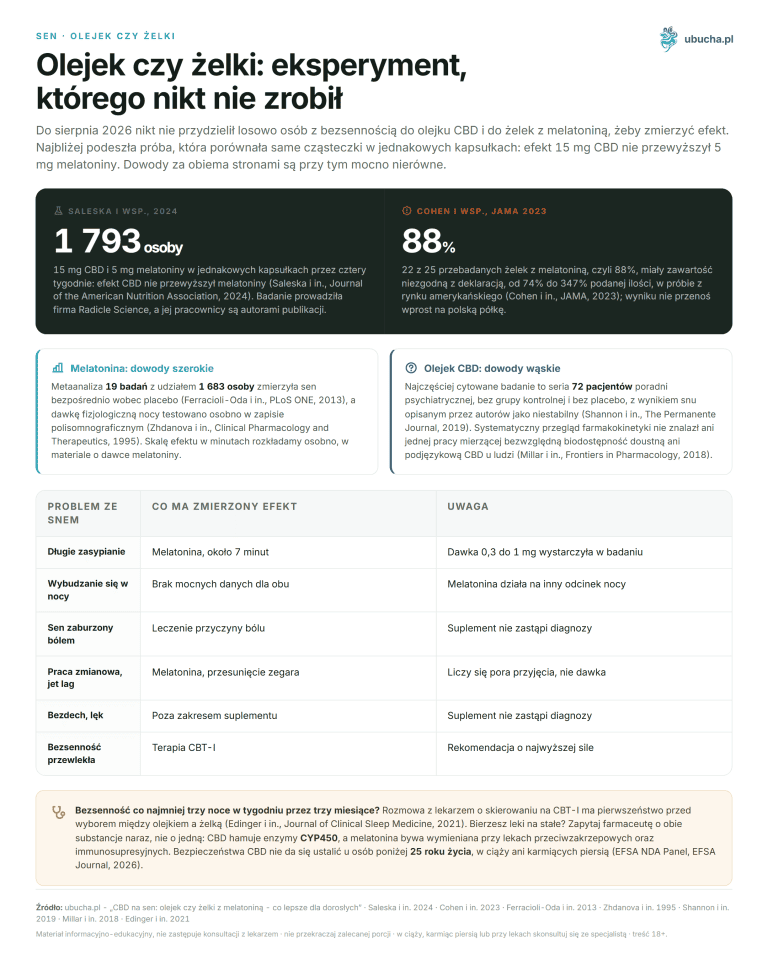
CBD oil dripped into tea without milk is one of the most common ways to use cannabidiol and also one of the least effective. The reason is not marketing, but chemical: cannabidiol dissolves in fats, not in water. Without a lipid carrier, most of the dose passes through the digestive tract unused. The second trap is temperature, as cannabidiol breaks down faster the hotter and more acidic the environment is. Both of these issues can be resolved through measurements, not culinary intuition, and there are indeed measurements available on this topic. Below, I show how much a fatty meal changes absorption, when to add oil to a cooked dish to retain something from it, and where the line is between legal cooking and cooking that ends in criminal charges.
KEY INFORMATION
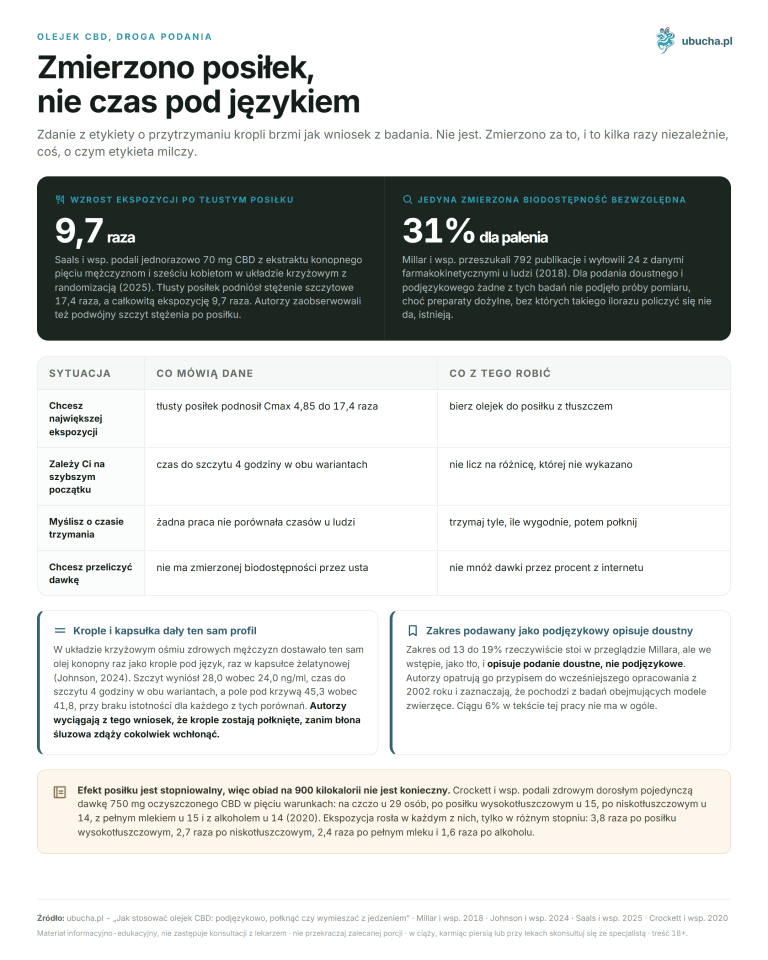
• A high-fat meal raised the area under the cannabidiol concentration curve 9.7 times, and the peak concentration 17.4 times compared to fasting administration (Saals et al., Scientific Reports, 2025).
• An independent study on patients with drug-resistant epilepsy showed a fourfold increase for the area under the curve and a fourteenfold increase for peak concentration (Birnbaum et al., Epilepsia, 2019).
• Cannabidiol breaks down faster at higher temperatures and in acidic environments; it is most stable at a pH of 4 to 6 (Jaidee et al., Cannabis and Cannabinoid Research, 2022).
• EFSA provides a temporary safe dose of 0.0275 mg/kg of body weight per day, which is about 2 mg for a person weighing 70 kg.
Why does CBD need fat?
Cannabidiol is a lipophilic compound: it dissolves in oils but hardly in water. In the small intestine, it is incorporated into lipid micelles, which transport it through the epithelium into the bloodstream. Without fat, this transport largely does not occur, and the dose goes unused.
The scale of the phenomenon was recently measured directly. Saals i wsp. (Scientific Reports, 2025) They administered a single dose of hemp extract corresponding to 70 mg of cannabidiol to eleven healthy individuals, five men and six women, once on an empty stomach and once after a standardized high-fat meal. After the meal, the area under the concentration-time curve was 9.7 times greater, and the peak concentration was 17.4 times greater than on an empty stomach. The authors also observed a double peak in concentration, which they attribute, among other factors, to lymphatic transport.
Kierunek potwierdza starsza praca z innej populacji. Birnbaum et al. (Epilepsia, 2019) They administered capsules with 99% pure cannabidiol to eight adults with drug-resistant epilepsy, both on an empty stomach and after a meal providing 840-860 kcal. The area under the curve was four times greater after the meal, and the peak concentration was fourteen times greater. Two different preparations, two different groups, the same conclusion: fat determines how much substance actually reaches the blood.
In culinary practice, any fat already present in the dish can serve as a carrier: olive oil, butter, full-fat dairy, avocado, or peanut butter. I write separately about when it's best to reach for the oil during the day. to take CBD oil before or after eating.
At what temperature does CBD break down?
Cannabidiol does not have a single threshold above which it disappears. It breaks down gradually, and the rate of this breakdown increases with temperature and decreases with increasing pH in the moderately acidic range. This means that in the kitchen, both heat and the acidity of the dish matter.
Jaidee i wsp. (Cannabis and Cannabinoid Research, 2022) They measured the kinetics of cannabidiol breakdown in hemp resin at temperatures from 50 to 80 degrees and in solutions with pH from 2 to 12 at temperatures from 40 to 70 degrees. The rate of transformation increased with temperature, most notably at 70 degrees and a pH of 2. The greatest stability of cannabidiol was recorded at a pH of 4 to 6. The authors' conclusion is succinct: low temperature, moderately acidic pH, and short processing time limit losses.
For cooking, this yields two specific tips. First, add the oil at the end, after removing the dish from the heat, when the dish has stopped steaming. Second, be cautious with highly acidic dishes served hot, as acid and temperature work together, not separately. A cold dressing with vinegar poses no problem, but a hot tomato sauce does.
Baking is a separate matter. The interior of a moist cake does not reach the oven temperature until the water evaporates, so some cannabidiol will survive. However, this is not a method that can be consistently controlled, and frying is completely out of the question: the pan operates at temperatures well above the range in which any oil remains.
Is it allowed to make food with hemp flower at home?
It depends on what you are cooking with. CBD oil and other products from industrial hemp are regular food and can be added to dishes without any restrictions. Medical-grade flower, issued by prescription, falls into a different legal category, and preparing anything from it in a home kitchen is prohibited.
The Anti-Narcotics Act defines processing as giving a narcotic substance a new form (Article 4, point 20). Making butter, cookies, or an infusion from hemp flower other than industrial hemp directly meets this definition, and liability arises from Article 53 of the Act.
A prescription does not change anything here, and this is the most common misunderstanding in the regulations circulating online. Article 33a of the Act allows hemp flower as a raw material for compounded medications, meaning those prepared by a pharmacist in a pharmacy. There is no provision exempting the patient from liability for independently giving the raw material a new form in their own kitchen.
The boundary is therefore not between 'home' and 'pharmacy' cooking, but between two raw materials. Industrial hemp refers to plants in which the sum of delta-9-THC and tetrahydrocannabinolic acid does not exceed 0.3% dry weight (Article 4, point 5 of the Act, i.e., Journal of Laws 2023, item 1939). Everything below this threshold and sourced from a legal source is legally safe in the kitchen. Above the threshold, narcotic regulations apply, regardless of who is cooking and for what purpose.
How much CBD should be added to a dish?
I will not provide a number here, and this is a substantive answer, not a disclaimer. The same amount of oil yields completely different concentrations in the blood depending on what else is on the plate, so a portion measured for one meal no longer fits for the next.
The scale of variability is evident in the numbers from the first section of this text. The difference between administration on an empty stomach and after a fatty meal reached almost tenfold in the area under the curve for Saals, and fourfold for Birnbaum, with an even greater divergence in peak concentrations. None of these studies sought an effective dose; both measured how much substance reaches the blood. Transferring such results to a teaspoon of oil in a salad would be an overreach.
Variability comes with a delay. After a meal, the effect appears much later than after sublingual administration, so it is easy to assume that nothing is happening, add another portion, and end up with both at once, two hours later. This is the most common mistake with cannabidiol in the kitchen, and more precise measuring does not eliminate it.
The only number that makes sense here is a limit, not a recommendation. EFSA established a temporary safe dose in 2026 of 0.0275 mg per kilogram of body weight per day, which is about 2 mg for a person weighing 70 kg, and noted that it applies only to supplements with a purity of cannabidiol of at least 98%, without nanoparticles. Safety cannot be established for individuals under 25 years of age, for pregnant and breastfeeding women, and for those taking medications. Determining your own portion is a conversation with a doctor, not a culinary recipe.
Does CBD in food interact with medications?
Yes, and the fact that it is taken with food makes this question more urgent, as higher absorption means higher concentration with the same bottle content. Cannabidiol interacts with the pathways through which the body metabolizes and eliminates many medications, so the risk does not depend on whether you take it in a capsule or in a sauce.
Review Brown i Winterstein (Journal of Clinical Medicine, 2019) compiled data from information on medicinal products containing cannabidiol. Adverse effects occurred in nearly half of the users and showed a dose-dependent relationship; the most common were elevated aminotransferase activity, drowsiness, sleep disturbances, infections, and anemia. Since cannabidiol affects CYP3A4 and CYP2C19 as well as P-glycoprotein, the authors assess the risk of interactions with commonly used medications as high and recommend medical supervision instead of self-adjustments.
The regulatory stance is moving in the same direction. EFSA stated in 2026 that for individuals taking medications simultaneously, the safety of cannabidiol cannot be established, and the potential hepatotoxicity in humans primarily reveals itself in such combinations. If you are taking anything prescription, discussing with your doctor before incorporating cannabidiol into your diet is not just a formality.
Caution is also required when combining with supplements that have a calming effect, such as melatonin or valerian. Drowsiness is one of the more frequently reported adverse effects of cannabidiol, and when taken with a fatty meal, it appears with a delay, making it difficult to link it to the cause.
Do jakich potraw CBD pasuje najlepiej?
The best options are dishes that already contain fat and do not require reheating after adding the oil. This combination solves both problems at once: the lipid carrier is in place, and cannabidiol does not get heated. Fat-free drinks perform the worst and are the most common choice.
| Danie | Fat carrier | When to add the oil |
|---|---|---|
| Salad dressing | oliwa albo olej konopny | na zimno, przy mieszaniu |
| Koktajl owocowy | peanut butter, avocado | together with the other ingredients |
| Jogurt albo hummus | milk fat, tahini | just before serving |
| Zupa krem | butter or cream | after removing from heat, when it stops steaming |
| Gorzka czekolada | cocoa butter | po ostudzeniu masy |
| Herbata albo kawa bez mleka | none | the weakest choice, add fat or change the dish |
We noticed a recurring pattern in conversations with customers: individuals switching to cannabidiol in food describe the effect as weaker than with sublingual administration, although pharmacokinetics suggests otherwise. The reason is the pace, not the strength. Sublingually, you get a clear signal quickly; with a meal, the same material breaks down over time. We gathered more ideas on incorporating cannabis into the daily menu in the text about CBD w diecie.
How to store CBD oil for cooking?
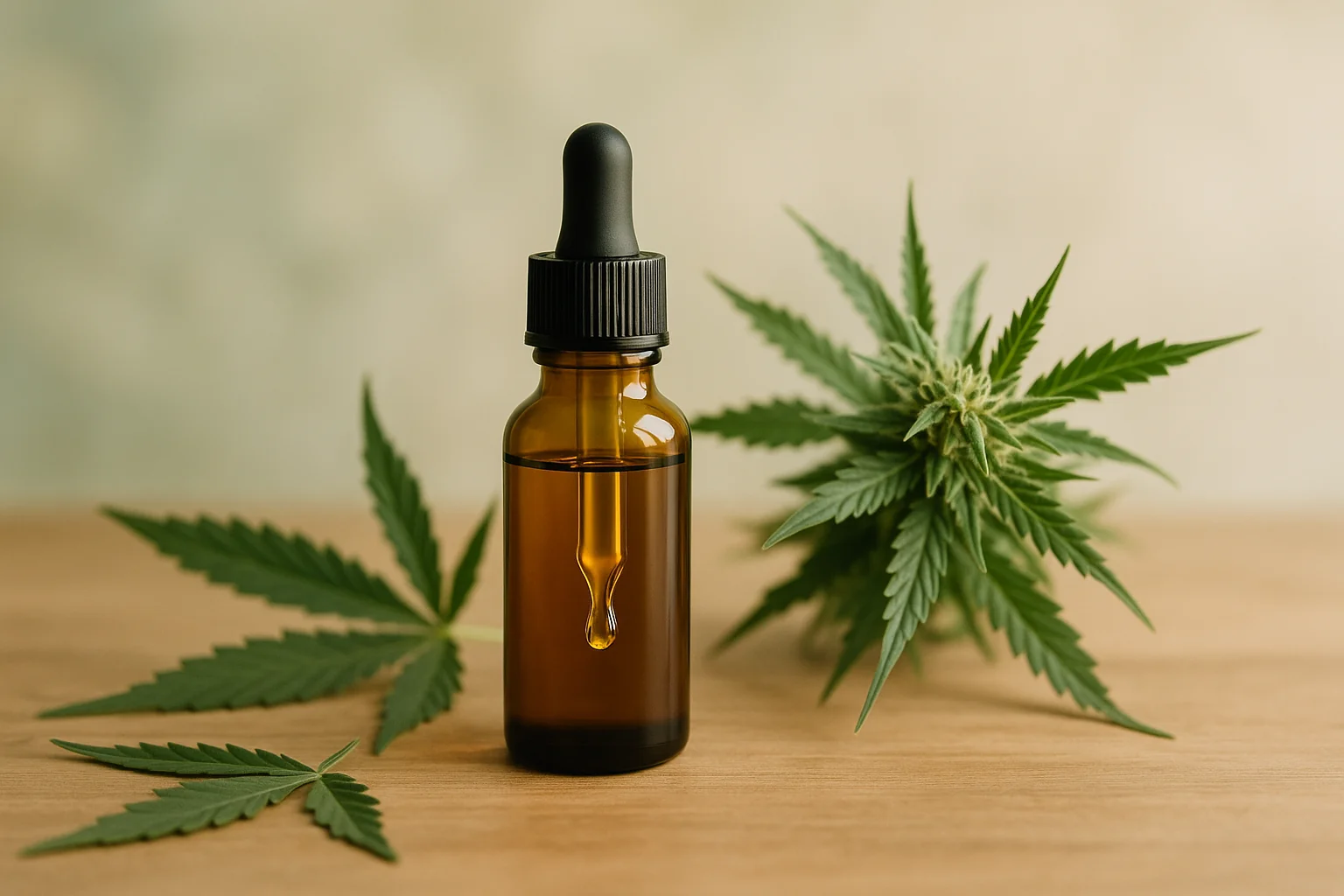
Just like any cold-pressed oil: in a cool place, in the dark, and in a tightly closed bottle. Dark glass with a cap is the standard not for aesthetic reasons, but because cannabidiol is sensitive to light, and the carrier oil can go rancid due to oxygen exposure.
The practical consequence is clear: the bottle should not be placed near the stove or on the windowsill. These are two places where the oil simultaneously receives heat and light, both of which accelerate degradation. A cabinet away from the oven or a refrigerator works better than a visible spot on the countertop.
After opening, it is advisable to use the contents within a reasonable time, as durability is determined not only by the cannabidiol itself but also by the carrier. A change in smell to sharp or bitter is a signal that the oil has oxidized, regardless of what remains of the active substance. A bottle with a dropper has one disadvantage: with each use, it draws in fresh air, so oil opened daily ages faster than the same product left untouched. I detailed the storage conditions in the text about this, how to store CBD oil.
Frequently Asked Questions
Can CBD be heated in food?
It is possible, but every heating comes at a cost. Jaidee et al. (Cannabis and Cannabinoid Research, 2022) demonstrated that the rate of cannabidiol breakdown increases with temperature and accelerates in an acidic environment, with the greatest stability recorded at pH from 4 to 6. It is safest to add the oil after removing the dish from the heat.
Why does CBD work better with fat?
Because it is lipophilic and needs lipid micelles to pass through the intestinal epithelium. Saals et al. (Scientific Reports, 2025) measured in eleven individuals that after a high-fat meal, the area under the concentration curve increased 9.7 times, and the peak concentration 17.4 times compared to fasting administration.
How much CBD should be added to one serving of food?
There is no number that could be stated honestly, as absorption changes several times depending on the fat content of the meal. EFSA has only set a limit: a temporary safe dose of 0.0275 mg/kg body weight per day, which is about 2 mg for a person weighing 70 kg. Determine the serving with your doctor.
Is CBD in food legal in Poland?
Yes, if it comes from industrial hemp, meaning plants with a total delta-9-THC and THCA below 0.3% dry weight. Cannabidiol is not listed in the controlled substances registry. The THC content in food from hemp seeds is separately regulated by Regulation (EU) 2023/915: up to 3.0 mg/kg in seeds and up to 7.5 mg/kg in oil.
Does CBD in food interact with medications?
Yes. Brown and Winterstein (Journal of Clinical Medicine, 2019) indicate the effect of cannabidiol on CYP3A4, CYP2C19, and P-glycoprotein and assess the risk of interactions with commonly used medications as high. EFSA adds that for individuals taking medications, the safety of cannabidiol cannot be established.
Is it allowed to bake a cake with pharmaceutical dried flower?
No. Giving a psychoactive substance a new form is referred to as processing by the law (Article 4 point 20), and liability arises from Article 53. A prescription does not change this: Article 33a allows hemp herb as a raw material for compounded medications prepared in a pharmacy, not for home baking.
Cooking oils can be found in the category hemp oils.
This article is for informational and educational purposes only and does not constitute medical advice. Before starting to use hemp or CBD for therapeutic purposes, consult your doctor, especially if you are taking other medications, are pregnant, or breastfeeding.
Author: Michał Waluk · Opublikowano: 2026-05-28 · Aktualizacja: 2026-08-11