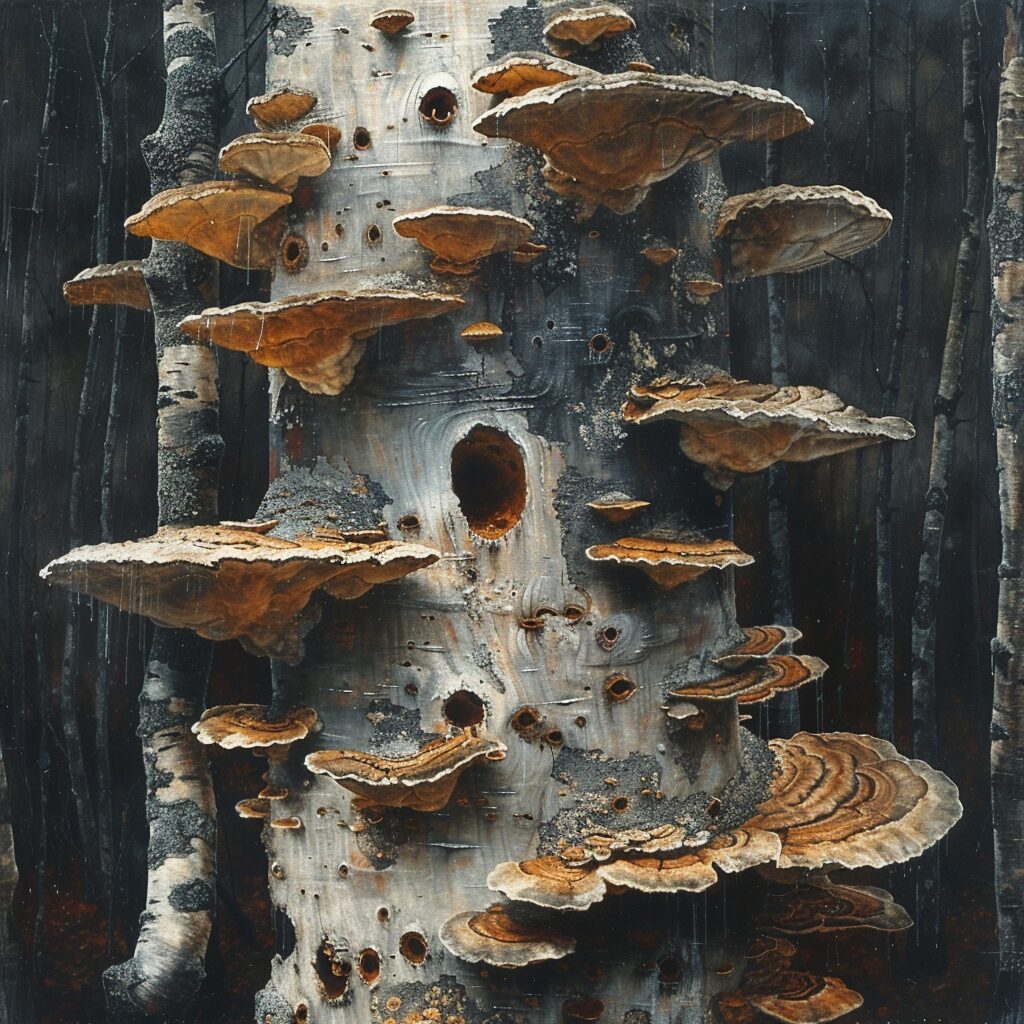

Adaptogens from mushrooms – Chaga (Inonotus obliquus)
Adaptogens from mushrooms – Chaga (Inonotus obliquus)
Mushroom adaptogens have been used for centuries in traditional medicine in various regions of the world. Contemporary research is shedding new light on their mechanism of action. In the case of the Chaga mushroom (Inonotus obliquus), it is worth noting studies on its anti-inflammatory, antioxidant, and anticancer effects, as well as data describing its effect on type 2 diabetes.
Chaga in traditional medicine
Chaga mushroom (Inonotus obliquus) has been traditionally used to treat various gastrointestinal disorders. article discussing the traditional use of Chaga, we read that one of the oldest documents confirming the use of its fruiting bodies for medicinal purposes is the work of Hippocrates "Corpus Hippocraticum" (he used infusions of this mushroom externally to wash wounds).
In Eastern Europe, the first records of Chaga mushroom use date back to the 12th century. Historical sources describe the healing of a Kiev prince's lip tumor. Meanwhile, the people of Siberia have used Chaga mushroom for centuries for its antiparasitic, antitubercular, anti-inflammatory, and gastrointestinal properties.
In some regions, Chaga was also recommended for heart and liver diseases, most often in the form of infusions, inhalations, or water macerates. Relatively early on, attention was drawn to its potential anticancer and supportive effects on cancer treatment, which was particularly important before the era of scientific oncology.
Chaga Mushroom Adaptogens – Scientific Research
The information gathered so far on the effects of Chaga mushroom on the human body comes primarily from in vitro laboratory studies and a few animal experiments. Although most authors emphasize the need for further research, the mechanism by which the mushroom extract affects certain bodily processes is already at least partially understood.
Currently, two mechanisms of action of Chaga extracts are emerging:
- The first is related to the effect on antioxidant enzymes and the level of reactive oxygen species (ROS).
- Second, as the results suggest research, is associated with the activity of receptors that shape the immune response in diseases characterized by chronic inflammation (more about PPARγ receptors here).
Chaga extract has the following effects:
- anti-inflammatory,
- anticancer,
- antioxidant,
- protective – protects cells against oxidative stress,
- stimulating – stimulates the immune system.
Chaga Mushroom Adaptogens and Insulin
According to some, the most promising discovery was the demonstration that Chaga has hypoglycemic potential and increases insulin sensitivity.
W study A study conducted on mice found that supplementation with chaga mushroom extract improved glucose tolerance, blood sugar control, and lipid metabolism. The results showed that the main active components of Chaga mushroom extract were β-glucans, triterpenoids, and polyphenols.
These components have been confirmed to be functional elements and play a role in anti-hyperglycemia and anti-hyperlipidemia effects in type 2 diabetes.
According to researchers, with the current state of knowledge, it can be concluded that Chaga meets the definition of a functional food and has a potentially positive impact on health beyond basic nutrition.