
CBD for Allergies - Does It Relieve Symptoms? Mast Cells, Histamine, IgE 2026
Does CBD relieve allergy symptoms? We examine mast cells, Th2 cytokines, drug interactions, and safety based on clinical and preclinical studies.
Allergies affect about 150 million Europeans today, and the European Academy of Allergy and Clinical Immunology (EAACI) warns that over the coming decades more than half of the continent’s population may experience some form of allergy. Questions about CBD for allergies are increasingly common in allergists’ offices - patients seek supplements to cetirizine, inhaled steroids, and emollients. Cannabidiol is a non-psychoactive compound from industrial hemp that influences the immune system, specifically mast cells, eosinophils, and the Th2 cytokine pathway - this pathway is responsible for the classic IgE-dependent reaction picture: hay fever, urticaria, atopic dermatitis. The question is whether this mechanism translates into real clinical effectiveness. This article discusses allergy immunology, preclinical and clinical research results on CBD in allergic airway inflammation, AD, and urticaria, as well as CBD interactions with antihistamines and steroids - showing when supplementation makes sense and when classical pharmacotherapy should be maintained.
KEY INFORMATION
- Allergies affect about 150 million Europeans today, and EAACI estimates that over the coming decades the problem may affect more than half of the continent’s population.
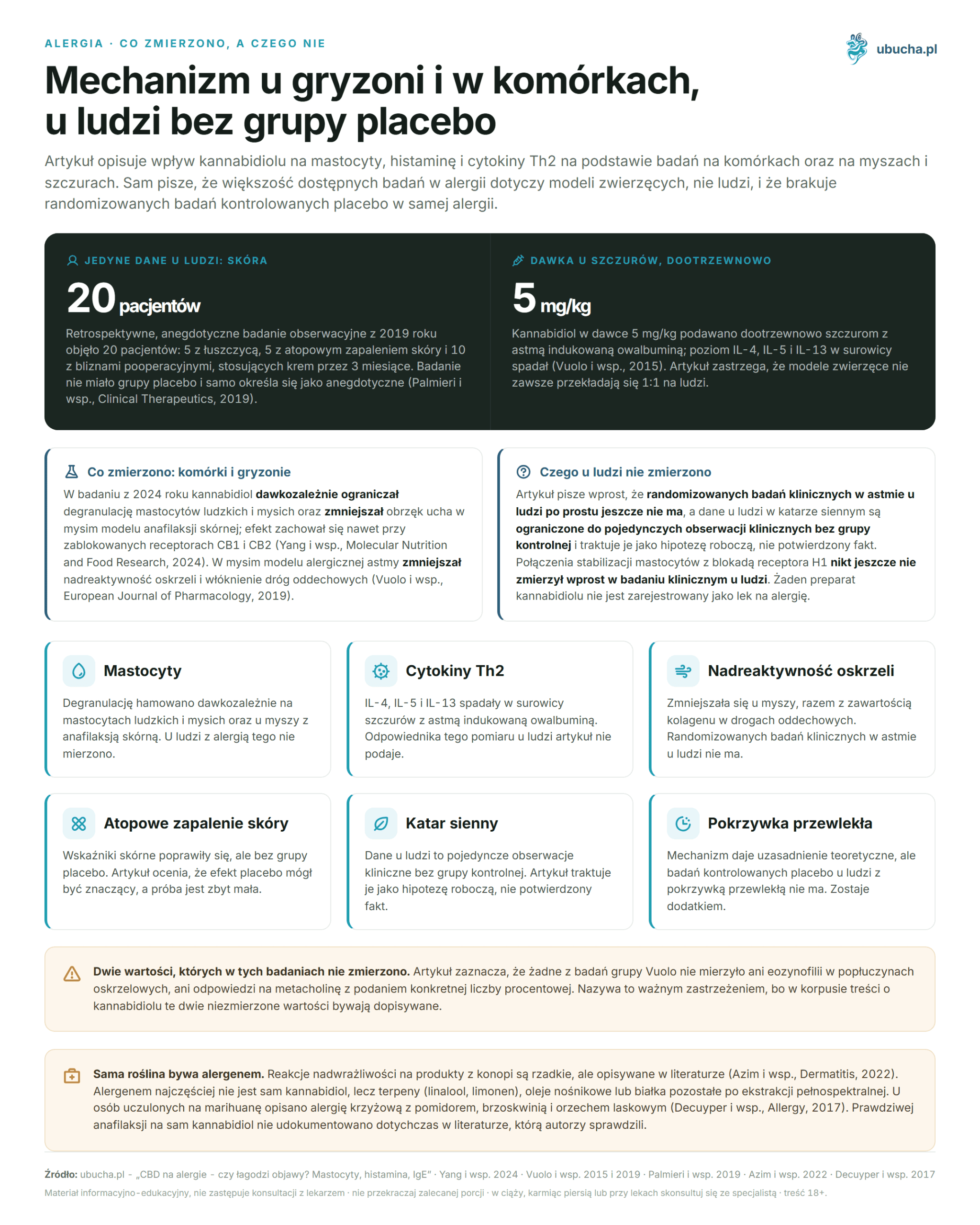
- In a 2024 study, CBD dose-dependently inhibited degranulation of human and mouse mast cells and reduced skin anaphylaxis in mice (Yang et al., Molecular Nutrition and Food Research, 2024).
- In a mouse model of allergic asthma, CBD reduced bronchial hyperreactivity and airway fibrosis (Vuolo et al., European Journal of Pharmacology, 2019).
- CBD is not an antihistamine drug but can support allergy therapy combined with cetirizine, loratadine, or topical steroids.
- Allergic reactions to CBD products themselves are rare and usually result from terpenes or carrier oils, not cannabidiol.
What happens in the body during an allergic reaction?
An allergic reaction is an excessive immune response to a harmless antigen. Three cell types are responsible for the entire storm: mast cells, eosinophils, and Th2 lymphocytes, linked by IgE antibodies (Galli and Tsai, Nature Medicine, 2012). The first contact with the allergen is the sensitization phase - B lymphocytes learn to produce specific IgE, which attaches to mast cell surfaces via the FcεRI receptor.
The next contact with the allergen triggers a cascade: the antigen cross-links IgE on mast cells, leading to their degranulation. Histamine and tryptase are released from granules, as well as leukotrienes and other cytokines - these cause itching, redness, swelling, bronchial constriction, and mucus hypersecretion, and in extreme cases anaphylaxis. The late phase, lasting 6-24 hours, involves influx of eosinophils and Th2 lymphocytes sustaining inflammation.
| Histamine receptor | Main function |
|---|---|
| H1 | itching, vasodilation, bronchial constriction, nasal mucus secretion - blocked by antihistamines |
| H2 | gastric acid secretion in the stomach |
| H3 | modulation of neurotransmitter release in the central nervous system |
| H4 | mainly on immune cells, influences eosinophil chemotaxis |
Classic antihistamines (cetirizine, loratadine, fexofenadine) block the H1 receptor - they suppress itching and sneezing but do not stop mast cell degranulation itself (Panula et al., Pharmacological Reviews, 2015). Histamine continues to be released but cannot act on this receptor. Th2 cytokines (IL-4, IL-5, IL-13) drive chronic asthma and AD - IL-4 switches B lymphocytes to IgE production, IL-5 recruits eosinophils, IL-13 stimulates mucus in airways and disrupts skin barrier. Modern biologics (dupilumab, mepolizumab) target this pathway. CBD, as shown below, acts higher in the same cascade - it limits mediator release rather than blocking released histamine. The same Th2 and mast cell pathway underlies some autoimmune diseases - for a broader context see our review on CBD and autoimmune diseases.
How does CBD affect the immune system and allergic pathway?
CBD modulates immunity via over 65 identified molecular targets, including TRPV1, GPR55, PPAR-gamma, and serotonin receptor 5-HT1A, not only classical cannabinoid receptors CB1 and CB2 (de Almeida and Devi, Pharmacology Research and Perspectives, 2020). This multi-target action explains cannabidiol’s broad anti-inflammatory effects.
The CB2 receptor is mainly on mast cells, eosinophils, lymphocytes, and dendritic cells. CB2 activation inhibits proinflammatory cytokine production. CBD is a weak CB2 agonist but a strong modulator: it enhances endogenous endocannabinoid action by slowing their removal. It does this not via FAAH enzyme inhibition (human FAAH is not inhibited by cannabidiol) but by competing for intracellular fatty acid binding proteins (FABP) that transport anandamide to FAAH (Elmes, J Biol Chem, 2015). The third mechanism is PPAR-gamma activation, regulating inflammatory gene expression. The fourth is antioxidant action: CBD neutralizes reactive oxygen species generated during inflammation (Atalay et al., Antioxidants, 2019), reducing tissue damage in chronic atopic diseases.
| Mechanism | Study findings | Source |
|---|---|---|
| Inhibition of mast cell degranulation | CBD dose-dependently limited degranulation of human and mouse mast cells and reduced ear swelling in a mouse skin anaphylaxis model; effect persisted even with CB1/CB2 receptor blockade | Yang et al., 2024 |
| Reduction of Th2 cytokines (rats) | CBD 5 mg/kg intraperitoneally lowered IL-4, IL-5, and IL-13 serum levels in ovalbumin-induced asthma rats | Vuolo et al., 2015 |
| Reduction of bronchial hyperreactivity and fibrosis (mice) | CBD decreased bronchial hyperreactivity, collagen content in airways, and inflammatory markers in bronchoalveolar lavage | Vuolo et al., 2019 |
Importantly, CBD does not block the H1 receptor like cetirizine - it acts higher in the cascade, reducing the release of histamine and other mediators from mast cells. This is a complementary, not competitive mechanism. Theoretically, combining both strategies - mast cell stabilization (CBD) plus H1 blockade (cetirizine) - may yield better effects than either alone, though no clinical trial in humans has directly measured this yet.
What do studies show about CBD in asthma and hay fever?
Most available CBD allergy studies are animal models, not humans. Two studies by Vuolo’s group are most significant: in 2015, CBD lowered Th2 cytokines in serum of ovalbumin-induced asthma rats, and in 2019, in mice, CBD reduced bronchial hyperreactivity and airway fibrosis in the same model. However, neither study measured eosinophilia in bronchoalveolar lavage nor methacholine response with specific percentage values - an important limitation since these unmeasured values are sometimes added in CBD content.
Asthma is an inflammatory airway disease where Th2 lymphocytes, eosinophils, and IgE play key roles. Vuolo 2019 showed CBD reduces airway remodeling dose-independently, decreasing collagen in bronchial and alveolar walls - a functional effect comparable to low-dose inhaled glucocorticosteroids but without systemic side effects like adrenal suppression. The main limitation is that animal models do not always translate 1:1 to humans, and randomized clinical trials of CBD in human asthma do not yet exist.
Hay fever affects tens of percent of Europe’s population, with a sharp rise in recent decades. Classic treatment includes oral antihistamines, nasal steroids, and in severe cases allergen immunotherapy. CBD’s potential mechanism is reducing Th2 cytokines in nasal mucosa, decreasing nasal mast cell degranulation, and relieving itching via TRPV1 receptor - but as with asthma, randomized trials of nasal CBD formulations are needed and currently unavailable on the market. Human data are limited to single clinical observations without control groups, so these are working hypotheses, not confirmed facts. We separately covered hay fever and seasonal allergies in our guide on CBD and allergic rhinitis.
Does CBD help with atopic dermatitis and urticaria?
Atopic dermatitis affects about 10-20% of children and 2-10% of adults in developed countries (Hadi et al., Life, 2021). The skin is a large organ of the endocannabinoid system - keratinocytes, sebocytes, melanocytes, and mast cells have CB1 and CB2 receptors, so topical CBD preparations seem rational.
Anecdotal retrospective observational study from 2019 included 20 patients: 5 with psoriasis, 5 with AD, and 10 with postoperative scars, using CBD cream twice daily for 3 months. PASI, SCORAD, and ADI indices improved, as did quality of life, with no irritation or sensitization reported (Palmieri et al., Clinical Therapeutics, 2019). The study lacked a placebo group and is anecdotal - placebo effect may be significant and sample too small to generalize. We explore CBD in AD more extensively in a separate guide on CBD oil for AD.
| Use | Practical advice |
|---|---|
| AD, topical preparations | apply to clean, dry skin twice daily, not on active weeping; first itch reduction in 15-60 minutes, lasting improvement in 4-12 weeks |
| AD, combined with steroids | can be combined with topical steroids (hydrocortisone, mometasone) during flare-ups - no described skin-level interaction |
| Acute urticaria | usually resolves within 6 weeks; CBD may be adjunct, but second-generation antihistamines remain first-line treatment |
| Chronic spontaneous urticaria | requires standard or up to fourfold antihistamine doses; if ineffective, add omalizumab; CBD remains experimental adjunct |
Skin mechanisms: CBD reduces inflammatory cytokine production in keratinocytes (TNF-alpha, IL-6, IL-8), modulates T lymphocyte differentiation, and relieves itching via TRPV1 receptor. Urticaria results from acute mast cell degranulation in skin, so the mast cell stabilization mechanism described earlier (Yang et al., 2024) theoretically supports CBD use as adjunct - but like AD, controlled placebo studies in chronic urticaria patients are lacking.
What interactions does CBD have with anti-allergy drugs?
CBD inhibits cytochrome P450 enzymes, mainly CYP3A4 and CYP2C9 (Lucas et al., British Journal of Clinical Pharmacology, 2018). CYP3A4 metabolizes many prescription drugs, so theoretical interaction risk is broad - but not every anti-allergy drug is equally problematic. It depends on the drug’s metabolic pathway.
| Drug | Main metabolism pathway | Interaction risk with CBD |
|---|---|---|
| Cetirizine, levocetirizine | minimal metabolism, mainly excreted unchanged in urine | low |
| Loratadine | CYP3A4 to desloratadine | theoretically increased active metabolite concentration, but effect small in practice |
| Fexofenadine | mixed metabolism, P-glycoprotein substrate | moderate, transporter-dependent |
| Diphenhydramine | mainly CYP2D6 | low pharmacokinetic risk, but combined high doses may cause additive sedation |
| Inhaled steroids (budesonide, fluticasone) | CYP3A4 | theoretically increased concentration, but inhaled doses are low, so effect marginal |
| Oral steroids (prednisone, methylprednisolone) | CYP3A4 | higher than inhaled steroids - chronic use requires medical consultation |
| Omalizumab | not metabolized by P450 (antibody) | no significant pharmacokinetic interaction |
Three practical rules for safe combination: keep at least 2-hour gap between CBD and medication (this reduces but does not eliminate liver interaction), start with a low CBD dose (5-10 mg) and observe for a week, and inform your doctor about CBD supplementation plans, especially with ongoing allergy therapy. Watch for symptoms like excessive drowsiness, low blood pressure, dizziness, dry mouth - if they appear, halve the CBD dose or stop.
Can CBD itself cause allergy?
Hypersensitivity reactions to CBD and cannabis products are rare but documented (Azim et al., Dermatitis, 2022). The allergen is usually not CBD itself but accompanying components: terpenes (linalool, limonene), carrier oils (coconut MCT), or proteins remaining after full-spectrum extraction. Linalool and limonene are recognized contact allergens, especially when oxidized - both naturally occur in other plants like lavender or citrus fruits.
People allergic to marijuana (via smoking or contact) have reported cross-allergy syndrome with some plant foods: tomato, peach, hazelnut (Decuyper et al., Allergy, 2017). Allergens here are LTP proteins (lipid transfer proteins) common to many plants - for these individuals, full-spectrum CBD is risky; isolate or broad spectrum after prior skin test is safer.
| Risk | What to watch for |
|---|---|
| Terpene allergy | linalool and limonene, especially oxidized form - choose isolate or broad spectrum with low terpene content |
| Cannabis-fruit/vegetable cross allergy | tomato, peach, hazelnut - if marijuana smoking caused symptoms, do a skin test before full-spectrum CBD |
| Phototoxic reactions | some citrus terpenes may react with sunlight after topical application - protect skin or apply in the evening |
Hypersensitivity symptoms to CBD or its components include contact rash, itching, and skin redness after topical use, less commonly systemic reactions. True anaphylaxis to CBD alone has not been documented in the literature we reviewed. If allergy symptoms worsen after CBD, first switch to broad spectrum or isolate, second discontinue.
What to choose: oil, capsules, gummies, or cosmetics for allergy?
The form depends on allergy type. For skin allergies (AD, urticaria, eczema) prefer topical preparations that achieve high skin concentration without liver burden. For systemic allergies (hay fever, asthma) oral or sublingual oil works better, although absolute bioavailability of any oral route has not been measured in humans yet: the only such measurement is for smoking at 31 percent.
| Form | Time to effect | For whom |
|---|---|---|
| Sublingual oil, broad spectrum | 15-45 minutes | systemic allergies, less terpenes and no THC than full spectrum |
| CBD isolate | 15-45 minutes | purest option but requires higher doses (no entourage effect) |
| Capsules, gummies | 60-120 minutes | precise dose and convenience; check ingredients for sugars and dyes in multi-organ atopy |
| Creams, balms, serum | topical, 15-60 minutes for itch | skin allergies - practically no systemic absorption, minimal drug interaction risk |
When choosing a cream or balm, check the entire cosmetic composition, not just CBD presence - we discuss this in detail in the guide on hemp cosmetics with CBD.
The “start low, go slow” protocol applies in allergy too: start with 10 mg CBD daily for the first week, if no effect increase to 20 mg. Effective doses in studies usually range 20-50 mg daily for immunomodulatory effect, with cellular effects building over 2-4 weeks - it is not an emergency drug. If you expect immediate relief after sneezing, stick with cetirizine.
Important note for allergy sufferers with reactive airways: vaporizing CBD flower or e-liquid gives fastest absorption, but vaporization itself can be irritating, and inhaled terpenes at high concentrations may worsen asthma symptoms. For lung disease patients, CBD inhalations are not first choice - nasal CBD formulations are in research but not yet market standard.
Safety, side effects, and who should avoid CBD?
EFSA in 2026 set a provisional safe CBD dose at 0.0275 mg per kilogram body weight daily, about 2 mg for a 70 kg person, and only for preparations with purity at least 98%. Safety cannot be established for people under 25 years old, pregnant or breastfeeding women, or those taking medications, so several patient groups should exercise caution or avoid CBD entirely.
| Group | Recommendation |
|---|---|
| Pregnancy and breastfeeding | avoid - FDA and EMA advise against, cannabinoids cross placenta and into milk, long-term effects unknown |
| Liver disease, coagulation disorders, post-transplant | consider individual risk with doctor |
| Polypharmacy (3-4+ chronic drugs) | CBD’s broad interaction profile is hard to predict - consultation mandatory |
| Children under 12 with allergy (not epilepsy) | CBD is not standard therapy, pediatric allergist consultation mandatory |
| Professional drivers | choose CBD isolate with certified zero THC - some immunoassays give false positives even with trace THC |
| WADA athletes | CBD removed from banned list in 2018, THC remains banned - choose isolate or broad spectrum with certificate (Cologne List, Informed Sport) |
Most common side effects (over 5% in clinical trials) are dry mouth, drowsiness, fatigue, diarrhea, and decreased appetite. In Epidiolex studies (registered epilepsy drug, doses much higher than supplements) elevated liver enzymes occurred in some patients - at typical supplement doses 20-50 mg daily this is rare. Epidiolex is a specialist drug under neurologist supervision, very different from allergy supplementation.
What is the market and outlook for CBD in allergology?
The global CBD market is projected by Grand View Research to reach about 39.7 billion USD by 2033, with cosmetics and dermatology as one of the fastest-growing segments. This reflects growing interest in CBD as adjunct treatment for AD, psoriasis, and chronic skin inflammation - market forecasts change quarterly, so treat this number as an approximate order of magnitude, not precise prediction.
Clinical research develops slower than consumer market. Currently no CBD preparation is registered as an allergy drug. Dupilumab (anti-IL4/IL13 antibody) and mepolizumab (anti-IL5) revolutionize severe asthma and AD therapy but cost thousands of euros monthly and access is limited by reimbursement. CBD will not replace these drugs in severe AD but may theoretically support patients with milder disease not qualifying for biologics. Allergen immunotherapy remains the only method modifying natural allergy course - CBD has no described contraindications during it but no studies confirm synergy, so caution advises against starting CBD during immunotherapy initiation.
How to integrate CBD into allergy treatment plan - step by step?
According to EAACI guidelines, allergy therapy is multi-level: allergen avoidance, symptomatic pharmacotherapy, allergen immunotherapy, biologics in severe cases. CBD fits as supplementary support, like probiotics or omega-3 fatty acids - it does not replace any of these levels.
| Step | What to do |
|---|---|
| 1. Talk with allergist | show planned product composition, ask about interactions with current medications - 10 minutes that save months of trial and error |
| 2. Product selection | certificate of analysis (COA) from independent lab: cannabinoid profile, THC level, pesticides, heavy metals, terpenes |
| 3. Starting dose | 10 mg CBD daily, increase every 7 days until effect or 40-50 mg |
| 4. Assessment after 8-12 weeks | immune modulation is slow - if no improvement after 12 weeks, CBD likely ineffective in this case |
Keeping a simple diary - symptom severity on 0-10 scale, number of rescue medication uses, sleep quality - helps objective assessment after 4 and 8 weeks instead of relying on initial impressions. However, some situations exclude CBD entirely: anaphylaxis, angioedema, uncontrolled severe asthma, and food allergy with shock risk require adrenaline and standard pharmacotherapy as first-line treatment. Attempting supplementation in such cases may delay proper help - after acute stabilization, chronic strategy discussion can resume.
Summary: does CBD really relieve allergy symptoms?
CBD affects several key elements of allergic reaction: mast cell degranulation, Th2 cytokine production, eosinophil influx, and keratinocyte signaling. Preclinical studies (mainly animal) are consistent. Human data are limited to single clinical observations and one small retrospective skin study without control group - randomized placebo-controlled trials in allergy are lacking, a major difference from well-studied indications like epilepsy.
Practical conclusion: CBD is a rational but still experimental support for allergy therapy, especially AD, chronic urticaria, and mild hay fever. It does not replace antihistamines, topical steroids, immunotherapy, or biologics. It acts slower than typical antihistamines (2-8 weeks to full effect) but its mechanism complements classical pharmacotherapy rather than competes.
For allergy sufferers, safest choice is broad spectrum CBD without THC and minimal terpenes, topical form for skin, oral form for systemic symptoms. Gradual dosing from 10 mg, target 20-50 mg daily, with 2-hour gap from CYP3A4-metabolized drugs. Consult allergist before starting CBD, especially with polytherapy and advanced allergy - and in anaphylaxis or acute allergic reaction call emergency services immediately without attempting self-treatment with CBD.
Frequently Asked Questions
Can CBD replace antihistamine drugs?
No. CBD does not directly block H1 receptors like cetirizine, loratadine, or diphenhydramine do. It acts indirectly on the immune system by limiting mast cell degranulation and Th2 cytokine production (de Almeida and Devi, Pharmacology Research and Perspectives, 2020). It can support therapy but does not replace standard allergy medications prescribed by a doctor.
How quickly does CBD act on allergy symptoms?
Skin symptoms such as itching or redness may ease within 15-60 minutes after topical application. The systemic effect from oral CBD oil develops only after 2-4 weeks of regular supplementation because reducing Th2 cytokine production takes time and is not achieved with a single dose. It is not an emergency medication for sudden symptoms.
Can CBD cause an allergic reaction?
Rarely, but yes - hypersensitivity reactions have been described in the literature (Azim et al., Dermatitis, 2022). The allergen is often not CBD itself but terpenes (linalool, limonene), carrier oils, or proteins remaining after full-spectrum extraction. People with cross-allergy to cannabis should avoid full-spectrum products and start with a skin test.
Which forms of CBD are best for atopic dermatitis?
The skin has its own endocannabinoid system, so topical preparations (creams, balms, serums) seem a rational approach, although their mechanism of action is not established. A small retrospective observational study from 2019 on 20 patients (5 with psoriasis, 5 with AD, 10 with scars) showed improvement in skin indices after 3 months of twice-daily CBD cream application, but without a placebo group (Palmieri et al., Clinical Therapeutics, 2019).
Does CBD interact with cetirizine and inhaled steroids?
CBD inhibits cytochrome P450 (CYP3A4, CYP2C9), but cetirizine and levocetirizine are mainly metabolized by other pathways, so the risk is low. Inhaled steroids (budesonide, fluticasone) are metabolized by CYP3A4, which theoretically increases their concentration (Lucas et al., British Journal of Clinical Pharmacology, 2018). Maintain at least a 2-hour gap between CBD and medications.
Does CBD help with allergic rhinitis (hay fever)?
Preclinical studies in rodents with allergic airway inflammation showed that CBD reduces Th2 cytokine levels and bronchial hyperreactivity (Vuolo et al., 2015 and 2019). Human data are limited to single clinical observations. CBD may theoretically support hay fever therapy but does not replace first-line medications.
Can I use CBD for urticaria?
Urticaria results from acute mast cell degranulation. In preclinical studies from 2024, CBD dose-dependently inhibited degranulation of human and mouse mast cells (Yang et al., Molecular Nutrition and Food Research, 2024). However, chronic urticaria requires antihistamine therapy as a foundation, and CBD should be considered only as an adjunct.
Can I use CBD during pregnancy or breastfeeding for allergies?
No. FDA and EMA advise against CBD use during pregnancy and lactation due to lack of safety studies and cannabinoid transfer into breast milk. In pregnancy-related allergy, continue medication prescribed by your gynecologist and postpone CBD experiments until after breastfeeding.
More about CBD in specific oral forms can be found in our CBD oil offer.
Sources
- Galli SJ, Tsai M. IgE and mast cells in allergic disease. Nature Medicine, 2012. PubMed
- Panula P et al. International Union of Basic and Clinical Pharmacology. XCVIII. Histamine Receptors. Pharmacological Reviews, 2015. PubMed
- de Almeida DL, Devi LA. Diversity of molecular targets and signaling pathways for CBD. Pharmacology Research and Perspectives, 2020. PubMed
- Atalay S, Jarocka-Karpowicz I, Skrzydlewska E. Antioxidative and Anti-Inflammatory Properties of Cannabidiol. Antioxidants, 2019. PubMed
- Yang X et al. Cannabidiol Inhibits IgE-Mediated Mast Cell Degranulation and Anaphylaxis in Mice. Molecular Nutrition and Food Research, 2024. PubMed
- Vuolo F et al. Evaluation of Serum Cytokines Levels and the Role of Cannabidiol Treatment in Animal Model of Asthma. Mediators of Inflammation, 2015. PubMed
- Vuolo F et al. Cannabidiol reduces airway inflammation and fibrosis in experimental allergic asthma. European Journal of Pharmacology, 2019. PubMed
- Palmieri B, Laurino C, Vadalà M. A therapeutic effect of CBD-enriched ointment in inflammatory skin diseases and cutaneous scars. Clinical Therapeutics, 2019. PubMed
- Hadi HA et al. The Epidemiology and Global Burden of Atopic Dermatitis: A Narrative Review. Life, 2021. PubMed
- Decuyper II et al. Cannabis sativa allergy: looking through the fog. Allergy, 2017. PubMed
- Azim SA et al. Contact Allergy to Cannabis and Related Essential Oils. Dermatitis, 2022. PubMed
- Lucas CJ, Galettis P, Schneider J. The pharmacokinetics and the pharmacodynamics of cannabinoids. British Journal of Clinical Pharmacology, 2018. PubMed
- WHO Expert Committee on Drug Dependence. Cannabidiol (CBD) Critical Review Report, 2018. WHO
- FDA. FDA Regulation of Cannabis and Cannabis-Derived Products, Including Cannabidiol (CBD), 2019. FDA
- Grand View Research. Cannabidiol (CBD) Market Size, Share and Trends Report. Grand View Research
This article is for informational and educational purposes and does not constitute medical advice. It does not replace consultation with an allergist. Before starting CBD supplementation, especially in people with severe allergy, asthma, chronic urticaria, or polypharmacy, consult a doctor. Do not use CBD during pregnancy and breastfeeding. In anaphylaxis, acute allergic reaction, and angioedema, call emergency services immediately.
Author: Michał Waluk · Published: 2026-04-23 · Updated: 2026-08-17