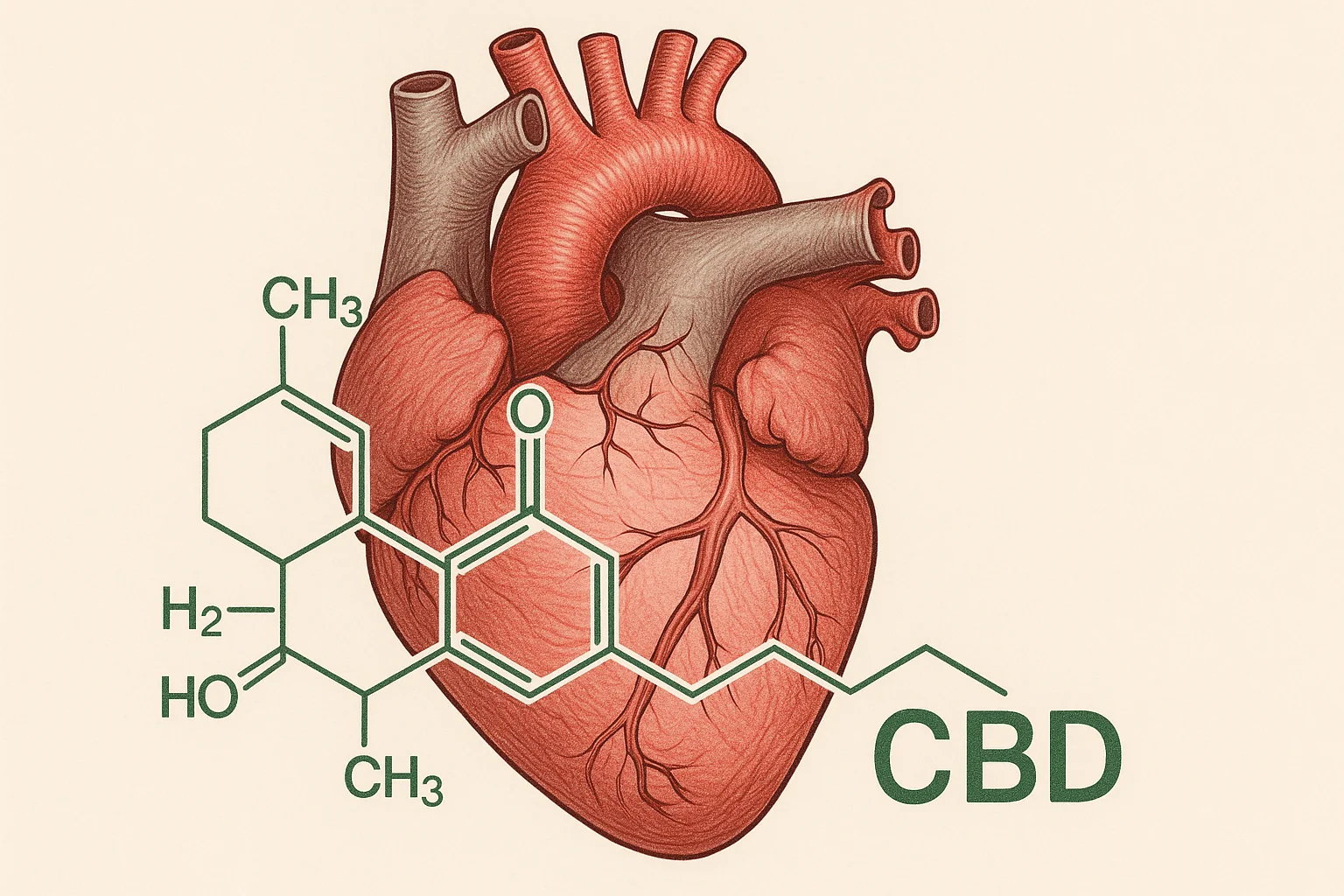

The heart and ischemia - CBD as an antiarrhythmic compound acting through the CB1 receptor
Serce i niedokrwienie — mechanizm wyjasniony prosto, w oparciu o badania. u Bucha.
Reperfusion arrhythmia occurs within the first minutes after blood flow is restored to the ischemic heart muscle and is one of the main causes of sudden cardiac death after a heart attack. Studies from the last two decades have shown that the endocannabinoid system - particularly the CB1 receptor - plays an unexpected role in regulating heart rhythm under ischemic conditions. CBD, acting on this pathway, exhibits strong antiarrhythmic and cardioprotective effects in animal models. How exactly does this mechanism work and what has been scientifically confirmed? This article explains the biology of this phenomenon step by step.
KEY INFORMATION
• CBD reduced the frequency of reperfusion arrhythmias by 66% in a rat study through a CB1 receptor-dependent mechanism (Walsh et al., British Journal of Pharmacology, 2010).
• CB1 receptors in the heart inhibit the release of norepinephrine from nerve endings, reducing the heart's oxygen demand.
• CBD exhibits antioxidant effects - reducing the area of necrosis by about 30% in experimental myocardial infarction models (Durst et al., PNAS, 2007).
• All available data come from preclinical studies - there are no clinical trials in humans with ischemic heart disease.
What is the CB1 receptor and how does it work in the heart?
The CB1 receptor (cannabinoid type 1) is a G-protein coupled receptor, dominant in the central nervous system but also present in the heart and blood vessels. In the heart muscle, CB1 is primarily located at the endings of sympathetic nerves and in the cardiomyocytes (Pacher et al., British Journal of Pharmacology, 2008). Its activation inhibits the release of norepinephrine, decreases heart rate, and lowers blood pressure.
Under physiological conditions, endogenous CB1 ligands - anandamide and 2-AG - modulate sympathetic tone in the heart. This means that the endocannabinoid system is a natural "safety brake" for the heart against excessive adrenergic stimulation. In the context of ischemia, where sympathetic overactivity accelerates muscle damage, the role of CB1 becomes particularly interesting.
CBD is not a classical CB1 agonist - it does not bind directly to this receptor with high affinity like THC. Instead, CBD raises anandamide levels by inhibiting the FAAH enzyme (fatty acid amide hydrolase), which indirectly enhances endocannabinoid signaling. Additionally, CBD exhibits antioxidant and anti-inflammatory effects independent of CB1 receptors, making its cardioprotective mechanism multifaceted.
What is reperfusion arrhythmia and why is it dangerous?
Reperfusion arrhythmia is a heart rhythm disorder that paradoxically occurs at the moment blood flow is restored to the ischemic area - not during the ischemia itself. This phenomenon has been known to cardiologists since the 1980s and is responsible for a significant portion of deaths within the first hour after a heart attack (Opie et al., Lancet, 2008). The mechanism involves the accumulation of intracellular calcium, a sudden increase in reactive oxygen species, and electrical destabilization of cardiomyocytes.
During reperfusion, a cascade of oxidative stress is activated - the influx of oxygenated blood into the hypoxic tissue generates a "storm" of free radicals. Heart cells, weakened by hypoxia, are unable to neutralize this attack of reactive oxygen species. This leads to cardiomyocyte death through necrosis and apoptosis, and ionic changes in cell membranes create a substrate for dangerous ventricular arrhythmias, including ventricular fibrillation.
Treating reperfusion arrhythmias remains a challenge. Available antiarrhythmic drugs often have a narrow therapeutic window and numerous side effects. Therefore, the search for new compounds with cardioprotective effects - such as CBD - is an active area of basic research.
The antiarrhythmic mechanism of CBD - what do studies show?
A groundbreaking study by Walsh and colleagues published in the British Journal of Pharmacology in 2010 tested CBD in a model of reperfusion arrhythmia in rats. Administration of CBD (1 mg/kg intravenously) before the induction of ischemia and reperfusion reduced the frequency of ventricular arrhythmias by 66% compared to the control group (Walsh et al., British Journal of Pharmacology, 2010). The key finding was that administering a selective CB1 antagonist (SR141716A, rimonabant) before CBD completely abolished this protective effect - directly indicating the CB1 receptor as a key mediator of the antiarrhythmic action of CBD.
We noted that the mechanism identified by Walsh is particularly interesting from a pharmacological perspective. CBD is not a classical CB1 agonist, yet its antiarrhythmic action is blocked by a CB1 antagonist. This likely explains the indirect mechanism of CBD by raising the level of anandamide - the endogenous CB1 agonist - through inhibiting FAAH. This is an example of "allosteric modulation by an enzymatic substrate," a relatively rare mechanism in pharmacology.
| Mechanism | Effect on the Heart | Receptor/Pathway |
|---|---|---|
| Inhibition of FAAH → Increase in Anandamide | Decreased heart rate, lowered blood pressure | CB1 (indirectly) |
| Antioxidant action (neutralization of ROS) | Reduction of necrosis area after reperfusion | Independent of CB1 |
| Inhibition of calcium influx | Electrical stabilization of cardiomyocytes | L-type calcium channels |
| Anti-inflammatory action (reduction of neutrophil activation) | Smaller inflammatory infiltrate in the infarct area | CB2, GPR55 |
| Inhibition of norepinephrine release | Reduction of the heart's oxygen demand | CB1 (presynaptic) |
Cardioprotection of CBD after ischemia - studies on animal models
The study by Durst et al. from 2007, published in PNAS, showed that CBD administered after experimental heart attack in mice reduced the necrosis area (infarct size) by about 30% compared to the control group (Durst et al., PNAS, 2007). The effect was attributed to the combination of CBD's antioxidant action and the reduction of neutrophil influx to the infarct area, which limited secondary tissue damage.
Pacher and Mechoulam in a 2011 review in the British Journal of Pharmacology summarized the results of several preclinical studies on cannabinoids in cardiology. Their conclusion was clear: the endocannabinoid system is actively involved in the heart's response to ischemia, and CBD - due to its multi-faceted mechanism - is one of the more promising candidates for further cardioprotective research (Pacher and Mechoulam, British Journal of Pharmacology, 2011). However, the authors emphasized that the path from promising results in animal models to confirmed clinical therapies is long and requires solid human studies.
An important aspect is also the effect of CBD on blood pressure. The study by Stanley et al. on healthy volunteers showed that a single oral dose of 600 mg of CBD reduced the blood pressure response to stress (Stanley et al., JCI Insight, 2017). This is one of the few clinical evidences of the cardiovascular effects of CBD in humans - although the study was small (9 participants) and did not involve patients with ischemic heart disease.
CBD interactions with cardiology medications - what you should know
CBD is a strong inhibitor of cytochrome CYP3A4 and CYP2C9 - liver enzymes that metabolize many cardiology medications. This means that CBD can significantly raise the blood levels of drugs such as warfarin, amiodarone, statins, or class I and III antiarrhythmic drugs (Nasrin et al., Drug Metabolism and Disposition, 2020). This is not a theoretical effect - clinical cases have been described of patients with epilepsy treated with Epidiolex (pharmaceutical CBD), who experienced significant increases in warfarin levels.
Our observations indicate that questions about CBD and the heart mainly concern individuals with arrhythmia and those taking cardiology medications. We pay particular attention to the interaction of CBD with warfarin - this combination requires close monitoring of INR and cardiology consultation, as excessively high levels of warfarin carry the risk of serious bleeding.
For individuals with atrial fibrillation treated with modern anticoagulant medications (apixaban, rivaroxaban, dabigatran), interactions with CBD are less studied but potentially significant. Dabigatran is metabolized through different pathways (P-gp), while apixaban and rivaroxaban utilize CYP3A4. Anyone taking cardiology medications and considering CBD supplementation should consult this decision with a cardiologist and pharmacist.
What has not been proven - the limits of current knowledge
All the aforementioned cardioprotective effects of CBD come from animal studies or small pilot studies on healthy volunteers. There is a lack of randomized clinical trials on patients with coronary artery disease, post-myocardial infarction, or arrhythmias. This is a fundamental limitation that prevents the formulation of clinical recommendations regarding the use of CBD in heart diseases.
An additional issue is the lack of data on the long-term safety of CBD in patients with heart failure. We know that high doses of CBD can cause a transient increase in liver enzyme activity (alanine aminotransferase), which is significant for patients taking hepatotoxic cardiology medications. Epidiolex, the only registered pharmaceutical form of CBD, has an FDA warning regarding hepatotoxicity at doses above 20 mg/kg/day.
One should not confuse data from studies on isolated CBD with data for full-spectrum CBD oils, which contain other cannabinoids, terpenes, and other plant compounds. Their impact on the cardiological mechanisms described in this article has not been studied.
Frequently Asked Questions
How does CBD affect the heart through the CB1 receptor?
CBD modulates the activity of the CB1 receptor in cardiac muscle indirectly - by raising the level of anandamide due to the inhibition of the FAAH enzyme. Activation of CB1 reduces the release of norepinephrine from sympathetic nerve endings, thereby lowering heart rate and oxygen demand (Pacher et al., British Journal of Pharmacology, 2008).
Can CBD prevent arrhythmias after a heart attack?
Preclinical studies in rats showed that CBD reduced the frequency of reperfusion arrhythmias by as much as 66% compared to the control group. The effect was dependent on CB1 receptors - administration of the CB1 antagonist (SR141716A) abolished the protective effect of CBD (Walsh et al., British Journal of Pharmacology, 2010). There are no clinical studies on humans.
Is CBD safe for people with heart diseases?
There is a lack of data from large clinical trials regarding the safety of CBD in patients with coronary artery disease. CBD may interact with anticoagulant and antiarrhythmic medications by inhibiting cytochrome CYP450 (Nasrin et al., Drug Metabolism and Disposition, 2020). A cardiology consultation is mandatory.
What is the cardioprotective effect of CBD after ischemia?
After ischemia, the heart is exposed to oxidative stress during reperfusion. CBD acts as a strong antioxidant, neutralizing reactive oxygen species (ROS) and reducing neutrophil activation. Studies have shown that CBD administered after experimental myocardial infarction reduced the area of necrosis by about 30% (Durst et al., PNAS, 2007).
What doses of CBD have been studied in the context of cardioprotection?
Preclinical studies used doses of 1-10 mg/kg body weight administered intravenously or intraperitoneally. Converting to oral doses for humans is difficult due to differences in bioavailability - oral CBD has a bioavailability of only 6-19% (Mechoulam et al., European Neuropsychopharmacology, 2013). There are no randomized clinical studies in humans.
This article is for informational and educational purposes and does not constitute legal advice. The legal status described in the article is valid as of the publication date - regulations regarding cannabis may change. Consult a lawyer or current legal acts before making decisions.
Author: Michał Waluk · Published: 2026-05-04 · Updated: 2026-05-04