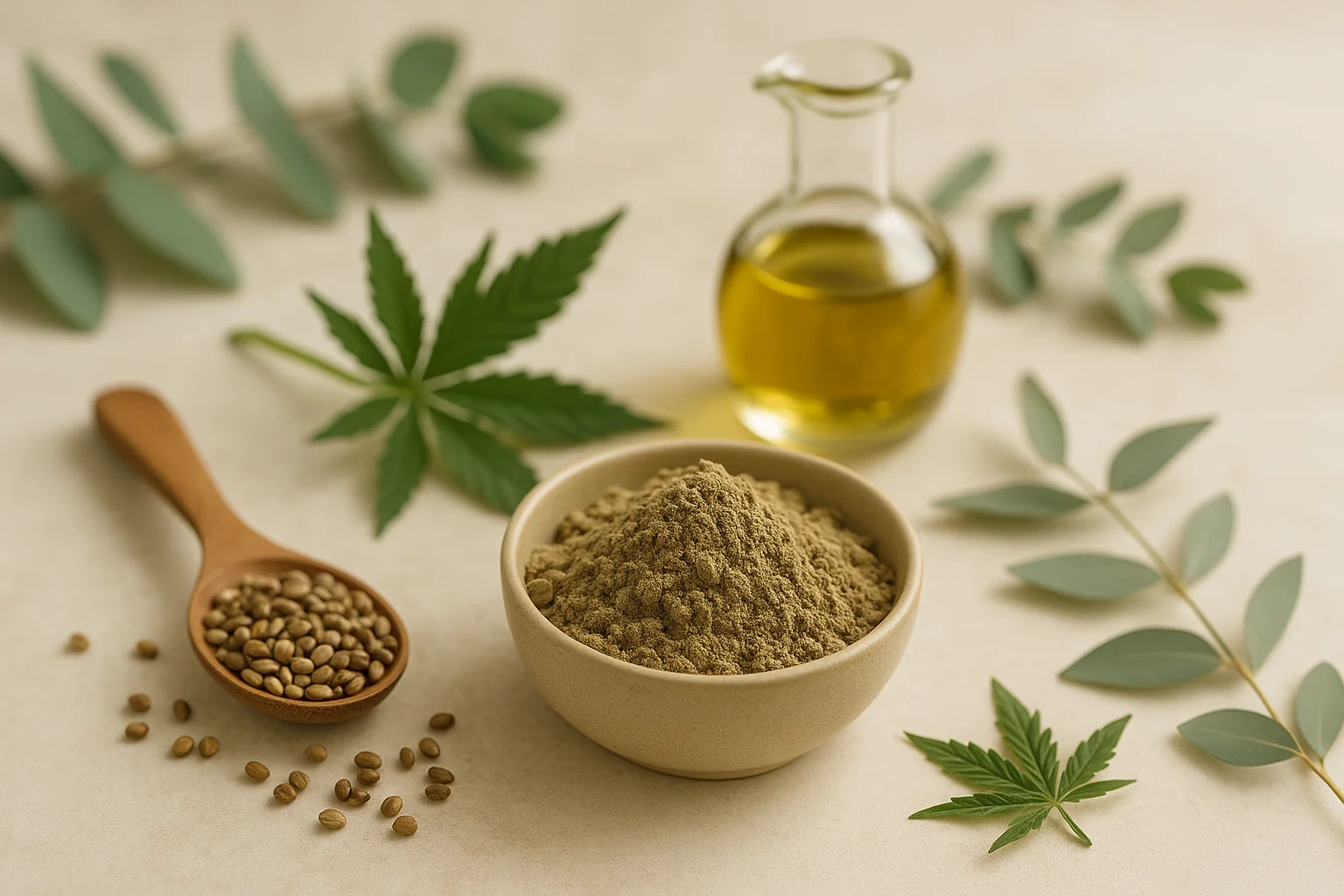

Hemp flour in baking - proportions, substitutes, and common mistakes
Hemp flour – how much to add to dough, what to substitute for wheat flour, common mistakes. A guide to baking with hemp flour.
Hemp flour looks like cocoa, absorbs water like a sponge, and colors baked goods a dark green-brown. These are not flaws - they are properties you need to know before adding it to a dough based on a wheat recipe. Do it unprepared, and you will end up with a mixture resembling cement. Do it with a plan, and you will bake bread with 30% more protein than wheat, with a low glycemic index and a distinct, nutty character. In this article, we will go through proportions, substitutes, common mistakes, and specific recipes - for both gluten and gluten-free bakers.
KEY INFORMATION
• Hemp flour contains about 30-36% protein and 30-40% fiber - multiple times more than wheat (Journal of Culinary Science, 2024).
• Safe substitution ratio: max 25-33% hemp flour in relation to base flour. Above 50%, the physical properties of the dough deteriorate.
• Hemp flour is naturally gluten-free but absorbs 10-15% more water than wheat - requires fluid adjustments.
• The dark color and nutty flavor are advantages in chocolate baked goods, whole grain breads, and pancakes, not flaws.
What is hemp flour and how does it differ from wheat flour?
Hemp flour is a byproduct of hemp oil pressing - after extracting oil from hemp seeds (Cannabis sativa L.) the press cake rich in protein and fiber remains. This press cake ground into powder is what hemp flour is. Depending on the degree of defatting, the flour can have from 6% to 12% fat - defatted flours have more protein and fiber, while full (non-defatted) retain more omega acids.
The comparison with wheat flour is striking. Whole wheat flour type 1850 has about 13% protein and 10% fiber. Hemp flour provides about 30-36% protein and 30-40% fiber according to analizy z Journal of Culinary Science & Technology (2024). It is a change in scale, not degree. At the same time, hemp flour has almost zero starch content and no gluten - which radically changes the behavior of the dough.
The absence of gluten in hemp flour is both an advantage (for those on a gluten-free diet) and a challenge (gluten provides elasticity and structure to the dough). Dough made with hemp flour will not stretch like wheat dough, will not rise the same way with yeast, and will not have the same elasticity. It is a different category of baking - and you have to accept that instead of fighting it.
What are the correct proportions of hemp flour in recipes?
The proportion of substituting hemp flour depends on the type of baked good and the effect you want to achieve. Generally, the more structure the baked good requires (yeast bread, sponge cake), the less hemp flour can be safely added. The more "resilient" the recipe is to structural changes (muffins, brownies, pancakes), the more hemp it can handle.
Why is exceeding 50% problematic? Hemp flour does not form gluten and has a very high water absorption capacity. With an excess of hemp, the dough does not have enough protein or starch network to maintain structure after baking. The result: a dry, crumbly, falling apart baked good. A 2024 study (Journal of Culinary Science) showed a statistically significant deterioration in hardness, elasticity, and sensory acceptability already at 40% hemp flour content in gluten-free cakes made with rice flour.
Adjusting water is a mandatory element when working with hemp flour. For every 100 g of hemp flour added to a recipe, plan for about 10-15% more liquid than originally. Oat starter, plant milk, eggs, or even a tablespoon of tahini effectively supplement liquids and add binding (protein).
What mistakes do bakers most often make when using hemp flour?
We have gathered seven mistakes that are most commonly repeated during the first attempts at baking with hemp flour. Each of them is easy to avoid if you know what to watch out for:
Error 1: Substituting 1:1 instead of wheat. This is the most common mistake. Hemp flour is not a drop-in replacement for wheat. Replace it with a maximum of 25-33% of the base flour.
Error 2: Lack of liquid adjustment. Hemp flour absorbs 10-15% more water than wheat. Without additional liquid, the dough will be too thick and crumbly. Add an extra tablespoon of milk or water for every 50 g of hemp flour.
Error 3: Using hemp flour in yeast recipes. Yeast ferments starch from wheat flour - hemp flour has almost no starch. Above 20% hemp content, the yeast dough will not rise properly.
Error 4: Expecting a light color in the baked goods. Hemp flour gives a dark green-brown color regardless of the proportions. Plan recipes where the dark color is an advantage (chocolate, cocoa, cinnamon cake).
We noticed in baking tests that brownies made with 40% hemp flour retain moisture significantly longer than those made with pure wheat - even 4-5 days after baking without losing texture. The high fiber content in hemp flour acts as a natural humectant, keeping moisture in the baked goods. This is an unintended advantage, especially for bakers who prepare in advance.
Error 5: Overdoing the amount on the first try. Start with 15-20% hemp flour in your favorite recipe. Assess the effect and gradually increase. Don't try maximum proportions right away.
Error 6: Lack of additional binding agents in gluten-free baking. In gluten-free recipes (rice + hemp + almond), gluten does not bind the dough. Add a tablespoon of ground flaxseed (1 tablespoon + 3 tablespoons of water = "flax egg") or a teaspoon of xanthan gum for every 200 g of flour mixture.
Error 7: Mixing dry ingredients for too short a time. Hemp flour tends to clump. Before mixing with wet ingredients, sift the hemp flour together with the other dry ingredients - the clumps will disappear.
How to substitute hemp flour if you don't have it?
Hemp flour does not have an ideal substitute, as no other flour combines such high protein with fiber, gluten-free properties, and a distinctive flavor. However, in specific recipes, you can look for substitutes:
For baking bread and muffins: quinoa flour (22% protein, gluten-free, neutral flavor) or navy bean flour (similar protein profile, but mild flavor). In a 1:1 ratio to hemp flour, but without the green color.
For brownies and chocolate cakes: almond or nut flour (similar water absorption, gluten-free, but much higher fat content). Requires reducing the fat in the recipe by about 20%.
For pancakes and fritters: buckwheat flour (gluten-free, distinct flavor, high protein ~13%). Less intense in flavor than hemp, but provides a dark color and good structure.
It's worth remembering: hemp flour enriches baked goods with complete plant protein with a full amino acid profile - something no simple substitute can replicate. If nutritional value is a priority, hemp flour is hard to replace. You can find more about the value of hemp protein in the article hemp protein how to use in the kitchen.
5 skeleton recipes with hemp flour
Each of the following recipes is a tested base that you can modify to your taste preferences:
1. Whole grain hemp bread (500 g loaf). 300 g whole wheat flour type 2000 + 100 g hemp flour + 7 g salt + 7 g instant yeast + 250 ml warm water + 2 tablespoons of oil. Knead for 10 minutes, let rise for 1 hour, bake at 200°C for 35 minutes. You will get a dark, dense, nutty loaf with 2× more protein than regular whole grain bread.
2. Hemp chocolate muffins (12 pieces). 150 g of wheat flour + 100 g of hemp flour + 50 g of cocoa + 150 g of brown sugar + 2 eggs + 180 ml of milk + 80 ml of oil + 2 teaspoons of baking powder. Bake at 180°C for 22 minutes. Dark, moist, intensely nutty.
3. Hemp pancakes (8 pieces). 100 g of hemp flour + 100 g of buckwheat flour + 2 eggs + 300 ml of milk + a pinch of salt. Optionally, a tablespoon of honey. Fry in clarified butter. Dark, slightly nutty, rich in fiber.
4. Hemp brownie (20×20 cm pan). 150 g of dark chocolate (70%) + 120 g of butter + 2 eggs + 150 g of sugar + 80 g of hemp flour + 30 g of cocoa. Bake at 175°C for 20-22 minutes. Very moist, intense, retains freshness for 5 days.
5. Banana pancakes (6 pieces). 2 ripe bananas (mashed) + 2 eggs + 60 g of hemp flour + 1 teaspoon of cinnamon + a tablespoon of peanut butter. No sugar. Fry over low heat. The natural sweetness of banana with a nutty hemp background.
For those who want to see a ready-made, purchased example of baking with hemp flour, we recommend checking out the Euforia brownie available at u Bucha - it's a craft product that showcases the final effect of hemp baking. You can find a broader context for cooking with hemp in the complete guide to hemp in the kitchen.
Hemp flour and gluten-free and keto diets
Hemp flour is naturally gluten-free and has a very low carbohydrate content - about 5 g per 100 g of dry product. This makes it an excellent ingredient for both gluten-free diets (celiac disease, non-celiac gluten sensitivity) and ketogenic or low-carb diets.
In the context of a keto diet, hemp flour has one of the lowest glycemic indices among all flours - it’s practically impossible to talk about GI in the traditional sense, as the content of simple carbohydrates is minimal. 100 g of hemp flour provides about 5 g of net carbohydrates (after subtracting fiber). For comparison: wheat flour - 60-70 g of net carbohydrates per 100 g.
Important note for people with celiac disease: when purchasing hemp flour, check the manufacturer's declaration regarding the place of production. If the facility also processes wheat, rye, or other gluten-containing grains, there is a risk of cross-contamination. Look for flour with a "gluten-free" certification and dedicated production lines.
Frequently Asked Questions
In what proportion should hemp flour be used instead of wheat flour?
A safe proportion is 25-33% hemp flour relative to the base flour. At 25%, baked goods maintain good structure and a slightly nutty flavor. Above 50% hemp flour, the dough loses elasticity - research from 2024 (Journal of Culinary Science) confirms the deterioration of physical and sensory properties at higher proportions.
Is hemp flour gluten-free?
Yes, hemp flour is naturally gluten-free. It comes from hemp seeds and does not contain gliadin or glutenin. If you have celiac disease, check the label for cross-contamination with wheat in the production facility. Look for a "gluten-free" certification from the manufacturer.
Why does hemp flour darken baked goods?
Hemp flour has a dark green-brown color due to the chlorophyll and flavonoids in hemp seeds. The higher the content, the darker the baked good. This is a natural property - it works well in chocolate muffins, whole grain bread, and brownies, but does not suit light sponge cakes.
How much protein and fiber does hemp flour contain?
Hemp flour contains about 30-36% protein and 30-40% fiber in dry mass - many times more than whole wheat flour (13% protein, 10% fiber). This makes it one of the most nutritious flours available on the market, according to data USDA FoodData Central.
Why is dough with hemp flour drier?
The high fiber content means that hemp flour absorbs 10-15% more water than wheat flour. If the dough is too thick, add an extra tablespoon of milk or water for every 50 g of hemp flour. Ground flaxseed or psyllium as a binder helps retain moisture.
What baked goods are best suited for hemp flour?
Hemp flour works best in: whole grain breads (up to 30%), chocolate muffins (up to 40%), brownies (up to 50%), whole grain pancakes (up to 50%), banana pancakes, oatmeal cookies. Not recommended for yeast rolls, light sponge cakes, or cakes where gluten is crucial for structure.
This article is for informational and educational purposes and does not replace consultation with a doctor. If you are pregnant, breastfeeding, taking medications, or have chronic conditions, consult the use of supplements or herbs with a specialist.
Author: Michał Waluk · Published: 2026-05-04 · Updated: 2026-05-04