Collagen is the most abundant protein in the human body — it constitutes about 30% of the total protein mass of the body (PMC, 2019) and is responsible for skin elasticity, joint stability, and bone strength. The natural synthesis of this protein begins to slow down around the age of 25-30 (PMC, 2019), which translates to the first signs of skin aging and gradual weakening of connective tissue. On this page, you will find supplements available at u Bucha: marine collagen, grass-fed, and vegan collagen booster — in liquid and sachet forms — along with a selection guide, dosage protocol, and an overview of all products.
How to choose collagen supplements?
Collagen supplements differ from regular protein by one key detail: the degree of hydrolysis. Research published in PMC (2019) confirms that collagen peptides with a molecular weight below 5,000 Da are absorbed into the bloodstream within 30-60 minutes, while non-hydrolyzed protein requires enzymatic digestion and has significantly lower bioavailability. So how to choose a product that actually works?
Six factors determining quality
- Source of raw material — marine (fish) primarily provides types I and III, optimal for skin and nails; grass-fed beef also contains types I and III with higher glycine content; type II bovine (PMC, 2019) is specifically used for the regeneration of joint cartilage.
- Molecular weight — look for the designation in daltons on the label; the range of 2,000-5,000 Da is the optimum for bioavailability (PMC, 2019).
- Dose of peptides — the clinically effective dose is 5,000-10,000 mg per day; meta-analysis "Nutrients" (2019) confirms this threshold for skin effects.
- Synergy with vitamin C — vitamin C is an essential enzymatic cofactor for the synthesis of proline and hydroxyproline; a product without it requires additional supplementation.
- Form of the preparation — liquid is absorbed faster than powder or tablets; sachets are more thermally stable and convenient for travel.
- Supplementary composition — hyaluronic acid, zinc, and coenzyme Q10 enhance the effects on the skin; chondroitin and MSM support joint tissues.
Two mistakes made by buyers
First mistake: focusing on the brand name instead of the molecular weight given in daltons — "premium" on the packaging does not mean the best bioavailability. Second mistake: comparing package prices without calculating the cost per gram of peptides — a higher dose in a package may be cheaper when calculated per serving.
Who should supplement, and who should not
Supplementation with protein peptides is recommended for individuals after the age of 25-30 (PMC, 2019), when natural protein production gradually decreases. We also recommend it for athletes recovering from ligament and joint injuries, women during menopause, and those caring for their skin's condition from the inside out. With fish-based products, the only significant limitation is an allergy to fish or shellfish; during pregnancy and breastfeeding, a medical consultation is required before introducing any dietary supplement.
Most popular products in the category
At u Bucha, there are ten products available that can be divided into four natural groups: high-dose formulas (Forte series), joint supplements (Flex series), beauty lines (Glow and Beauty series), and special variants (grass-fed, fish NatiCol® and vegan booster Vollagen®).
Forte series — the highest dose for skin and bones: Colladrop Forte 10 000 mg sachets (129.90 zł for 30 pcs.) and Colladrop Forte 10 000 mg liquid 500 ml (89.90 zł) contains hydrolyzed raw material COLLAGEN HM™ with an average molecular weight of 2 000 Da, vitamin C (synthesis cofactor, Nutrients 2019), hyaluronic acid, and organic silicon. Produced by Aura Herbals in Poland.
Colladrop® Beauty — the "glow" effect with mojito: Colladrop® Beauty HMG™ 10 000 mg sachets (149.90 zł for 30 pcs.) is made with HMG™ raw material instead of HM™ and a rich formula with Q10, selenium, and vitamin C. The mojito flavor makes the daily supplementation ritual a pleasure.
Flex series — comprehensive support for joints: Colladrop Flex 5 000 mg sachets (119.90 zł) and Colladrop Flex 5 000 mg liquid 500 ml (79.90 zł) marine raw material with chondroitin, MSM, vitamins C, D, E, K, and extract from Indian frankincense. The composition is tailored for active individuals and seniors with joint ailments.
Glow Series — beauty with 21 ingredients: Colladrop Glow 5,000 mg sachets (119.90 zł) and Colladrop Glow 5,000 mg liquid 500 ml (79.90 zł) contains COLLAGEN HM™ enriched with 21 active ingredients — hyaluronic acid, zinc, selenium, and nettle extract. Sugar-free, sweetened with xylitol.
Fish collagen NatiCol®: Colladrop NatiCol® + vitamin C, liquid 500 ml (44.90 zł) is a French-origin raw material with a molecular weight of 4,000 Da (PMC, 2019) — suitable for vegetarians and ideal as an economical introduction to supplementation.
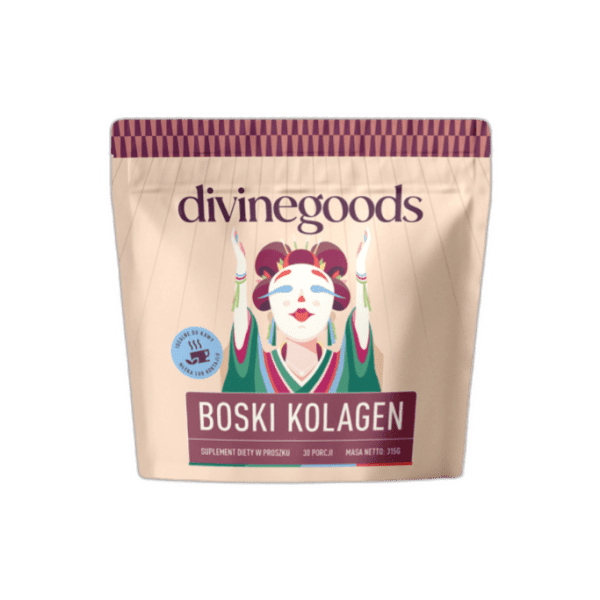
Grass-fed collagen from Tremella: Divine Collagen — grass-fed (Divine Goods by.herbs) (119 zł) is a powder containing 10,000 mg of pasture-raised bovine raw material from 500 mg of Tremella fuciformis extract DER 10:1 (PubMed, 2013) — a mushroom with moisturizing properties. Lactose-free, gluten-free, and GMO-free.
Vegan Vollagen® Booster — an option for vegans: Colladrop® Vegan Vollagen® 2,000 mg sachets 30 pcs. (20 zł) is a formula without animal-derived raw materials — a complex of amino acids from corn, vitamin C, hyaluronic acid, and Q10 stimulate the body's own production of collagen by fibroblasts. In terms of serving size, it is the most economical option in the entire range.
What do studies say?
A meta-analysis published in "Nutrients" (2019) included 11 randomized clinical trials and showed that supplementation with hydrolyzed peptides for 90 days improves skin hydration and elasticity compared to placebo. The effect was consistent across all studies despite the variability of the doses used. A study from "Journal of Athletic Training" (2018) additionally suggests that 15 grams of peptides with vitamin C taken 60 minutes before physical exertion increases collagen synthesis in connective tissue by about 20% compared to placebo. However, it is important to know the limits of this knowledge: most studies were funded by active ingredient manufacturers — this context should be considered when evaluating the results.
The effects are real, but they won't occur faster than after several weeks of regular use. Consistency is more important here than a one-time high dose — the regularity of the protocol determines the visible effect. You can find detailed analyses of the literature in our article Collagen and its properties — a comprehensive guide.
Who is the collagen supplement for?
This is a supplement with a wide range of applications — benefits are felt by both those caring for their appearance and athletes, as well as seniors with joint problems. Below are some groups that most often reach for collagen products.
Individuals caring for their skin from within: Loss of skin elasticity is one of the first visible effects of decreased synthesis of structural protein. Regular supplementation improves the density of the epidermis and skin hydration. Marine products from the Glow or Forte series work best here.
Athletes and active people: Studies (Shaw et al., 2017) It has been confirmed that 15 g of peptides with vitamin C taken 60 minutes before training supports the regeneration of ligaments and tendons. The Flex series with chondroitin and MSM is the optimal choice here.
Seniors and individuals with joint ailments: With age, joint cartilage thins; daily supplementation with a joint preparation can support comfort in movement. Proper nutrition and physical activity are essential complements.
Vegans and vegetarians: Individuals avoiding animal products can reach for Colladrop® Vegan Vollagen® — a complex of amino acids stimulating endogenous synthesis without animal-derived raw materials. Vegetarians can also choose fish-based NatiCol® in liquid form, which is suitable for this group.
Women at various stages of life: The decline in estrogen during menopause accelerates the degradation of structural fibers; supplementation can help maintain bone density and skin elasticity. Pregnant women should consult a doctor before starting any supplement.
Types of collagen — which one to choose for your needs?
Collagen preparations are divided into several types based on the source and structure of the protein. Differentiation is practically significant when choosing a supplement.
Marine collagen (fish) is obtained from the skin and scales of marine fish. It is characterized by a small molecular weight — in the case of Colladrop Forte and Glow, it is 2,000 daltons (Nutrients, 2019), which ensures rapid absorption through the intestinal epithelium. It contains types I and III, which are the main structural components of skin and internal organs. This is the most commonly chosen type by those interested in improving skin appearance, hair density, and nail condition.
Grass-fed bovine collagen comes from the bones and skin of pasture-raised cattle. It provides typical types I and III with a higher glycine content — an amino acid building block of connective tissue. Divine Goods' Boski Kolagen combines this raw material with Tremella for a synergistic hydration effect. Bovine raw material is also suitable for those avoiding fish for dietary or religious reasons.
Vollagen® collagen booster does not contain animal collagen but stimulates its endogenous synthesis by fibroblasts. Vollagen® is a standardized complex of amino acids from corn, serving the function of "raw material for production" instead of ready-made protein. It is the only option for those on a vegan diet. It should be noted that the action of the booster is indirect and may require a longer time to see visible effects compared to direct peptide supplementation.
Why do collagen types matter when choosing a preparation? The body cannot independently "redirect" consumed peptides exclusively to the skin or exclusively to the joints — target tissues absorb amino acids according to their own metabolic needs. PMC (2019) However, it indicates that fish and bovine raw materials differ in their amino acid profiles, which translates into subtle differences in effectiveness depending on the application.
How to use collagen step by step?
Dosing is a straightforward protocol, but a few details significantly impact effectiveness. Below is a description of each step, ensuring that supplementation yields the best results.
-
Step one — Determine the dosage
Meta-analysis "Nutrients" (2019) showed the effectiveness of doses starting from 5 000 mg daily. Start with 5 000 mg per day as a starting point. Increase to 10 000 mg if the goal is a noticeable anti-aging effect or intense physical activity. Do not exceed 15 000 mg daily without consulting a specialist.
-
Step two — Choose the timing
The best time is in the morning on an empty stomach or just before training. Data from "Journal of Athletic Training" (2018) indicate that consumption 60 minutes before exertion increases synthesis in active tissues by about 20% compared to placebo.
-
Step three — Prepare the portion
Dissolve the powder from the sachet in lukewarm water or juice. Stability studies of peptides suggest avoiding temperatures exceeding 60 °C (PMC, 2019), as higher temperatures may degrade the peptides. The liquid form can be consumed directly or mixed with a drink. Colladrop NatiCol® measures itself with the included scoop.
-
Step four — Ensure vitamin C
If the product does not contain vitamin C in its composition, take it concurrently. Shaw et al. (2017) used 1 000 mg in a sports study; the EU daily norm is 80 mg. Vitamin C is an enzymatic cofactor absolutely crucial for fibroblasts synthesizing collagen.
-
Step five — Maintain consistency
Use continuously for at least several weeks to assess the effects. Initial results on the skin usually appear after four to six weeks; improvement in joint function — after eight to twelve weeks of regular supplementation, as confirmed by the cited clinical studies.
Safety and contraindications
Hydrolyzed collagen supplement is a food ingredient with a long history of safe use. With fish-based products, the only significant risk is an allergic reaction in individuals with confirmed allergies to fish or shellfish — always check the label before purchasing. Colladrop® Vegan Vollagen® and Boski Kolagen grass-fed are safe for those intolerant to fish. Bovine products are not suitable for vegans and vegetarians. Pregnant and breastfeeding women should consult a doctor before starting any dietary supplement. Individuals with chronic kidney diseases should consider the provided supplements in their overall protein intake.
Collagen can be combined with most popular supplements without the risk of interactions. Hyaluronic acid, zinc, biotin, and vitamin D enhance the effects of peptides on the skin and joints. A broader context of supplementation in a holistic approach to biohacking is described in the article Biohacking and supplements 2026, where we discuss NMN, adaptogens, and CBD alongside collagen products.
Frequently asked questions
What daily dose of collagen is effective?
Clinical studies most commonly used from 5 000 to 10 000 mg of hydrolyzed peptides daily. Meta-analysis from "Nutrients" (2019) confirms that doses in this range improve hydration and elasticity of the skin after eight to twelve weeks. For joints, a lower dose supplemented with vitamin C is often sufficient.
Marine or bovine collagen — which to choose?
Marine (types I and III) has a smaller molecular weight and is recommended for skin, hair, and nail issues. Grass-fed bovine also provides types I and III with higher glycine content. PMC (2019) suggests that both sources show similar effectiveness for the skin — choose according to your needs and diet.
When will I see the first effects?
The first skin effects usually appear after four to six weeks of daily supplementation. Improvement in joint condition requires eight to twelve weeks. Meta-analysis (Nutrients, 2019) included studies lasting up to 90 days and showed a significant improvement in skin biomarkers during this time.
Can collagen supplements be taken with other preparations?
Yes — they combine well with vitamin C, hyaluronic acid, zinc, and biotin. They can be taken alongside CBD — both substances are wellness ingredients with no documented pharmacokinetic interactions at standard doses. Avoid supplementing more than one source of protein at a time in very large amounts if you have kidney diseases.
What does "grass-fed collagen" mean?
"Grass-fed" means the cattle were exclusively fed grass in pastures, without nutrient-rich feeds containing antibiotics and growth hormones. Divine Goods by.herbs' Divine Collagen provides 10,000 mg of such raw material combined with 500 mg. Tremella fuciformis (DER 10:1) (PubMed, 2013) — a mushroom studied for its moisturizing properties.
How does liquid collagen differ from sachets?
The liquid form absorbs faster and does not require mixing — just measure the dose with the included measuring cup. Sachets are thermally more stable and convenient for travel. Both forms contain the same active ingredient — choose the one that fits your daily routine.
Is there a vegan alternative to animal collagen?
There is no plant-based collagen as such — it is a protein exclusively from animal sources. However, there are "collagen boosters" such as Colladrop® Vegan Vollagen® 2,000 mg, which provide amino acids from corn that stimulate their own synthesis by fibroblasts — without animal-derived raw materials.
Why is vitamin C crucial when using collagen peptides?
Vitamin C catalyzes prolyl and lysyl hydroxylases — enzymes critical for the stability of fibers. Without sufficient levels, synthesis is disrupted even with a high intake of peptides. The EU daily norm is 80 mg; in sports studies Shaw et al. (2017) they used 1,000 mg to enhance tissue effect.
The site is informational and educational and does not replace consultation with a doctor. If you are pregnant, breastfeeding, taking medications, or have chronic conditions, consult the use of supplements or herbs with a specialist.