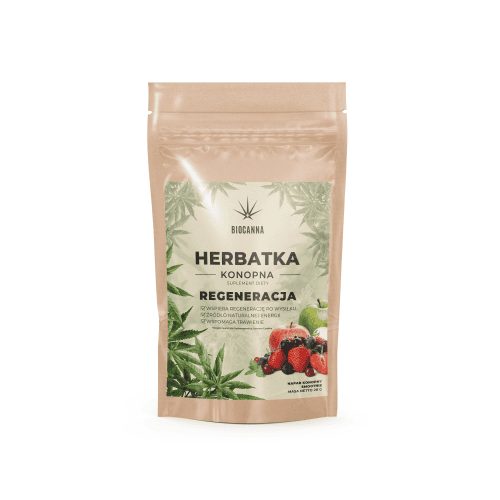
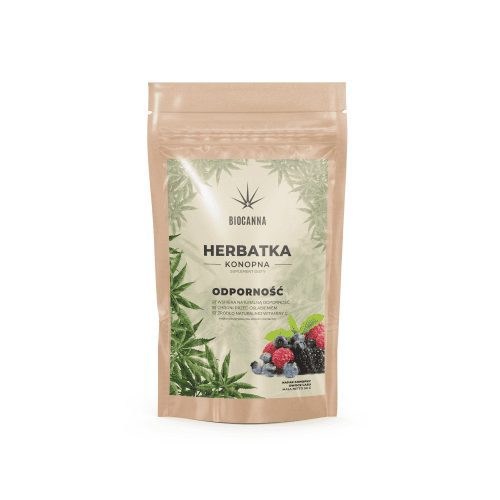
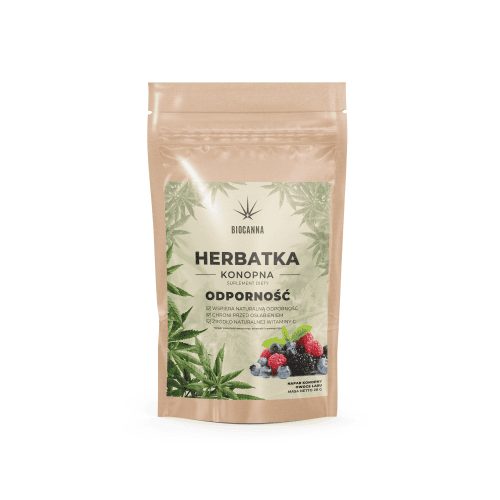
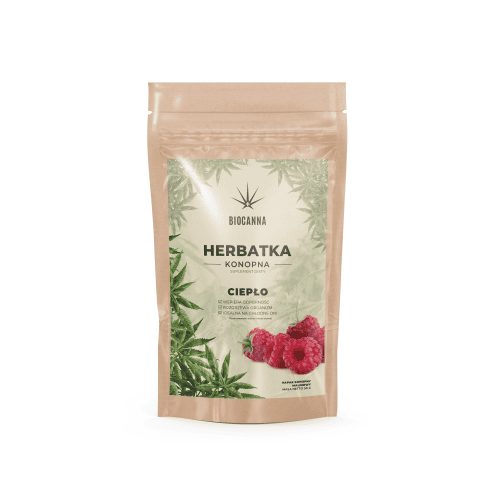
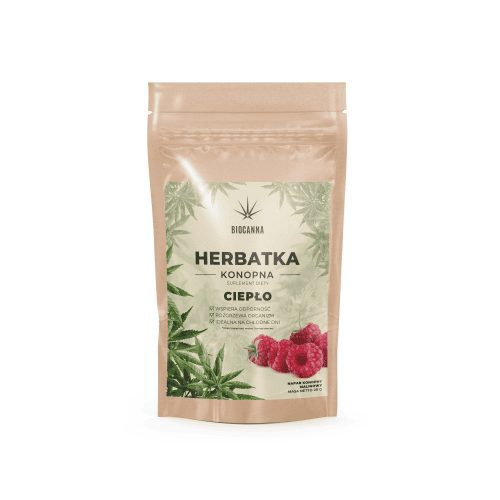
Hemp teas, herbal teas, and functional CBD infusions are a category for those seeking natural support for their daily routine. Here you'll find dried hemp (Cannabis sativa L.) inflorescences, herbal blends with CBD, and blended infusions enriched with active ingredients like L-theanine and ginkgo biloba. All products contain less than 0.3% THC in accordance with EU regulations and are legally sold as food. On this page, we'll explain how to choose the right tea for your needs, how to brew it, and what to expect from regular drinking.
How to choose hemp or herbal tea?
The global functional tea market was valued at over USD 3.4 billion in 2023 and is growing by approximately 6% per year—driven by interest in adaptogenic plants and caffeine-free stress reduction. When choosing an infusion, it's worth considering four criteria: functional purpose, herb composition, quality certificates, and brewing method.
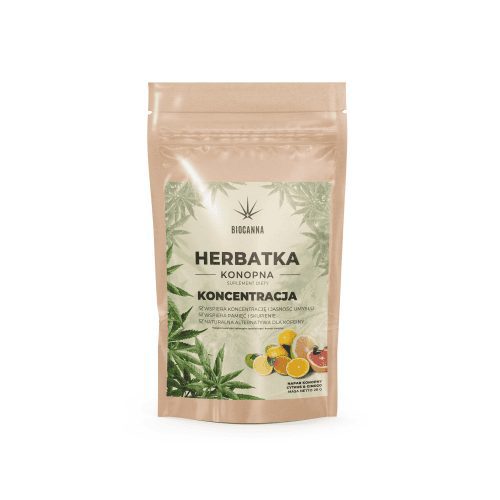
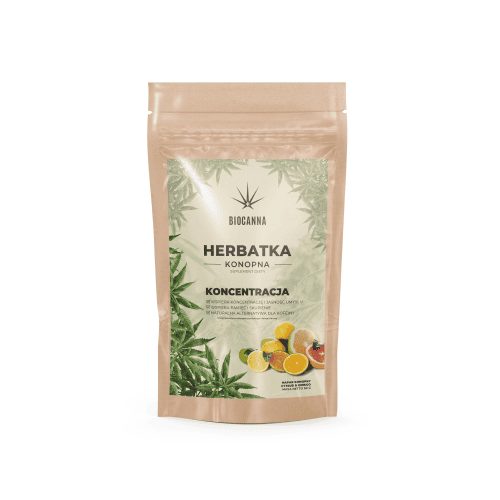
Functional purpose. Highlight what you need: evening relaxation, better sleep, daytime focus, or digestive support. Hemp teas with lavender and lemon balm (e.g. Hemp tea lavender with lemon balm 30 g) have a calming effect. Blends with ginkgo and citrus (CONCENTRATION Hemp Tea) support focus without caffeine. Herbal blends are great for sleep, such as Deep Sleep Herbal Blend with valerian and hops.
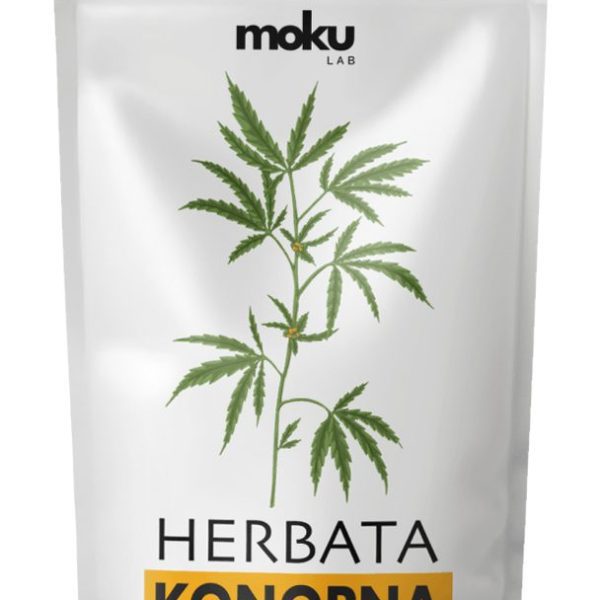
CBD composition and concentration. Check whether the manufacturer provides the percentage of CBD in the dried product and the laboratory test results (COA). mokuLAB tea with a concentration of 4.13% CBD This is a significantly higher concentration than in typical food infusions, which translates into a more noticeable relaxing effect with just one cup.
Certificates and origin. Look for organically grown products certified by the EU Organic or a national equivalent. Chemicals are extracted into water just as effectively as cannabinoids—so pure raw materials are especially important. All Bucha hemp teas come from certified plantations.
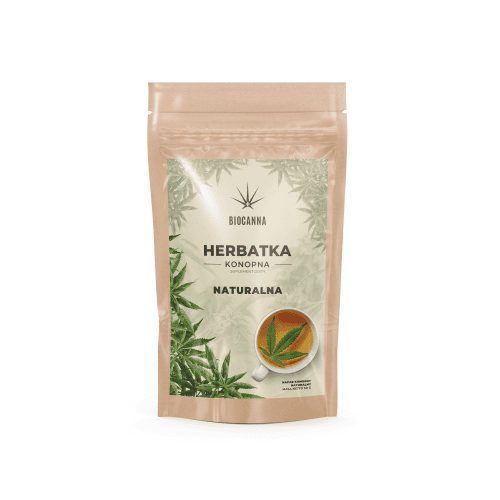
Brewing method. Dry loose material (e.g. NATURAL Hemp Tea 20 g DR Joint) gives you complete control over your portion. Biodegradable pyramids (Hemp Combination) simplify your daily ritual without cluttering your strainer. Both forms are equivalent in terms of cannabinoid extraction.
Common mistake #1: brewing with boiling water. Temperature above 90°C accelerates the degradation of CBD and terpenes responsible for the aroma. The optimum temperature is 80–90°C – it is worth investing in a kettle with temperature control.
Common mistake #2: Skipping the fat. Cannabinoids are lipophilic—without a bit of plant milk or oil the bioavailability of CBD from the infusion decreases by up to several percent. A tablespoon of oat milk is enough.
Who are these infusions for?. For adults looking for a caffeine-free alternative to relaxation, those having trouble falling asleep, white-collar workers looking to improve focus without stimulants, and anyone who prefers functional foods to capsule supplements.
Who are they NOT for?. Pregnant and breastfeeding women should consult their doctor before using herbal remedies. People taking medications metabolized by the CYP450 enzyme (e.g., heart medications, antidepressants) should discuss regular use of CBD teas with their pharmacist—even at low concentrations.
How to read a hemp tea label? A well-described product states three things: the percentage of CBD in the herb (e.g. "4,13% CBD" as in mokuLAB), country of cultivation and organic certifications, as well as packaging weight. Avoid products that only list "CBD" without the exact percentage—this is a red flag for conscious consumers. Also, check if the manufacturer provides laboratory test results (COA) confirming that THC and pesticide limits are not exceeded.
The most popular products in the tea category
Bucha's offer includes over 17 products in the tea category — Below is a discussion of the ten most frequently chosen by customers, grouped by purpose.
Teas based on pure dried hemp. Hemp Tea 4,13% mokuLAB - Natural Calmness This is a flagship product for those who want a significant concentration of CBD and a full spectrum of cannabinoids. No artificial additives, a distinct hint of greenery—perfect for an evening of relaxation. Similarly composed NATURAL Hemp Tea 20 g (DR Joint) contains CBD, CBDA and CBG - a cheaper option for those who are just starting out with hemp infusions and do not want to invest in a more expensive product.
Herbal and hemp mixtures for relaxation and sleep. Hemp tea lavender with lemon balm 30 g (Kombinat Konopny) combines hemp flowers with lavender and lemon balm in biodegradable pyramids—a classic formula for evening relaxation. For more intensive sleep support, we recommend Deep Sleep Herbal Blend with valerian and hops - without CBD, but with a rich herbal tradition and documented calming effects.
Premium CBD Teas. CBD Premium Hemp Tea - 100% Organic i CBD Premium Hemp Tea Moment of Peace — with the addition of chamomile, lavender, lemon balm and jasmine — is a proposition for those who value organic raw materials, certified ingredients and a multi-dimensional flavor profile in one infusion.
Functional teas with active substances. Hemp Tea PEACE 20 g - Strawberry & Lemon Balm + L-theanine contains 32 mg L-theanine per serving – a stress-reducing amino acid without causing drowsiness. The analogue for concentration is Hemp Tea CONCENTRATION 20 g - Citrus & Ginkgo with ginkgo biloba, which supports cerebral microcirculation.
Flavored and digestive infusions. Hemp tea mint with orange 30 g in pyramids is a refreshing choice for your morning ritual. If digestion is your priority, Light Belly Herbal Blend 100 g with mint, dandelion and helichrysum supports stomach comfort after heavy meals.
How to brew hemp tea - 6 steps
Brewing hemp tea differs from traditional tea primarily in the water temperature and optional addition of fat for better cannabinoid extraction. Below are six steps to extracting maximum CBD and flavor. For a detailed guide, see the article. How to Make CBD Hemp Tea on Buch's blog.
- Measure out a portion of the dried herb. Use approx. 1–2 teaspoons of loose dried herb or 1 sachet. A larger portion intensifies the flavor and increases the CBD concentration in the infusion—start with a smaller amount and adjust to your preference.
- Heat the water to 80–90°C. Temperature above 90°C degrades CBD and terpenes responsible for the aroma. If you don't have a thermometer, wait about 2 minutes after boiling the water in a regular kettle.
- Pour and cover. Pour water into a cup and cover with a saucer or lid. essential oils and light cannabinoids do not escape with the steam — this is an important step often overlooked by new users.
- Brew for 5–8 minutes. Optimal CBD extraction occurs in this window. A shorter brewing time produces a milder infusion, while a longer one produces a more intense and slightly bitter infusion, similar to green tea.
- Optional: add fat. A spoonful of oat milk or a bit of coconut oil increases the bioavailability of CBD because cannabinoids are lipophilic and are more easily absorbed with fat. We especially recommend this step for people who drink tea for relaxation.
- Strain and drink slowly. Remove the herb or remove the sachet. You can sweeten it with honey. The relaxing effects increase over time. 20–30 minutes after drinking — do not expect immediate action as with pharmaceutical preparations.
What does research say about CBD in infusions?
Hemp tea is a growing area of pharmacognosy research. Review from Frontiers in Plant Science (2020) confirms that CBD extraction into water at 80–90°C is feasible, although lower than in lipid media. From 1g of dried material with a concentration of approximately 4% CBD, approximately 30–40% of available cannabinoids are transferred to the infusion—enough to experience a relaxing effect with a standard dose.
How does CBD affect anxiety and stress? Study from the Journal of Clinical Medicine (2019) showed that CBD doses of 25–75 mg per day reduced anxiety in 79% participants after the first month of use. Infusions are a gentle dosage form—suitable as part of a daily wellness routine, not a replacement for therapy. You can read more about CBD's effects on sleep in this article. CBD and Insomnia – Does Cannabis Help with Sleep Disorders? on Buch's blog.
Herbs in functional blends have an equally solid scientific basis. Lemon balm has documented anxiolytic effects, confirmed by, among others, study from Nutrients (2014). Valerian shortens the time it takes to fall asleep, as confirmed by a meta-analysis American Journal of Medicine (2006). L-theanine - present in the SOKÓJ Tea in the amount of 32 mg per serving - according to Biological Psychology Research (2007) increases alpha brain wave activity, promoting focused relaxation without drowsiness.
Will hemp tea replace CBD oil? No—infusions have lower and less predictable bioavailability than sublingual oils. However, they are an excellent dietary supplement and a natural ritual with their own therapeutic value. You can read more about the difference between cheap CBD and high-quality CBD in this article. Cheap CBD or good CBD - how to avoid being fooled by marketing.
It is also worth knowing that the effects of athletes using CBD differ from the effects of people drinking tea in the evening with low levels of stress. A study involving Olympic athletes described on Bucha's blog shows that even advanced athletes value CBD primarily for its recovery and sleep enhancement—not for its direct effects during exercise. Hemp tea fits into this context: it's a tool for periods of rest and recovery, not for moments of high intensity.
Safety and contraindications
Hemp and herbal teas are generally safe for healthy adults. WHO in the 2018 report assessed CBD as having a good safety profile, with no addictive potential at typical dietary doses. Below is the most important information for the informed consumer.
Drug interactions. CBD inhibits the CYP3A4 enzyme, which metabolizes many medications—including anticoagulants, some statins, and benzodiazepines. If you take chronic medications, consult a pharmacist before regularly drinking hemp teas. Even if the concentration of CBD in a single cup is low, daily accumulation may be clinically significant.
Pregnancy and breastfeeding. There is insufficient data on the safety of CBD in pregnant women. As a precautionary measure, avoid regular consumption or consult your midwife or doctor.
Interactions between herbs. Valerian and hops (Deep Sleep) may enhance the effects of sedatives and sleep medications. Do not combine teas containing these herbs with benzodiazepines without consulting a doctor—the additive effect may be undesirable. If you're unsure, consult a pharmacist and show them the full ingredients on the tea label.
Children and the elderly. Hemp teas are not intended for children under 18. Older adults taking multiple medications should exercise extreme caution due to the potential interactions of CBD with hepatic metabolism, as described in numerous pharmacological reviews.
Allergies. Hemp belongs to the Cannabaceae family - people who are allergic to hemp pollen should start with a small test portion and observe their body's reaction for the first few days. 24 hours after first ingestion.
Frequently Asked Questions
What are hemp teas and how do they differ from regular herbs?
Hemp teas are infusions made from the dried inflorescences, leaves, or stems of the hemp plant (Cannabis sativa L.), containing cannabinoids such as CBD and CBG. Unlike traditional herbs, they are caffeine-free and act on the endocannabinoid system—a network of receptors that regulate stress, sleep, and mood. Standard herbal teas work primarily through phenolic compounds and essential oils, without this mechanism.
How much CBD does hemp tea contain after brewing?
The CBD content in an infusion depends on the concentration in the herb, the water temperature, and the brewing time. Research indicates that water at 80–90°C extracts approximately. 30–40% of available cannabinoids. With mokuLAB tea (4,13% CBD) and a 1g serving, you can expect approximately 12–16mg of CBD per cup—a dose experienced as a mild calming effect without sedative effects.
Is hemp tea legal in Poland?
Yes. Hemp teas available at Bucha contain the following: 0.3% THC - the limit allowed by EU regulations regarding industrial hemp. The products are certified and sold legally as foodstuffs – you can order and drink them without any legal restrictions.
When to drink hemp tea – morning or evening?
It depends on your goal. Blends with L-theanine (PEACE Hemp Tea with Strawberry) are effective in the morning—they support focused calm without agitation. Infusions with lavender, lemon balm, or hops (Lavender Tea with Lemon Balm, Deep Sleep) are recommended in the evening—they aid in falling asleep. Pure hemp mokuLAB (4,13% CBD) is neutral in terms of time of day.
How to brew hemp tea to extract the most CBD?
Use water at 80–90°C (not boiling). Cover and steep for 5–8 minutes. Add fat—a tablespoon of plant milk or coconut oil— increases the absorption of CBD because cannabinoids are lipophilic. More details in the guide How to Make CBD Hemp Tea.
Do hemp teas have side effects?
In typical infusion doses, hemp teas are well tolerated. WHO classifies CBD as a safe compound with reasonable consumption. Caution is advised with drugs metabolized by the CYP450 enzyme - consult your doctor or pharmacist, especially with long-term use.
What is the difference between hemp teas, herbal teas, and functional blends?
Hemp teas are based on dried Cannabis sativa and provide CBD. Herbal teas (e.g. Light Belly 100 g) are based on traditional plants like mint, dandelion, and helichrysum. Functional blends combine both groups, adding active ingredients like L-theanine (focus) or valerian (sleep). The choice depends on your specific goal.
This website is for informational and educational purposes only and does not replace consultation with a physician. If you are pregnant, breastfeeding, taking medication, or have a chronic condition, please consult a specialist regarding the use of supplements or herbs.